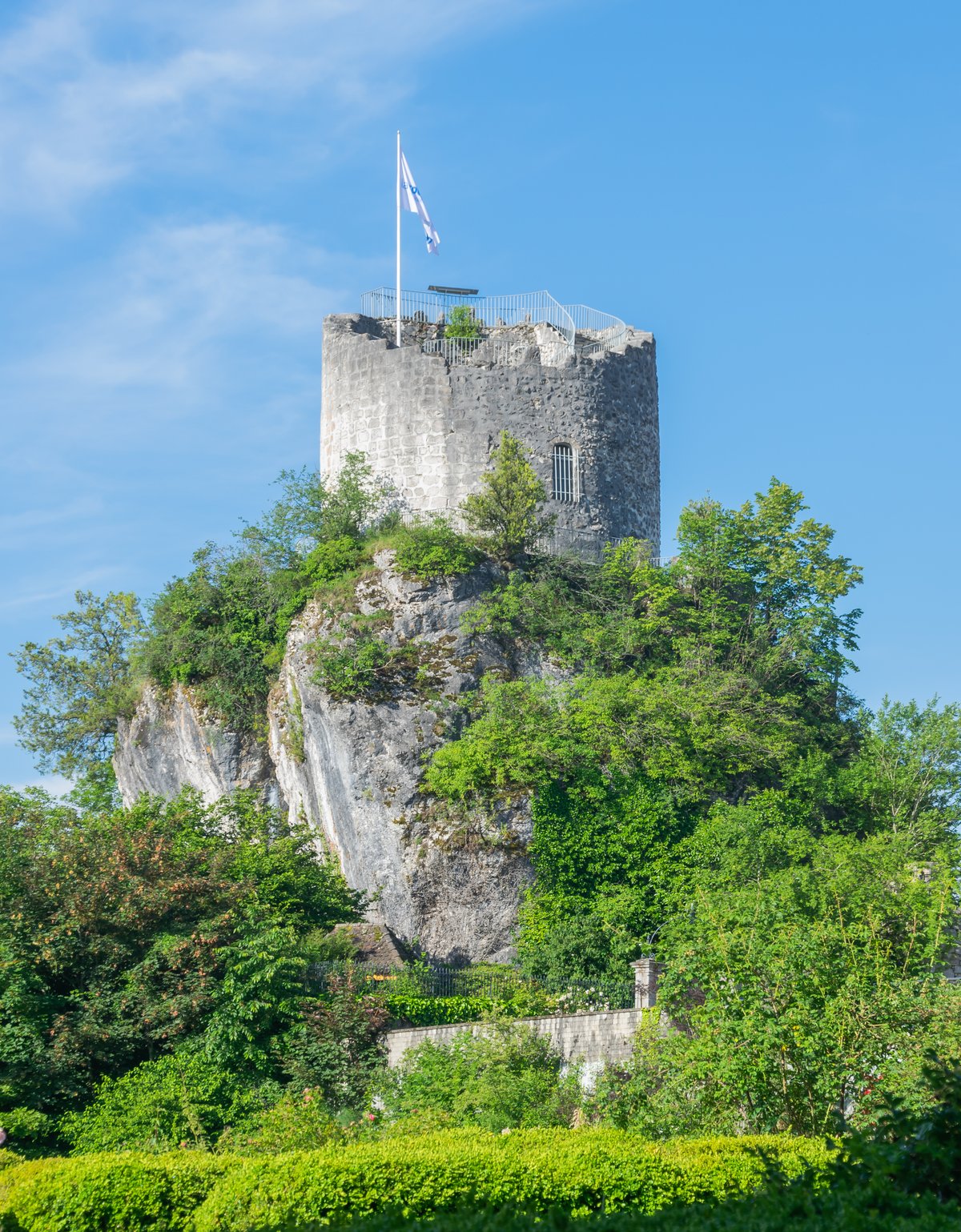

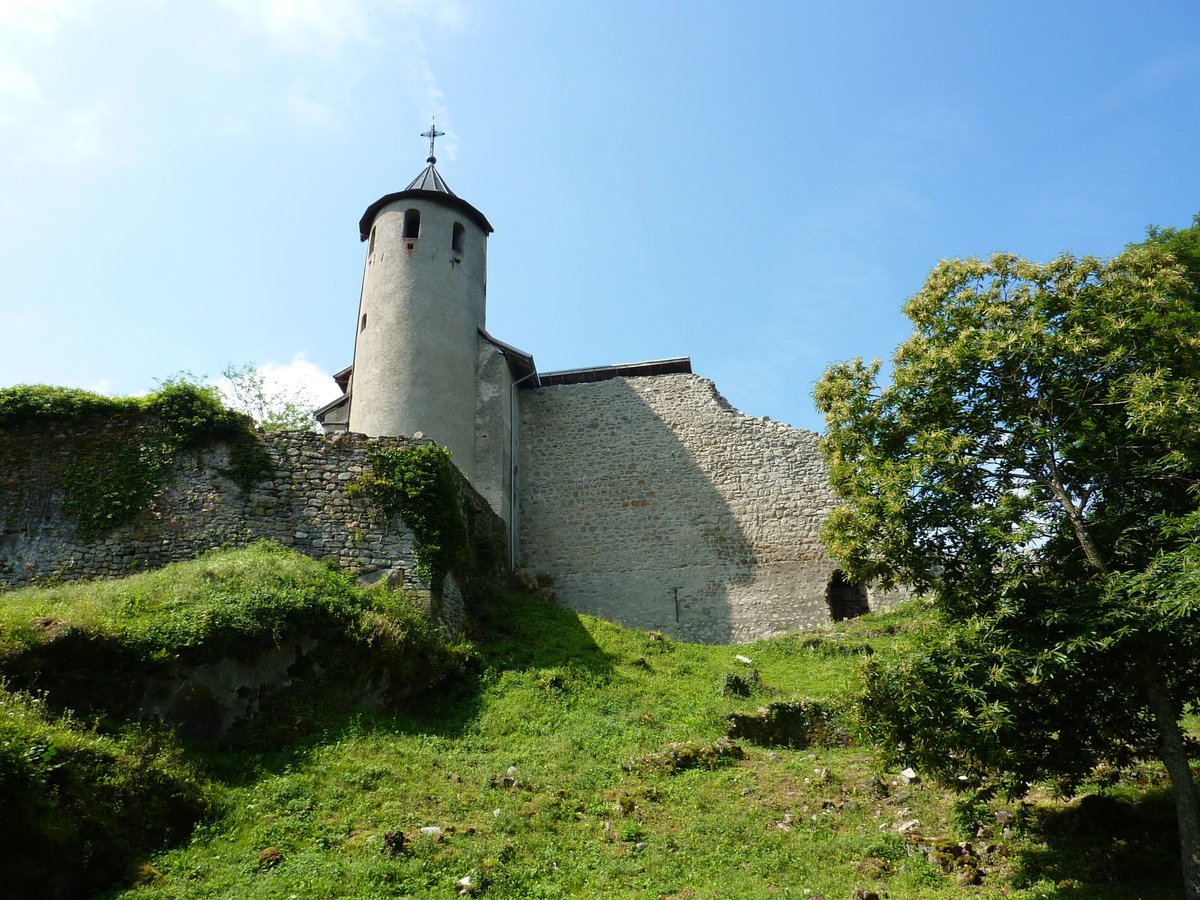
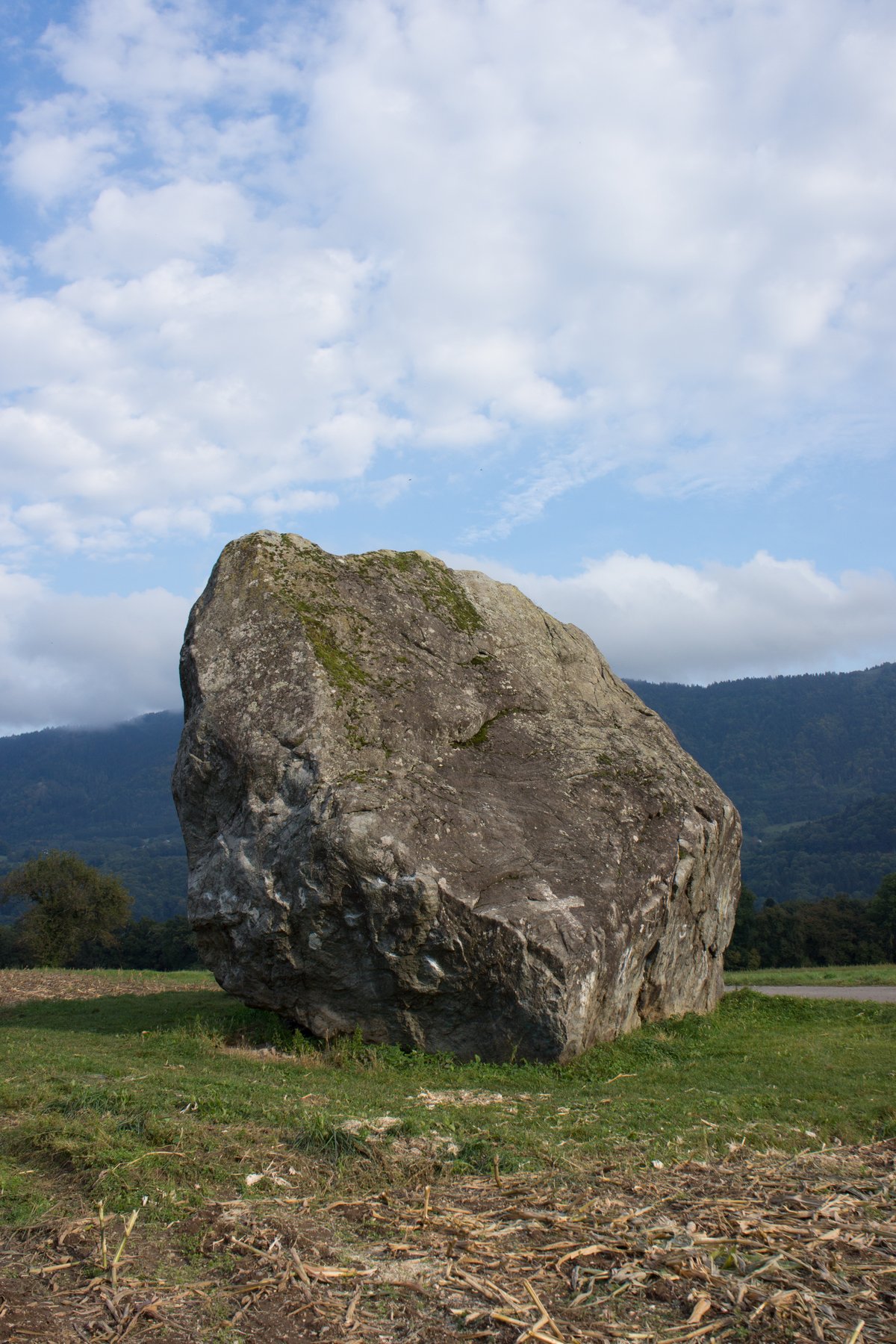
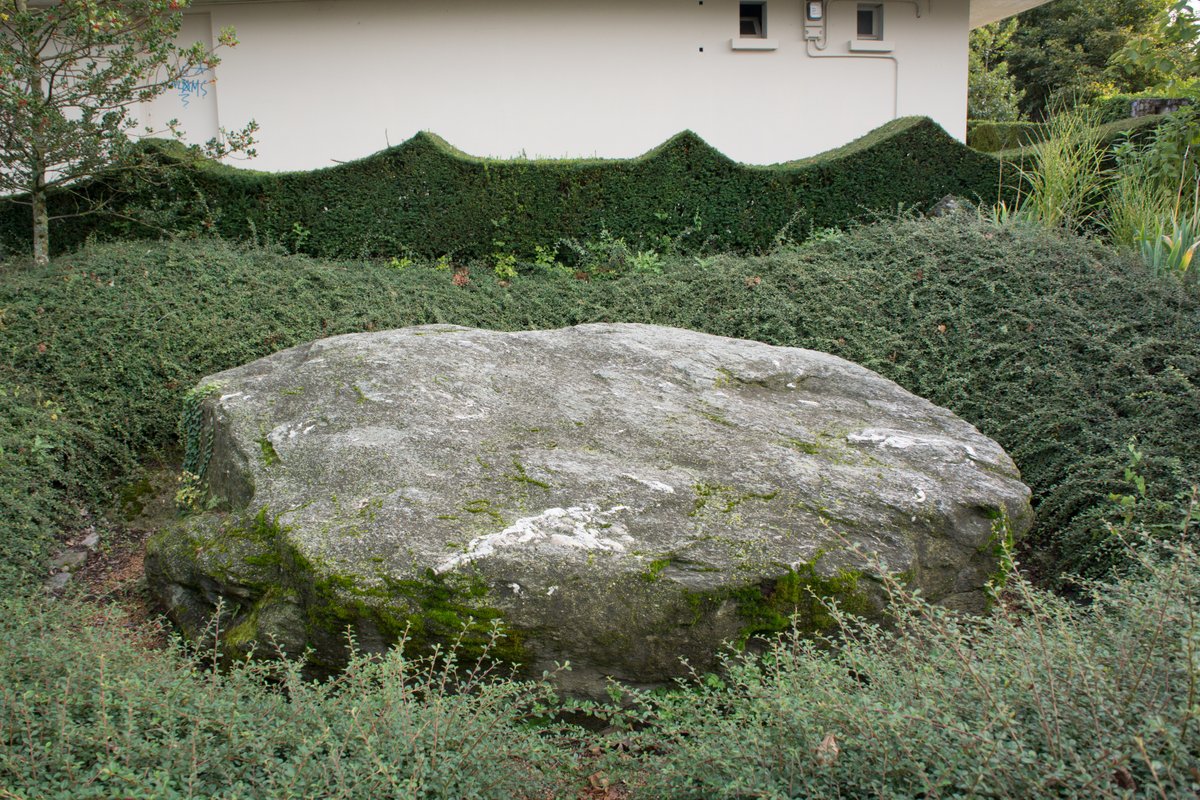
Have you ever wondered what happens when you mix a massive prehistoric accident with medieval military ambition? The result is the Tour des Comtes de Genève. It sits atop a gargantuan erratic block, a glacial deposit transported by the Mont-Blanc glacier approximately 10,000 years ago. This rock is the namesake of the town of La Roche-sur-Foron, where the fortress once defended access to the Foron valley.
The builders exploited a natural fissure in this imposing rock to create four stacked natural cellars. While the builders walled the fissure on the exterior, they subdivided the interior to create these storage spaces. Above this geological feature, the donjon itself was constructed with three floors.
The tower, likely erected in the second quarter of the 13th century, was one of the first circular towers built in Savoie. This circular architecture represented a significant military advancement at the time, as it eliminated the blind spots created by traditional square walls.
After centuries of being seized and besieged, the fortress was eventually ravaged during a night raid in 1590. Today, only the masonry of the donjon remains, standing as a remnant of the medieval fortification built into the natural landscape.
Sources: Wikipedia, OpenStreetMap, Wikidata, Wikimedia Commons
Written by Nicolo Ciampini
Discuss this with the author and others
No comments yet. Be the first to start the conversation.