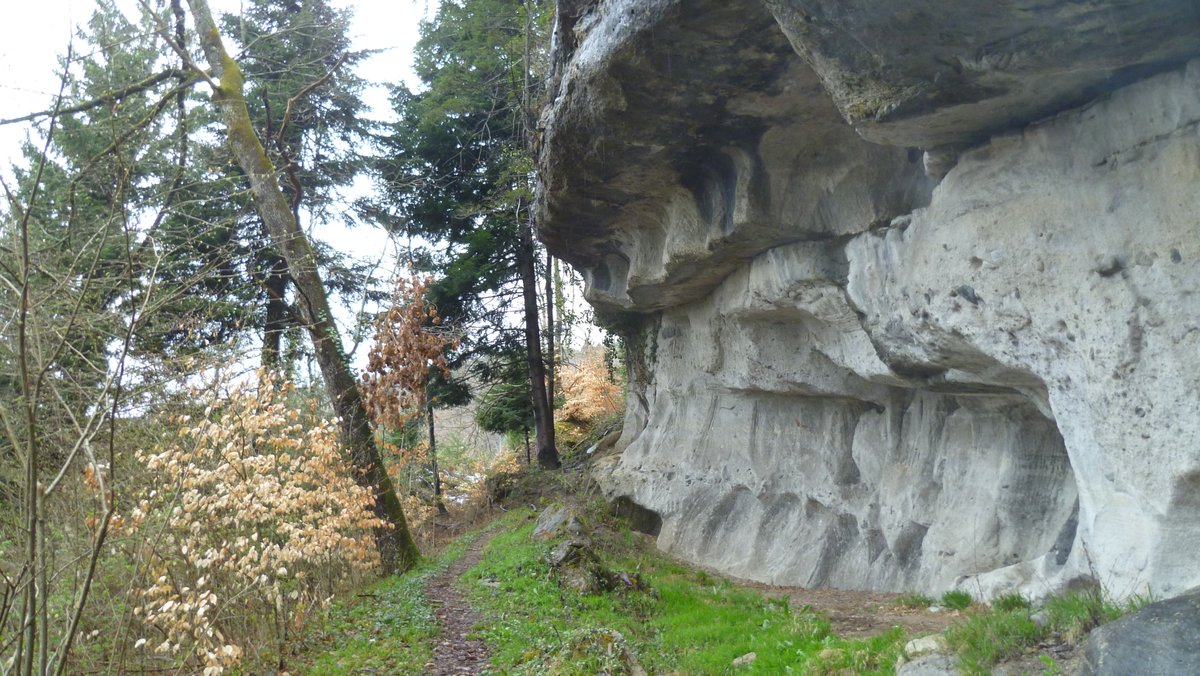

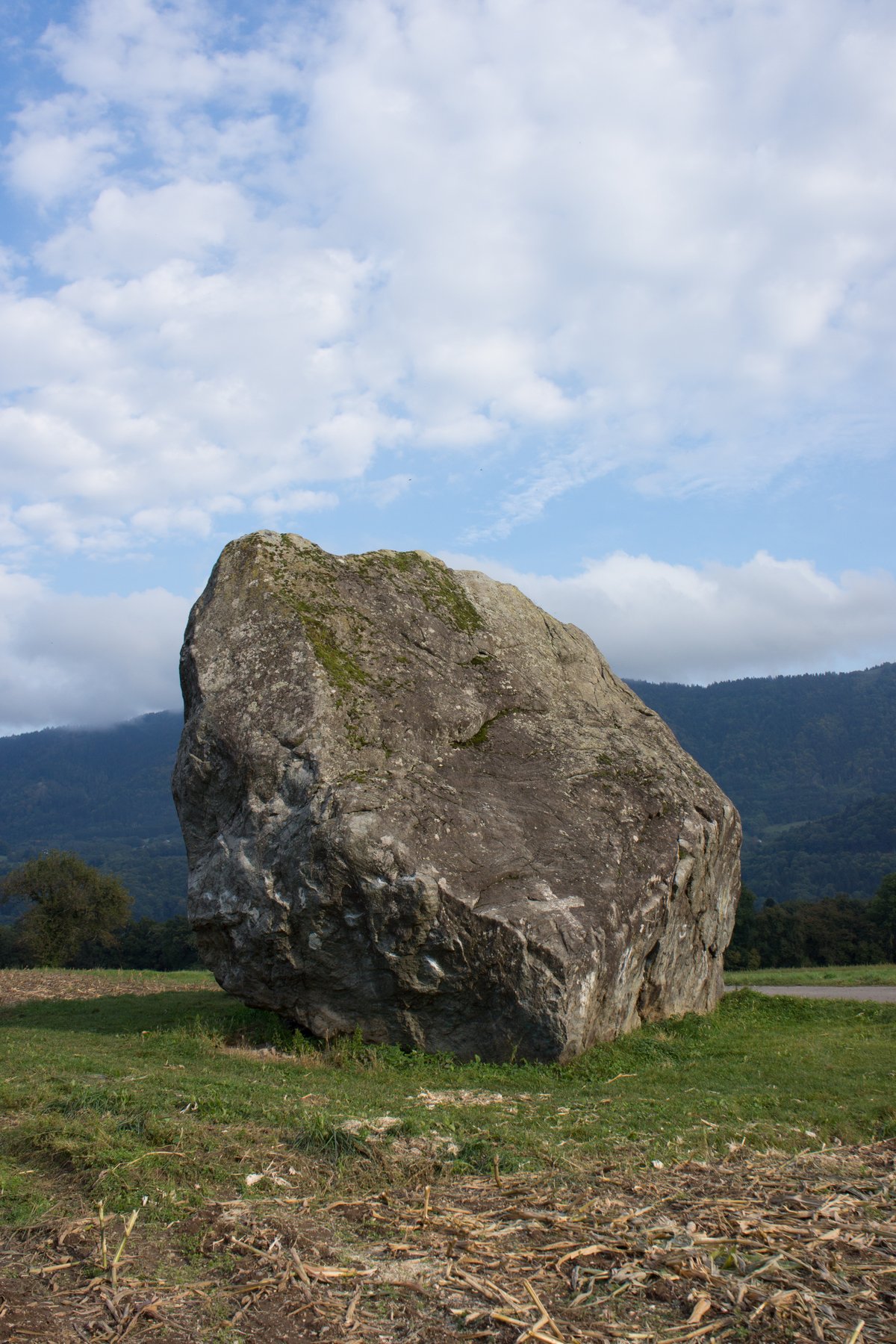
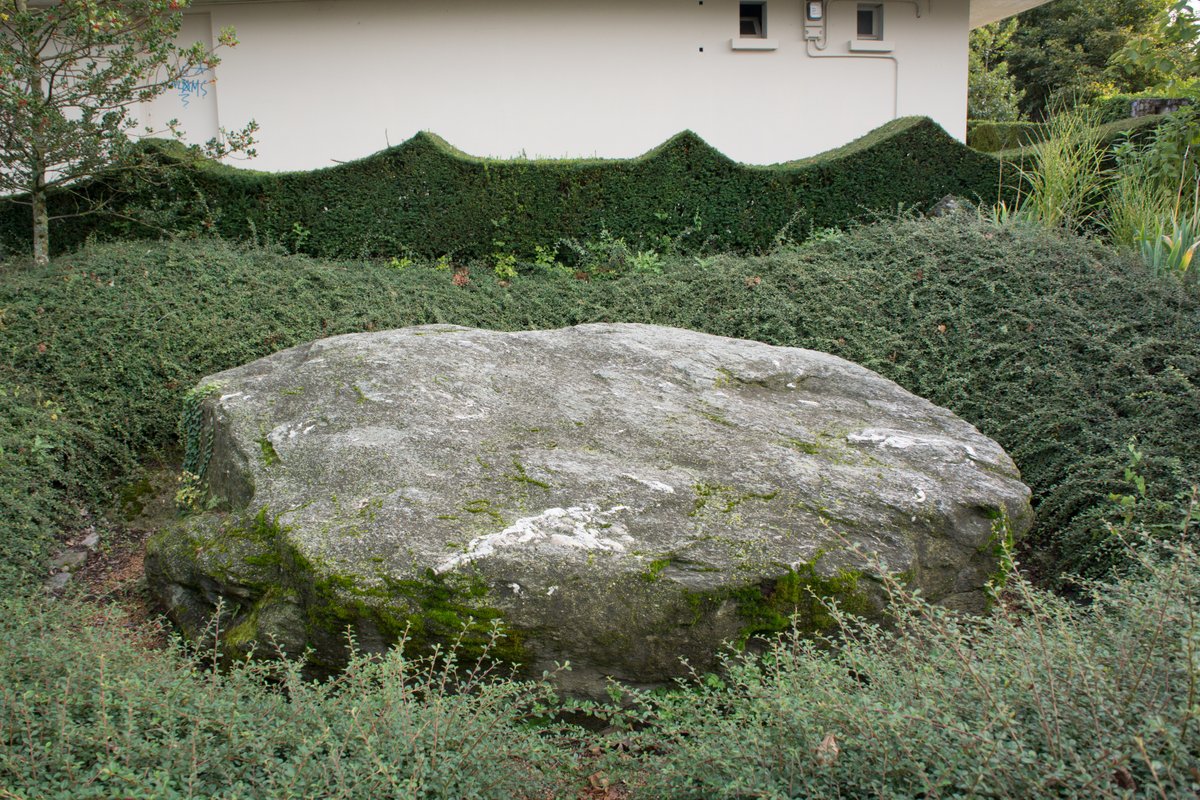
Located in the commune of Saint-André-de-Boëge in Haute-Savoie, the Meulières de Saint-André-de-Boëge consist of a group of seven quarries. One is situated within a erratic block called Rocher de la Gouille au Mort, while the others are at the foot of a cliff at the base of a rocky outcrop. Millstone positions are still visible today. According to Alain Belmont, a professor of modern history at the University Pierre Mendès France in Grenoble, this site - along with the nearby Meulières du Mont Vouan - is one of the most important grain mill stone extraction sites identified in Europe.
Radiating from the Mont Vouan to the rocks of the Balmes and Roche Parée at La Molière, 72 extraction sites have been identified where several hundred thousand millstones were extracted. Carbon 14 dating places the start of systematic exploitation at the beginning of the 13th century, though the smallest millstones date back to the Roman era. This was a significant economic activity; the price of a single millstone, once extracted, delivered, and installed at a mill, could reach the cost of a house.
Historical engravings show the transport of these stones was carried out by a 'fardié' - a cart pulled sometimes by four horses and two oxen. The exploitation of the site ceased in the 19th century. Today, the site is classified as a monument historique. It also features a small chamber forming a sort of oratory with religious motifs, a type of decor that is particularly rare in Europe. A path has been arranged to facilitate visits to the site.
Sources: Wikipedia, OpenStreetMap, Wikidata, Wikimedia Commons


Written by Nicolo Ciampini
Discuss this with the author and others
No comments yet. Be the first to start the conversation.