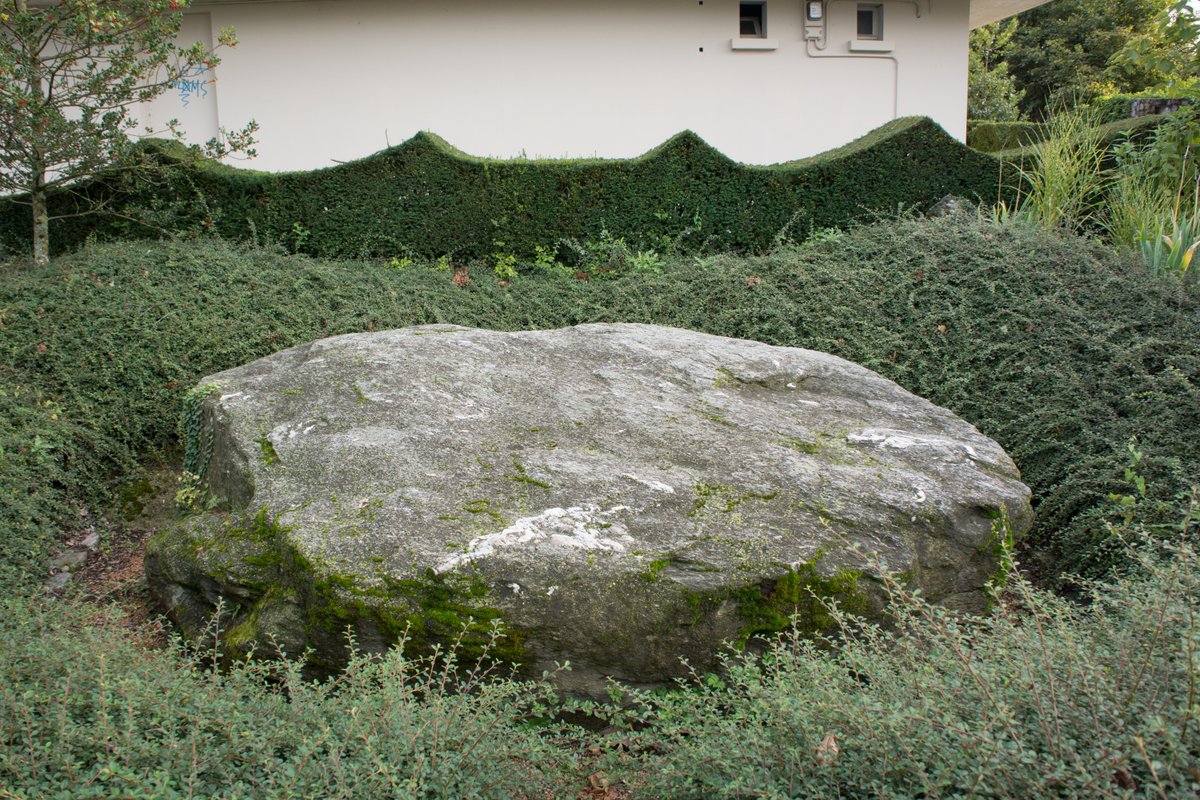

Nestled amidst the charming backdrop of Anthy-sur-Léman, France, there resides a peculiar relic called the Pierre des Sacrifices. This peculiar monolith, 4 meters wide by 3 meters long and standing tall at 1.1 meters, leans towards the Léman. Since 1907, it's been a monument historique, protected under Unesco's Géoparc mondial du Chablais and the inventaire du géopatrimoine communale d’Anthy-sur-Léman. Yet, what sets this stone apart from its mundane counterparts is the elaborate carvings on its exterior.
these 44 cupules from the Neolithic era number among its decor, varying in size from 1 to 8 cm in diameter and 5 mm to 4 cm in depth. Their purpose or symbolism remains as slippery as an eel playing peek-a-boo in the dusk, with theories aplenty but none yet proven. One theory postulates that nine of these cupules depict the constellation of the Great Bear, while others suggest they are marks of a fertility cult or agriculture. Regardless, these cryptic symbols puzzle historians and dilettantes alike, questioning if they hold a lost key to the past or a cosmic conundrum awaiting resolution.
The Pierre des Sacrifices stands as a testament to the puzzling past that rests beneath Anthy-sur-Léman, a tantalizing hint that not all secrets have made their final rest.
Sources: Wikipedia, OpenStreetMap, Wikidata, Wikimedia Commons
Written by Nicolo Ciampini
Discuss this with the author and others
No comments yet. Be the first to start the conversation.