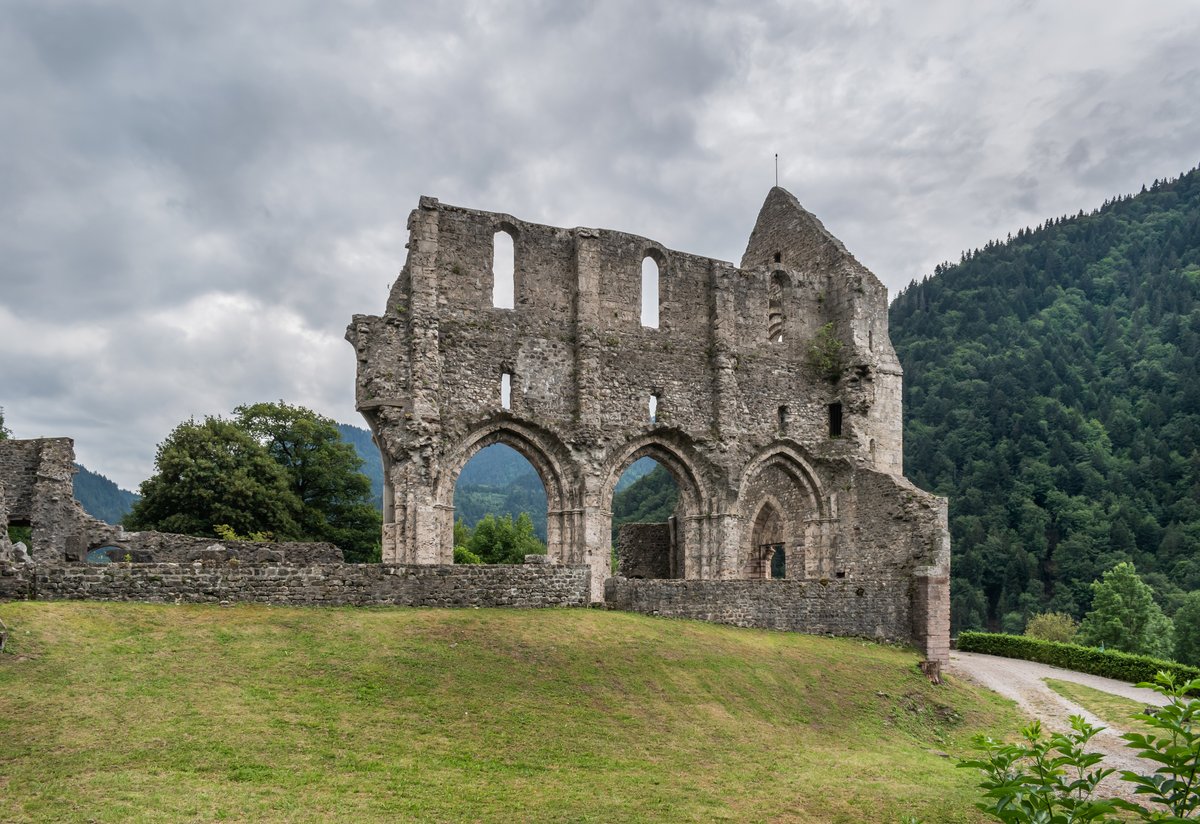

Nestled in the French Alps, Aulps Abbey emerged in the final months of the 11th century, the domain of a troupe of monks originating from Molesme Abbey in Burgundy, including Guarinus from Sitten, who later became the second abbot and rose to sainthood as Saint Guarinus. The name derives from the Latin word alpibus, meaning "mountain pastures". In 1961, the name of the village was changed from St Jean d'Aulph to St Jean d'Aulps.
From the care of the Cistercian Order since 1136, the abbey became a revered destination for pilgrims seeking Saint Guarinus' relics. The abbey held significant influence throughout the Chablais, Faucigny and Jura regions; its abbots were the right-hand men of the Counts of Savoy and lords of Faucigny, and some eventually became bishops.
In 1792, the French invaded the Savoy, driving out the final monks. The abbey was formally suppressed in 1793. By 1823, the inhabitants of Saint-Jean-d'Aulph decided to reconstruct a burned-out parish church nearby and used the abandoned monastery as a quarry for the stone. The abbey's estate, under the ownership of Ernest Tavernier, managed to preserve the remains by having the site listed as a "monument historique" in 1902.
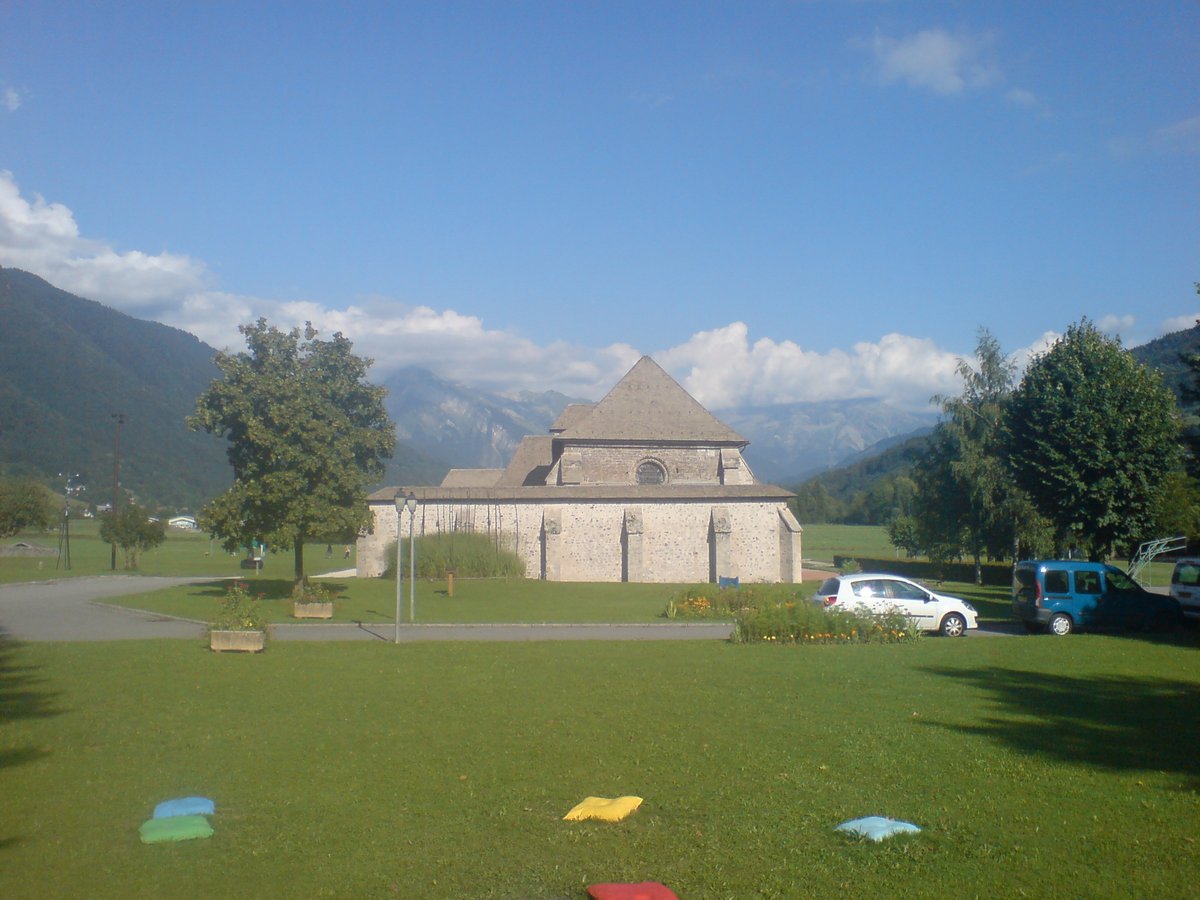
Today, the three-hectare property showcases agricultural structures, cellars, a gatehouse, and a medicinal garden. The church's facade remains standing as a monument historique. Inside, the nave and the side aisles were roofed with ribbed vaults. The third level is entirely occupied by a rose window centred under a vast load-bearing arch, supported by corniced columns.
Sources: Wikipedia, OpenStreetMap, Wikidata, Wikimedia Commons

Written by Nicolo Ciampini
Discuss this with the author and others
No comments yet. Be the first to start the conversation.