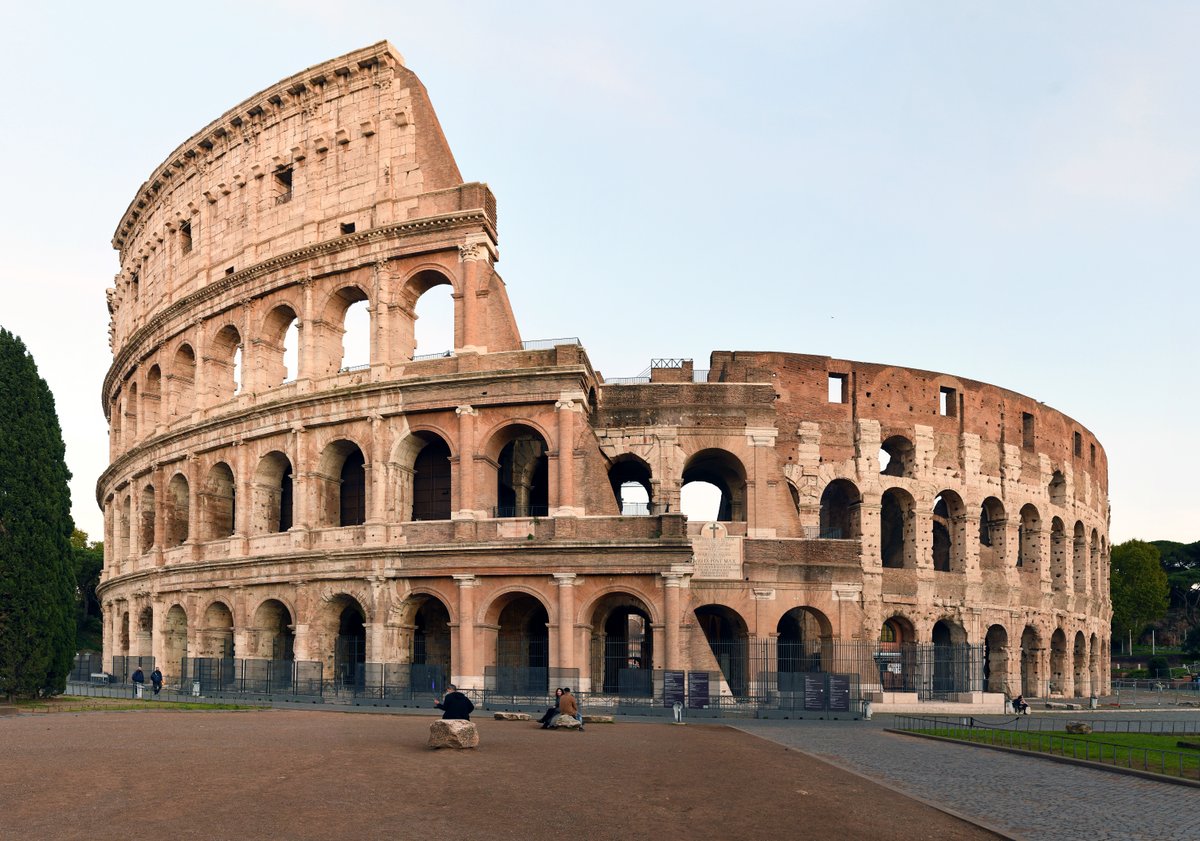

Situated in the heart of Rome, the Colosseum boasts a striking elliptical design, dubbed as the largest ancient amphitheater ever built and the largest standing one today. Commissioned under the Flavian Emperors - Vespasian (reigned 69-79 AD), Titus (79-81), and Domitian (81-96) - this architectural marvel served an astounding estimated 80,000 spectators in its different eras, counting an average of 80,000 souls at a time. It wasn't just for gladiatorial combats, but also hosted various spectacles like animal hunts, battle reenactments, Roman mythology-inspired dramas, brief mock sea battles, as well as being repurposed over time for residential use, workshops, quarters for a religious order, a fortress, a quarry, and a Christian shrine.
Despite battles with earthquakes and stone thieves, the Colosseum persists as a symbol of Imperial Rome, landing among the New 7 Wonders of the World. Today, it remains one of Rome’s most beloved tourist attractions and graces the Italian version of the 5-euro cent coin, offering visitors a taste of the grandeur of the past with every visit.
Sources: Wikipedia, OpenStreetMap, Wikidata, Wikimedia Commons
Written by Nicolo Ciampini
Discuss this with the author and others
No comments yet. Be the first to start the conversation.