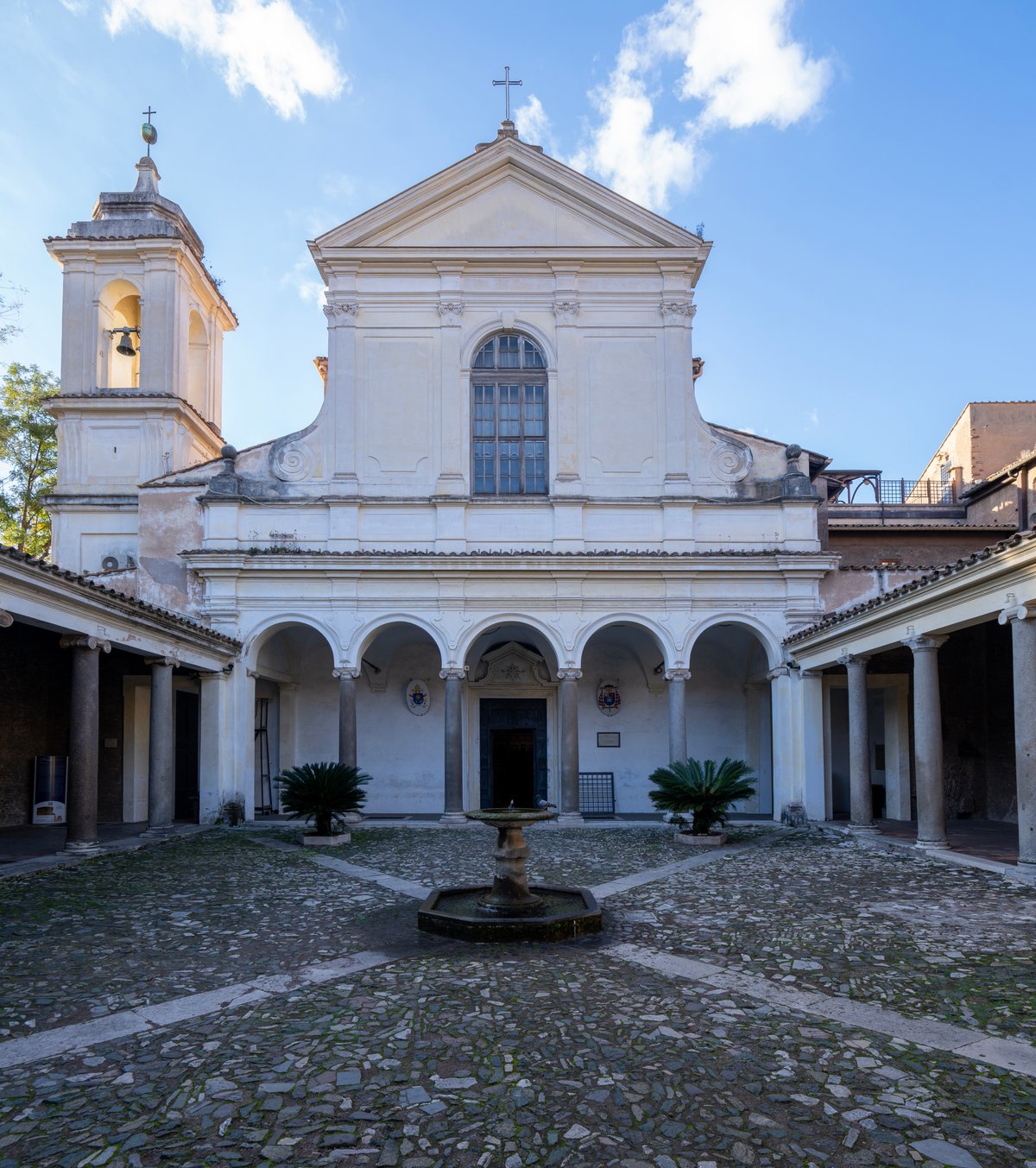

Located in the heart of Rome, the Basilica of Saint Clement (Italian: Basilica di San Clemente al Laterano) is a Latin Catholic minor basilica dedicated to Pope Clement I. Beneath the present basilica, which was built just before the year 1100, lies a hidden world of Rome’s ancient past. The home of a Roman nobleman, who lived on the site in the 4th century, was built on the foundations of a republican era villa and warehouse destroyed in the Great Fire of AD 64.
In the 1st century, the home briefly served as a Christian meeting place, and in the 2nd century, it briefly served as a mithraeum, a place of worship for the religion of Mithraism. However, it's important to note that these uses were only for brief periods.
The basilica remains one of the most richly adorned churches in Rome, with its interior filled with frescoes that tell the story of St Clement and other early saints. One of the most famous treasures of the basilica is the Sol statue, a figure of the Roman sun god kept in the sanctuary in a niche near the entrance in the 2nd century. Another treasure is the Mithraeum, a Roman shrine discovered in the courtyard of the insula, the residential complex built on top of the Roman nobleman’s house in the 3rd century.
The main cult room of the Mithraeum was discovered in 1867 but could not be investigated until 1914. The exedra of the main room was trimmed with pumice to render it more cave-like. An altar was found in the main room, with a tauroctony relief on the front. The torchbearers Cautes and Cautopates appear on respectively the left and right facing sides of the altar. A dedicatory inscription from the 1st century identifies the donor as one pater Cnaeus Arrius Claudianus.
Please note that the architect of the facade is Carlo Stefano Fontana, not Carlo Fontana as previously mentioned. The repetition of the basilica being filled with frescoes has also been eliminated.
Sources: Wikipedia, OpenStreetMap, Wikidata, Wikimedia Commons
Written by Nicolo Ciampini
Discuss this with the author and others
No comments yet. Be the first to start the conversation.