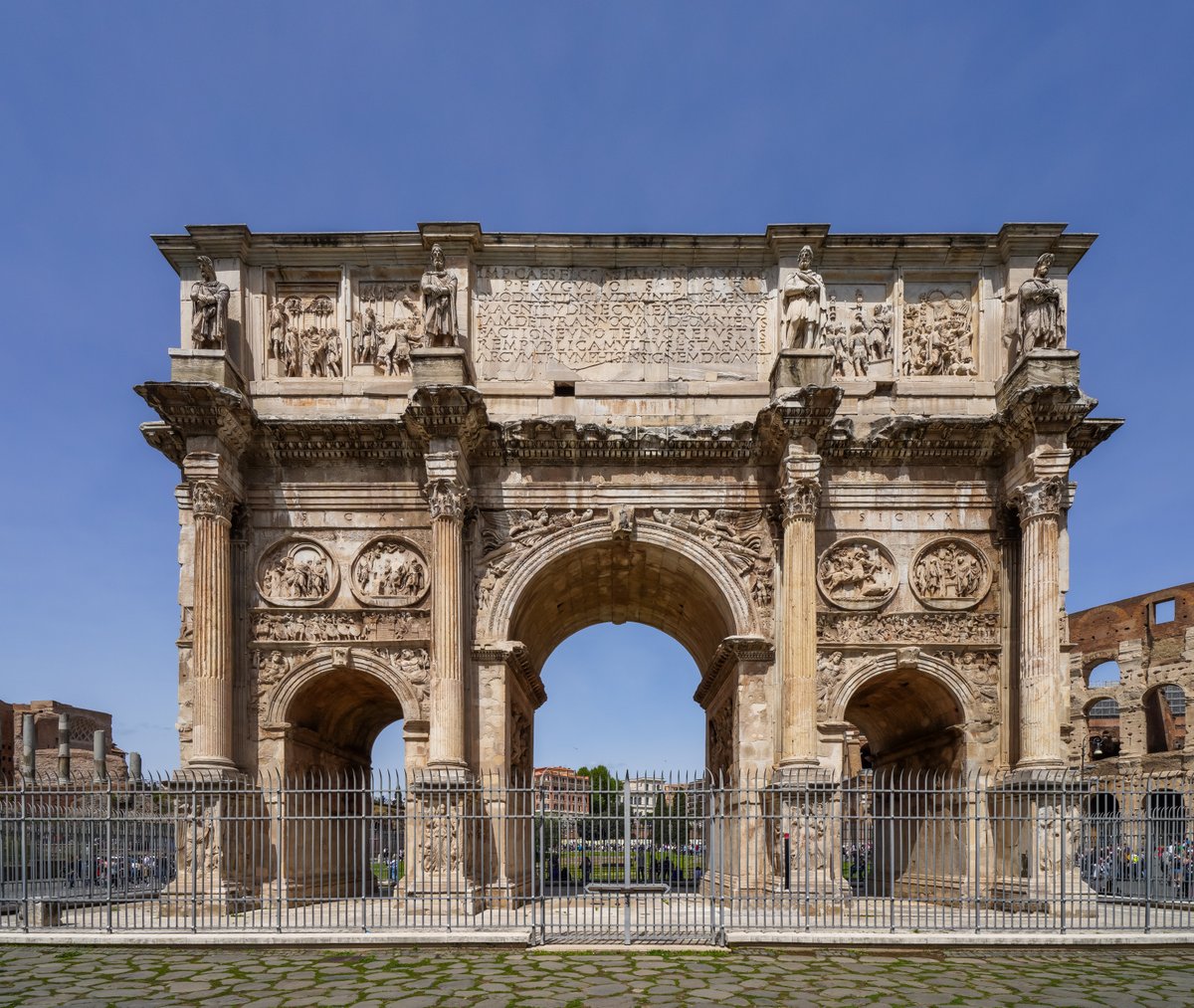

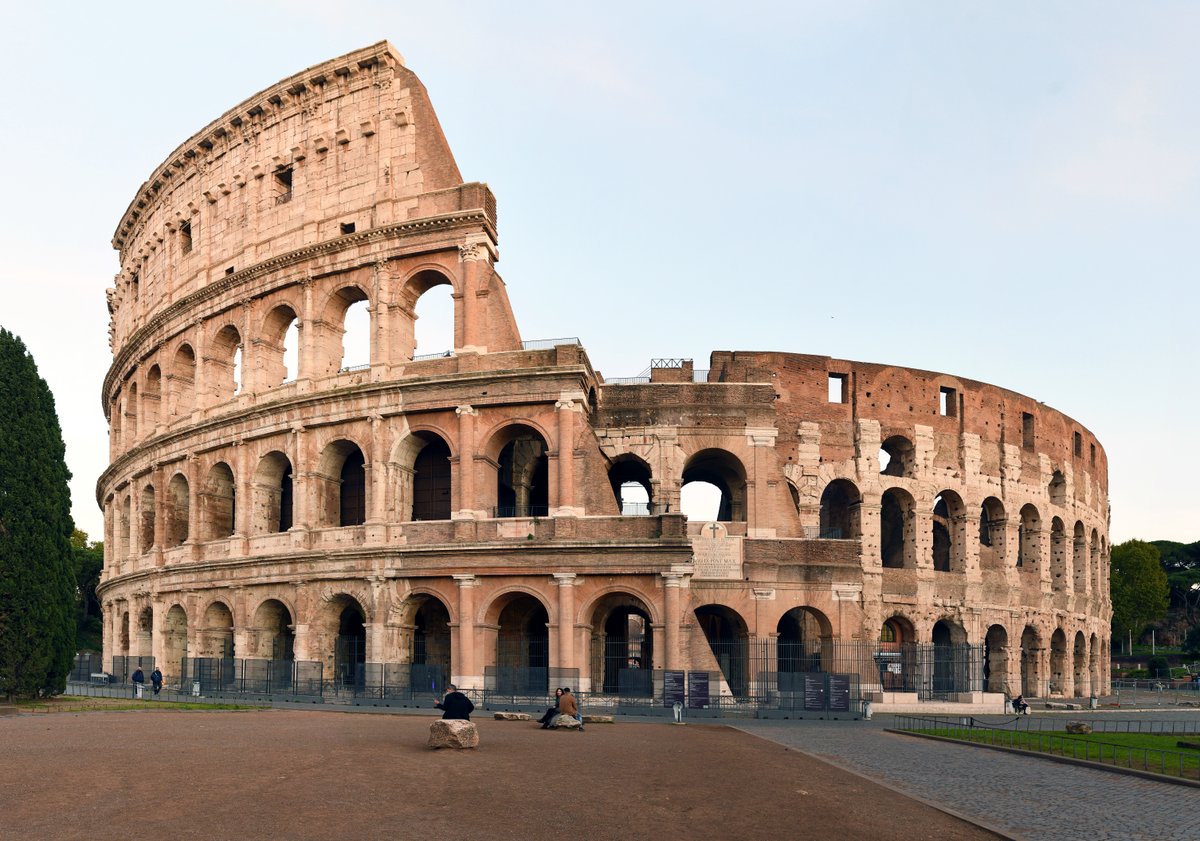
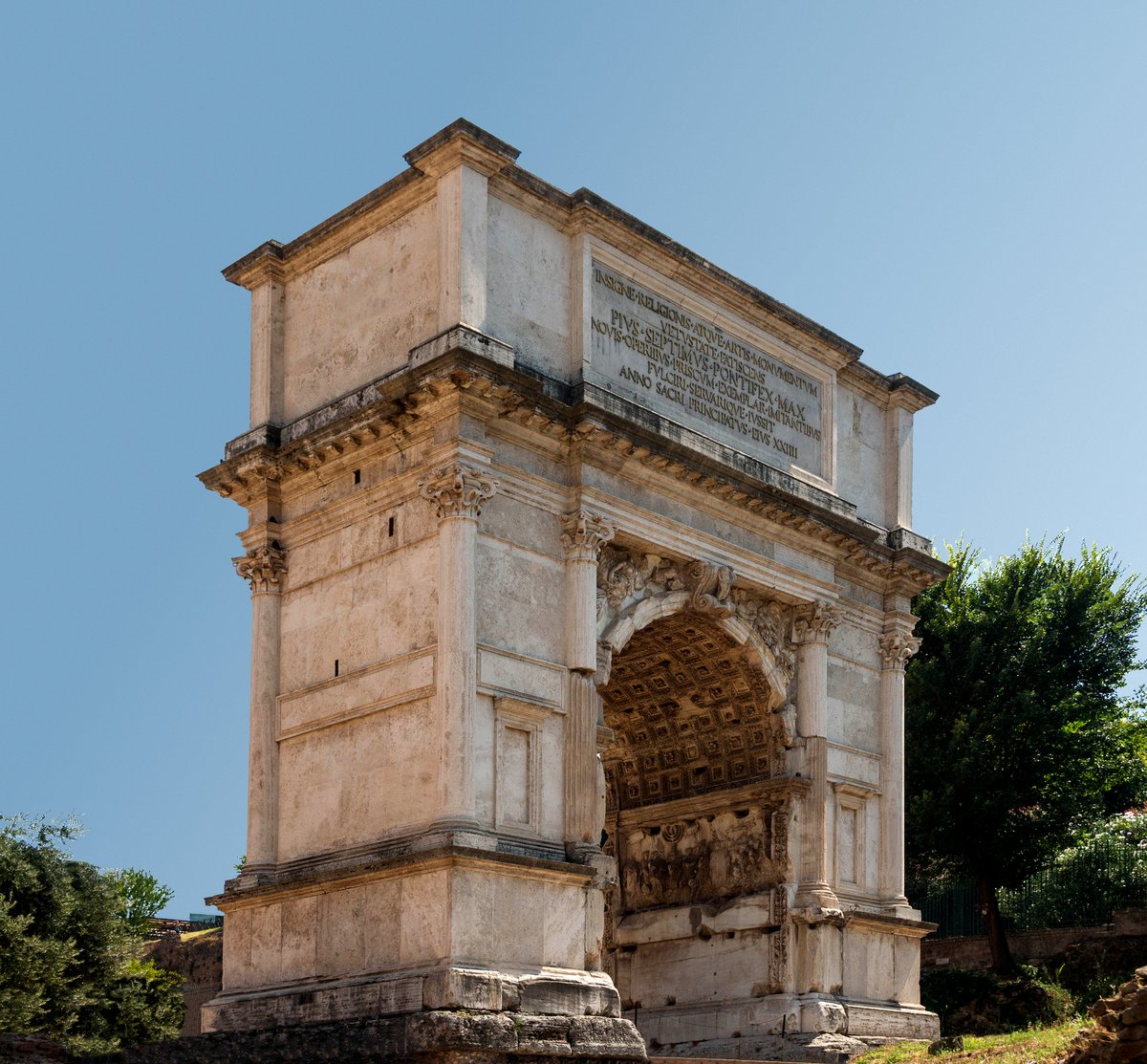
The Arch of Constantine is a triumphal arch in Rome dedicated to the emperor Constantine the Great. Commissioned by the Roman Senate, it commemorates Constantine's victory over Maxentius at the Battle of the Milvian Bridge in AD 312. Situated between the Colosseum and the Palatine Hill, the arch spans the Via Triumphalis, the route taken by victorious military leaders when they entered the city in triumphal procession. Dedicated in 315, it is the largest Roman triumphal arch, standing 21 m high, 25.9 m wide, and 7.4 m deep.
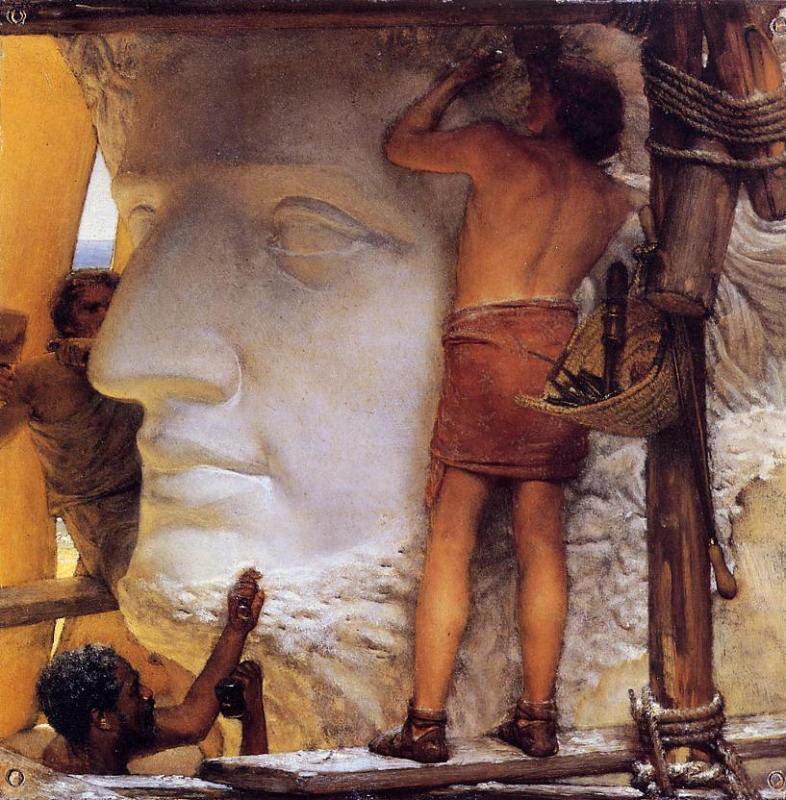
The arch is constructed of brick-faced concrete covered in marble. While it was dedicated to Constantine, much of the sculptural decoration consists of reliefs and statues removed from earlier triumphal monuments dedicated to Trajan, Hadrian, and Marcus Aurelius. The portrait heads were replaced with those of Constantine, resulting in a mixture of sculptural styles that has been a subject of discussion among art historians.
Construction took place between 312 and 315. The Senate commissioned the monument to celebrate Constantine's victory and his decennalia, a series of games and prayers held every decade of his reign. Although Constantine entered Rome in October 312 amidst great rejoicing, he left the city within two months and did not return until 326. The arch served as the finish line for the marathon during the 1960 Summer Olympics and suffered damage from a direct lightning strike on 3 September 2024.
Historians debate the exact origins of the monument, with some suggesting it may have been a reworked work from the time of Hadrian or even started by Maxentius. Recent scholarship considers it primarily a senatorial commission designed to be compatible with Constantine’s political image. The arch's placement was a deliberate part of Constantinian urban design, connecting the Circus Maximus to the Forum Romanum.
Sources: Wikipedia, OpenStreetMap, Wikidata, Wikimedia Commons
Written by Nicolo Ciampini
Discuss this with the author and others
No comments yet. Be the first to start the conversation.