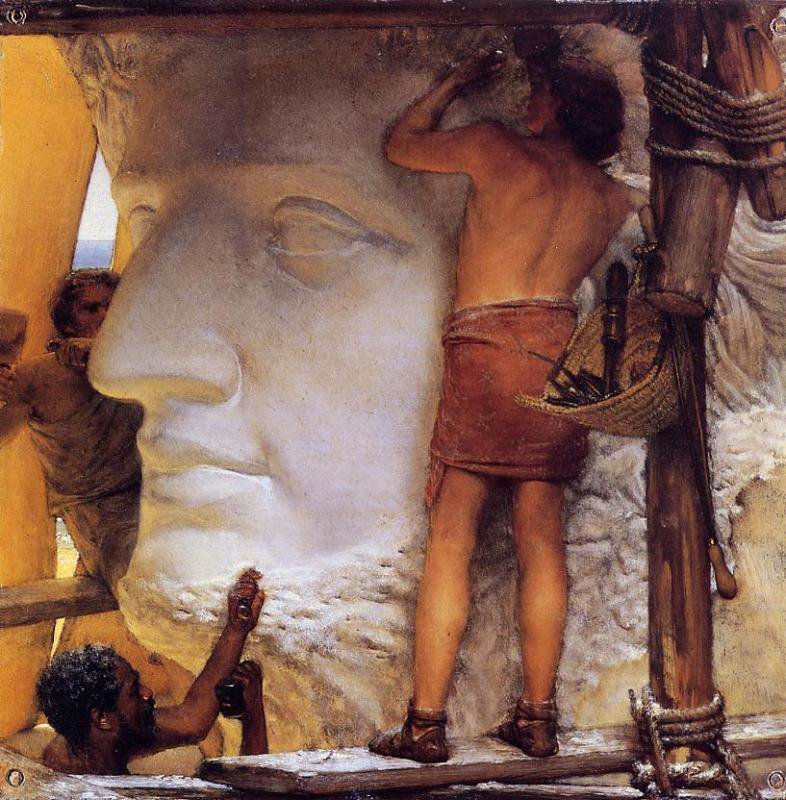

Under Roman Emperor Nero, between AD 64 and 68, Zenodorus, a Greek architect, crafted the Colossus Solis, a 30.3-meter (99 feet) statue of Sol, the sun god. Instead of standing outside the Domus Aurea's main entrance, this colossal testament to Nero's ego was placed in a large atrium of porticoes separating the city from his private villa. Emperor Vespasian, after assuming power, added a radiate crown to the statue. But what transpired after Nero's AD 68 demise?
The statue was temporarily transported just northwest of the Flavian Amphitheatre, and later, it was transformed into the Colossus Solis by Nero's successors. Alas, the statue vanished, possibly during the Sack of Rome in 410 or as the result of fifth-century earthquakes, with its metal recycled. Today, only the foundations of its marble pedestal, unearthed in 1986, serve as a reminder. And, in a twist of fate, the name of the Roman amphitheatre, the Colosseum, is derived from the Colossus Solis.
Bede penned a well-known epigram on the statue, often mistakenly referencing the Colosseum. To rectify this misquote, the correct title for the statue should be 'Colossus Neronis'.
Sources: Wikipedia, OpenStreetMap, Wikidata, Wikimedia Commons
Written by Nicolo Ciampini
Discuss this with the author and others
No comments yet. Be the first to start the conversation.