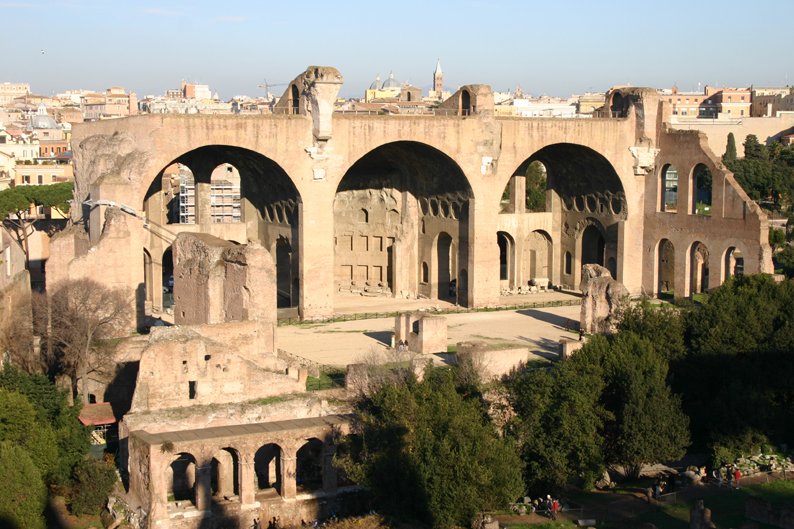

The Basilica of Maxentius was a structural pioneer in ancient Rome. As the largest building in the Forum and the last basilica built in the city, it utilized engineering techniques taken from the Markets of Trajan and the Baths of Diocletian. Instead of using columns to support the ceiling like other basilicas, it was built using arches, a feature more common in Roman baths.
Construction began under Maxentius in 308 AD and finished by Constantine I in 312 AD. The structure featured a central nave 80 metres long, covered by three groin vaults suspended 39 metres above the floor on four large piers. A folded roof was used to decrease the overall weight of the structure and the horizontal forces exerted on the outer arches. This radical architectural move eventually influenced the design of larger places of Christian worship and 19th-century transit hubs like New York City's former Penn Station.
Earthquakes in 847 and 1349 tore through the structure, causing the vault of the nave to collapse. Most of the central nave was destroyed, leaving only the north aisle with its three concrete barrel vaults standing. The ceilings of these barrel vaults show advanced weight-saving structural skill with octagonal ceiling coffers.
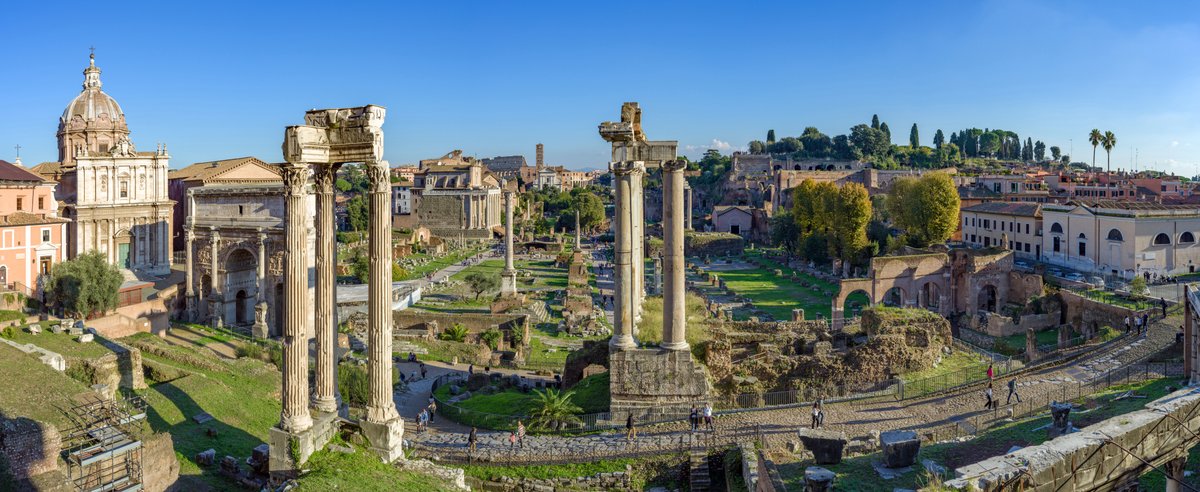
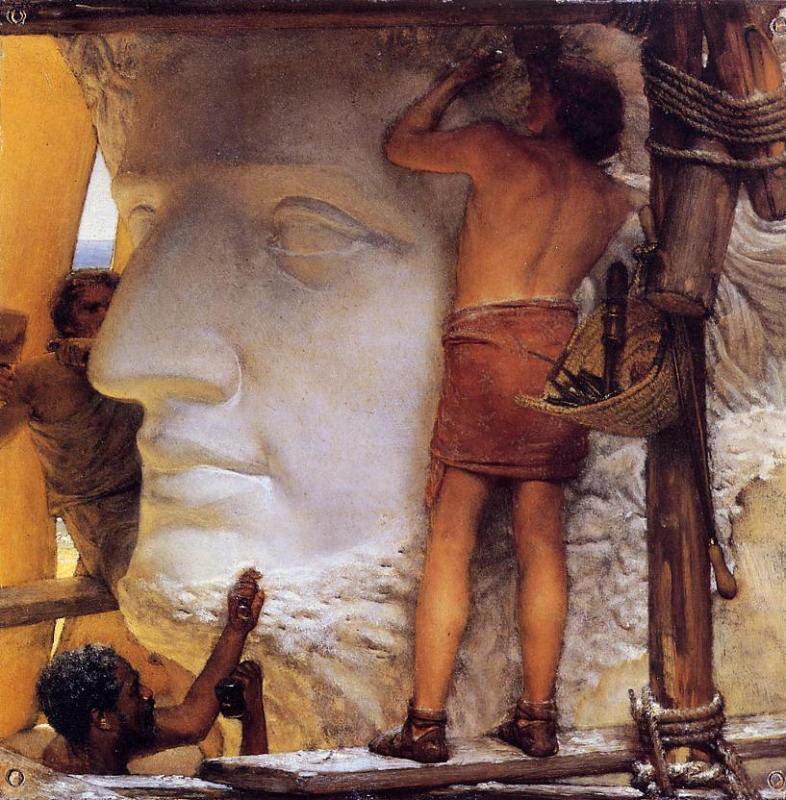
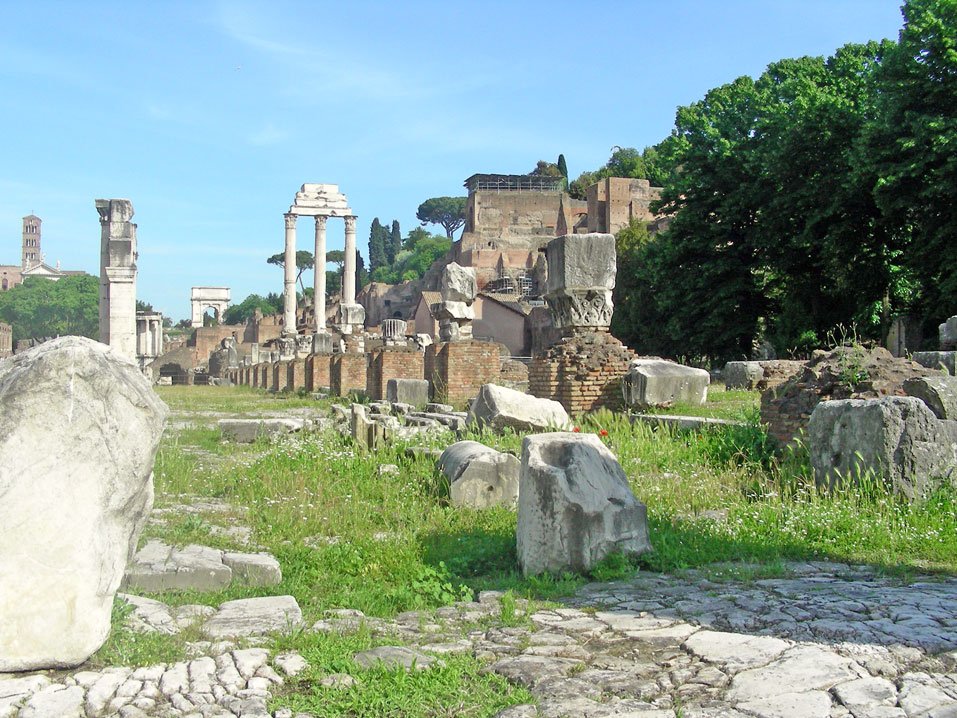
Today, the remaining north aisle stands as a testament to advanced Roman engineering. Visitors to the Roman Forum can view the ruins of this civic hall, which once featured a projecting porch on its south face and a colossal statue of Constantine in its western apse.
Sources: Wikipedia, OpenStreetMap, Wikidata, Wikimedia Commons
Written by Nicolo Ciampini
Discuss this with the author and others
No comments yet. Be the first to start the conversation.