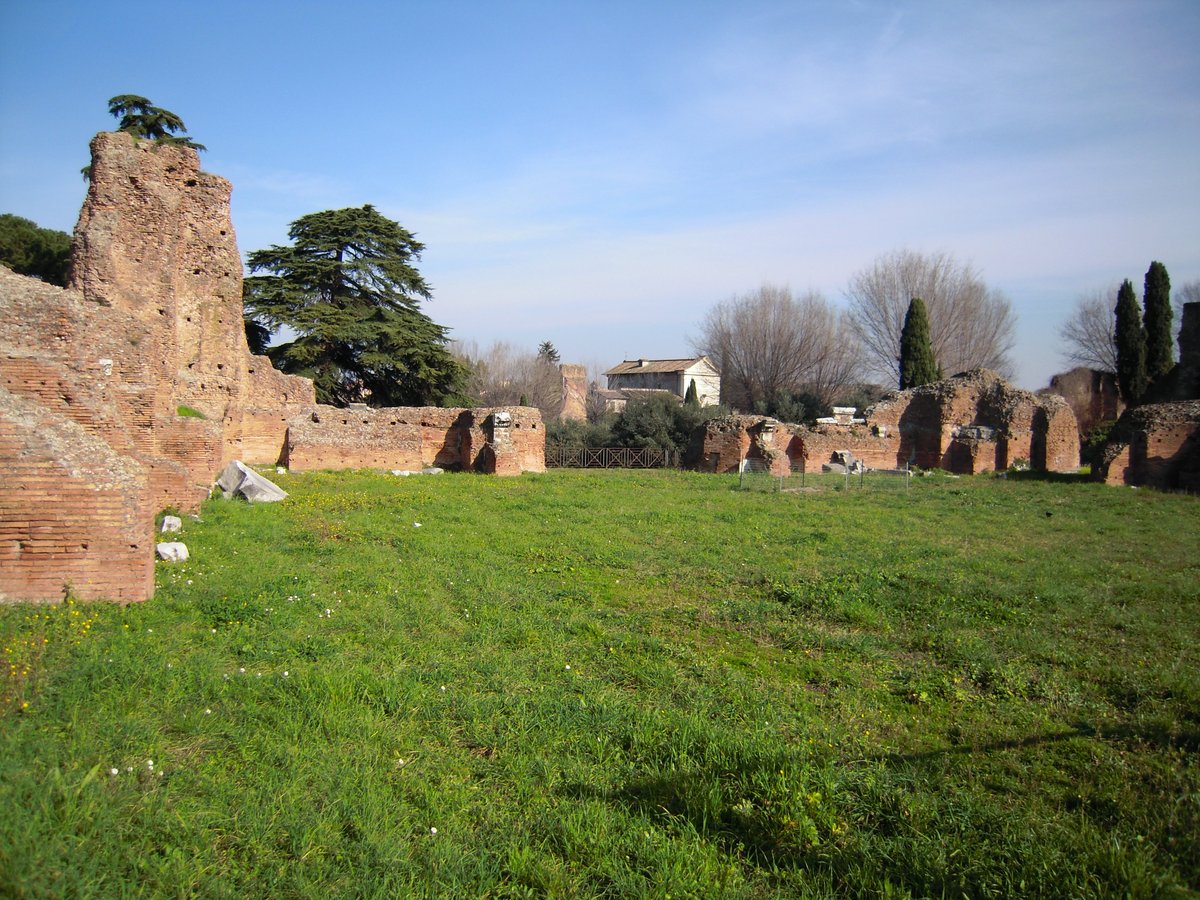

Once nestled within the walls of the Flavian Palace on the Palatine Hill in Rome, the Aula Regia was the revered venue for grand audiences and receptions. However, beneath this facade of imperial grandeur lies a hidden plot: this very hall was metamorphosed into a church, Santa Croce in Gerusalemme, that served as a repository for relics. Yet, let us ponder another Aula Regia, this time in Trier, Germany, constructed during the reign of Constantine the Great in 311.
The intrigue deepens; you see, this Aula Regia stands today as a testament to the art of imperial architecture, whereas its counterpart in Rome weakens like an old relic, transformed into a different kind of sacred space. The secret to understanding this divergence resides in the tale of Helena, Constantine's mother, who lived in Rome and, whispers say, converted a smaller aula within the Sessorium Palace into the church of Santa Croce in Gerusalemme, in order to house the relics she had procured from Jerusalem.
Sources: Wikipedia, OpenStreetMap, Wikidata, Wikimedia Commons
Written by Nicolo Ciampini
Discuss this with the author and others
No comments yet. Be the first to start the conversation.