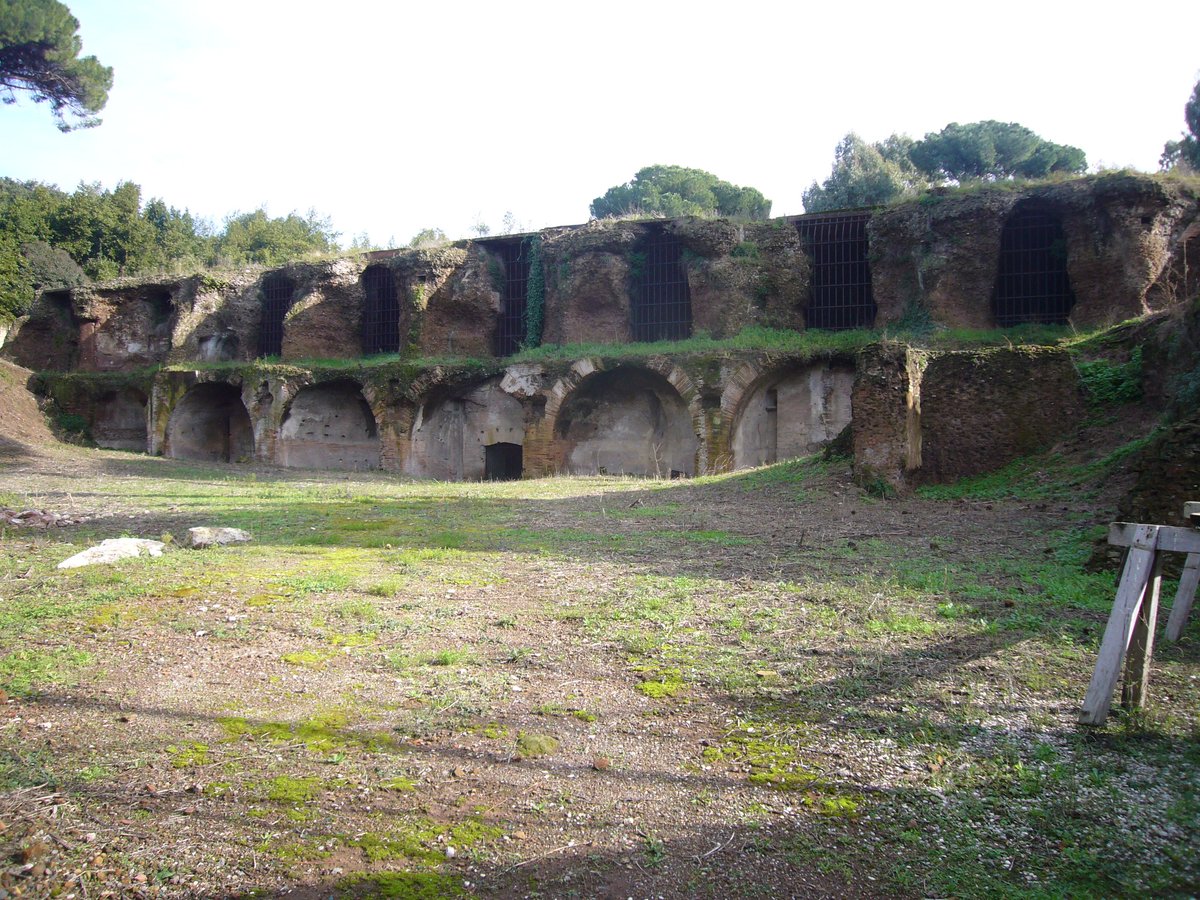

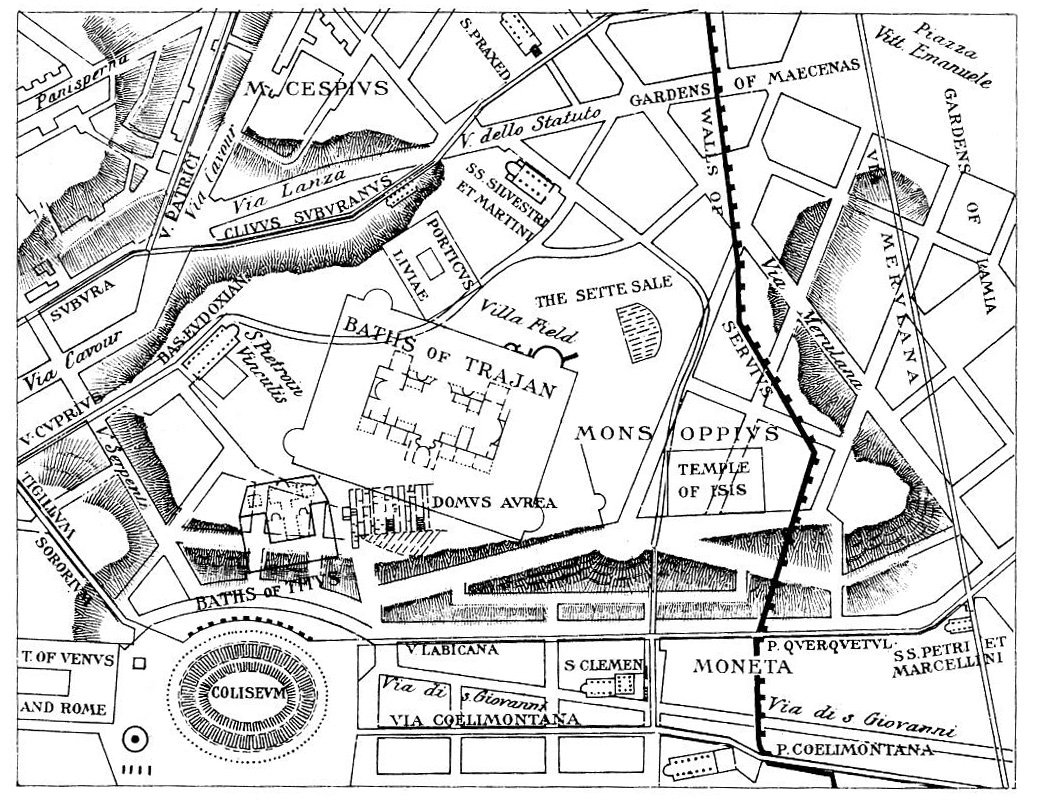
Why did the Romans build such a massive complex of cisterns for water? Because supplying the Baths of Trajan required serious volume. This complex, known as the Sette Sale, once held over 8 million litres. It was fed by a branch aqueduct that came from the Esquiline Hill.
It is called the Seven Halls because, when the complex was noted in the mid-eighteenth century, only seven chambers were recognised. In reality, there are two levels of nine parallel compartments each. These are more than 5 metres wide and 30 to 40 metres long. The lower level is a cryptoporticus supporting the true reservoir on the upper level, which was high enough for water to flow out with enough pressure to supply the Baths. The compartments' walls and floors were lined with waterproof plaster.
For a long time, people thought it belonged to the Domus Aurea because of its orientation. However, the many brick stamps found in its wall prove that it was built at the same time as the Baths. In the Middle Ages, the northernmost chambers were used as catacombs and more than a thousand skeletons were discovered here during the 1967 excavations.
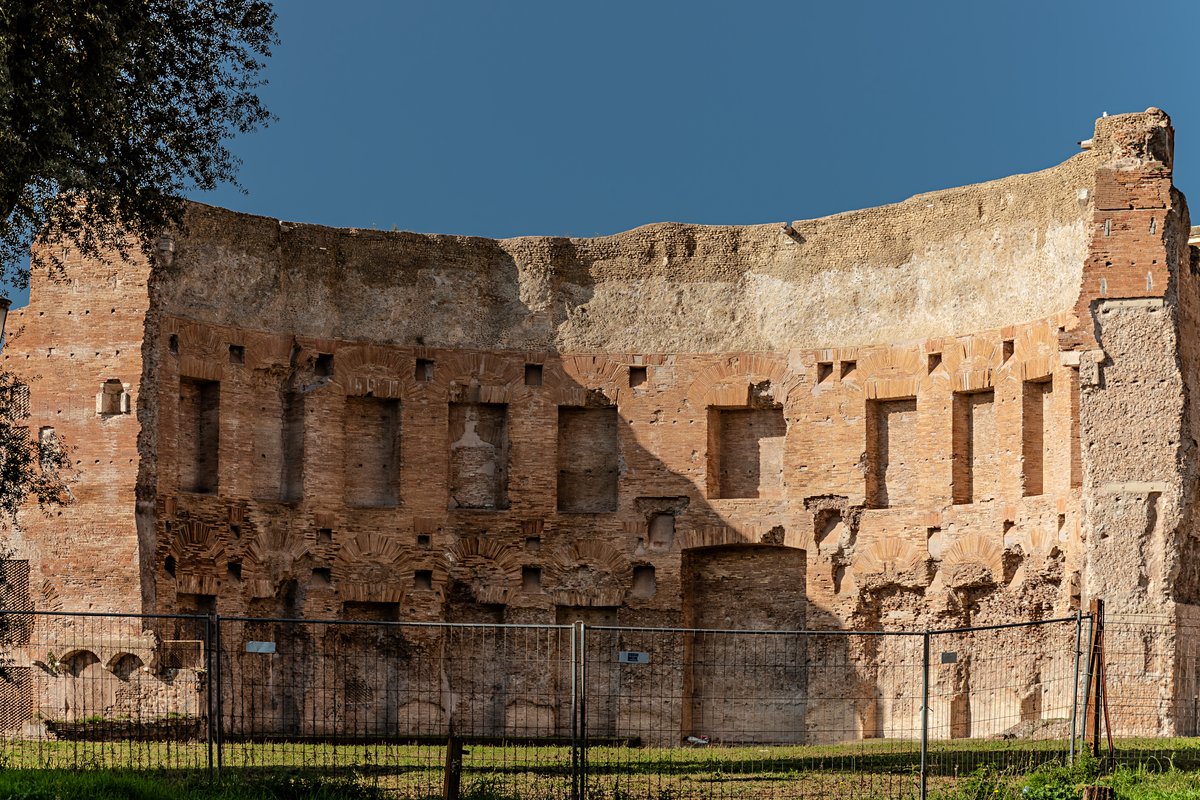
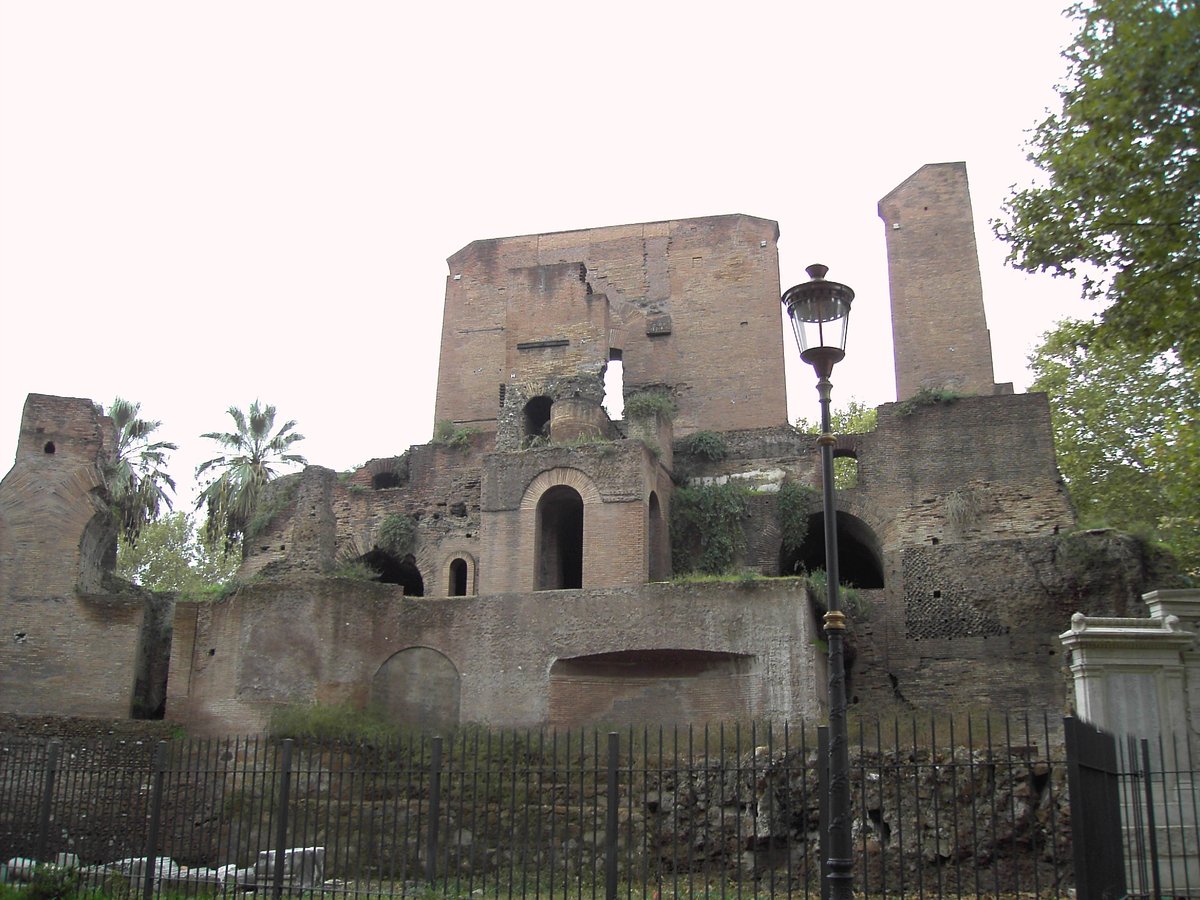
Located at the edge of the park, the cistern is well preserved. Visitors can see the impressive straight front wall with alternating rectangular and semicircular niches. Large openings in the niches of the upper level provided ventilation, while water flowed out of pipes in the low-level niches into a large pipe found in front of the northeastern exedra of the Baths.
Sources: Wikipedia, OpenStreetMap, Wikidata, Wikimedia Commons
Written by Nicolo Ciampini
Discuss this with the author and others
No comments yet. Be the first to start the conversation.