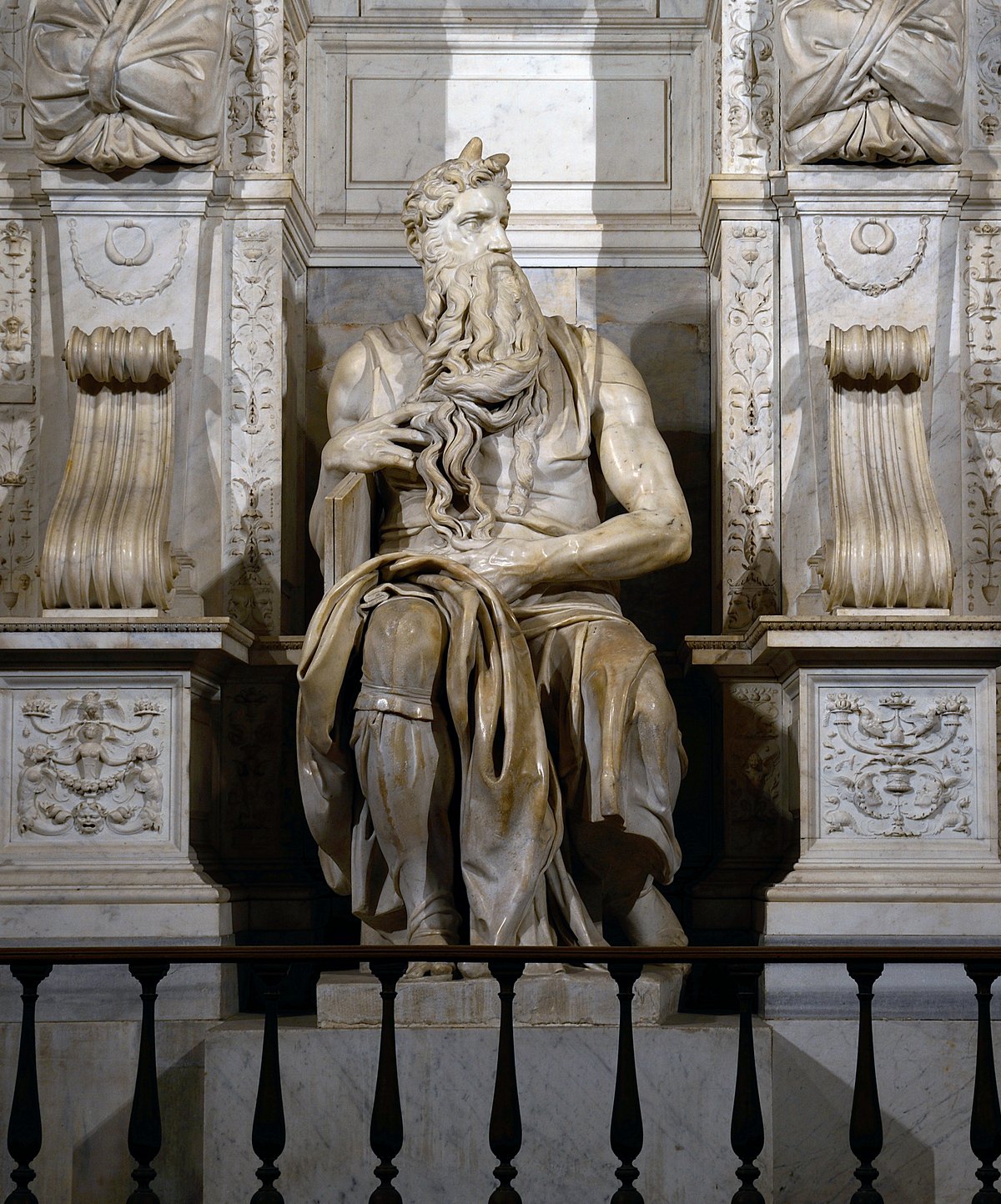

Moses (Italian: Mosè), a stone sculpture carved between 1513 and 1515, is housed in the Basilica of San Pietro in Vincoli in Rome. Commissioned by Pope Julius II for his tomb, the work portrays the biblical figure with horns on his head. This detail stems from a description in chapter 34 of Exodus in the Vulgate, the Latin translation of the Bible used at the time. While some scholars believe the use of horns may hold an antisemitic implication, others hold that it is simply a convention based on a translation error.
Sigmund Freud's interpretations of the statue from 1916 are particularly well-known, noting a demonic force and a beautiful figure with emotional intensity as God's word is revealed. The delicacy of features such as the flowing hair is seen as a remarkable technical achievement, but Freud argues that Michelangelo goes beyond mere skills to provoke curiosity in the viewer. He asks why Moses plays with his hair and why he is presented with horns.
The sculpture shows Moses seated, his body facing forward with a mighty beard looking to the left. His right arm links the stone tablets bearing the Commandments with something that looks like a book, while his left arm lies in his lap. The statue is noted for its vitality and the ropy, smoky coils of the beard. Michelangelo used these elements to give the figure an inhuman, demonic aspect that leads the viewer from formal to intellectual surprise.
Sources: Wikipedia, OpenStreetMap, Wikidata, Wikimedia Commons
Written by Nicolo Ciampini
Discuss this with the author and others
No comments yet. Be the first to start the conversation.