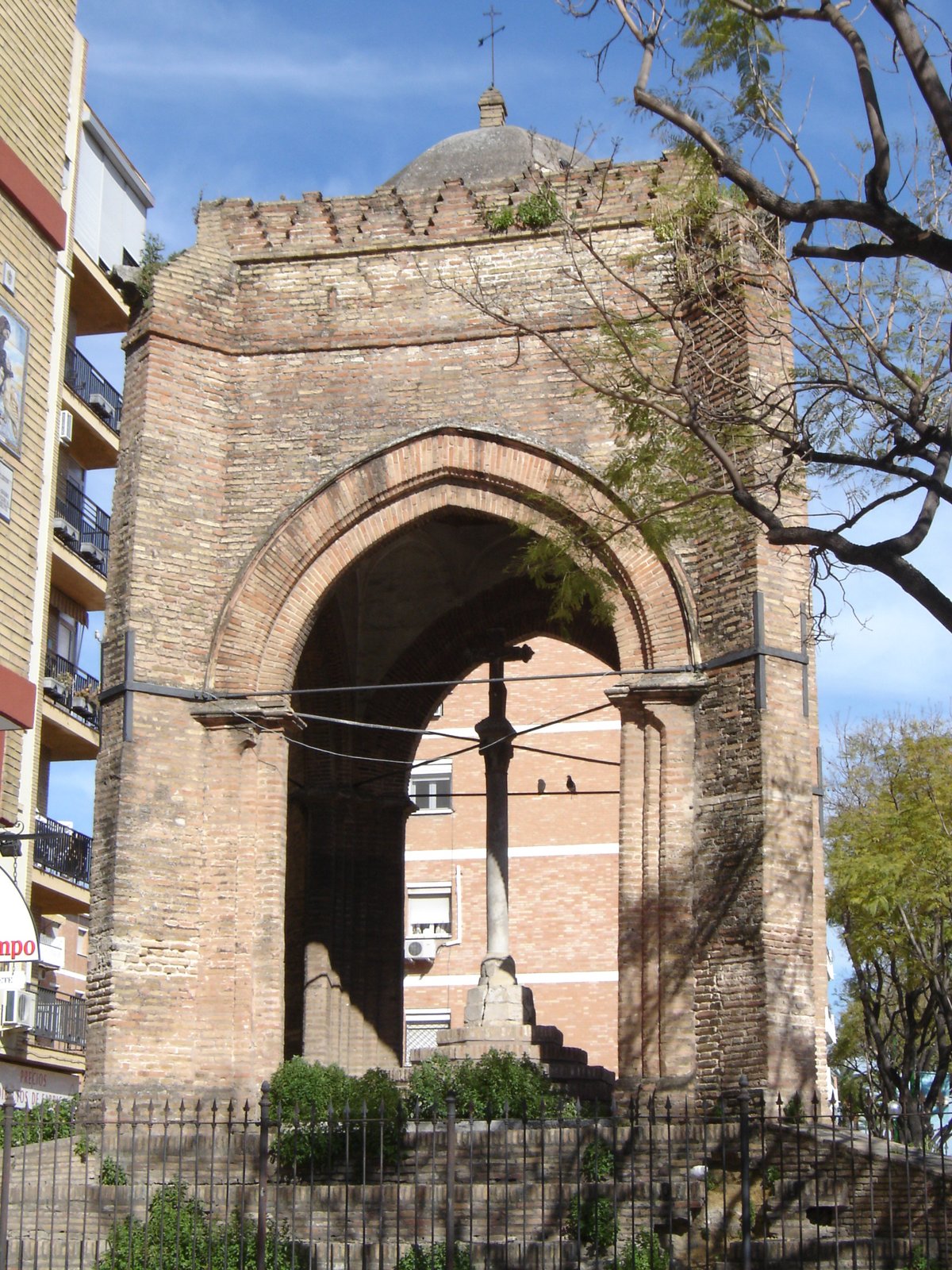

Standing in a busy avenue in Seville, the Humilladero de la Cruz del Campo is difficult to notice, if not for the monthly pilgrims - or the looming monument that marks another site of medieval pilgrimage. The true story of this cross begins more than six centuries earlier than its renovation in 1571, but the date of its construction is disputed. Some sources claim it was built in 1380 by the cofradía Nuestra Señora de los Ángeles, while others suggest it was built in 1482 by Diego de Merlo.
Regardless, Juan Bautista Vázquez the Elder is attributed with carving the current marble cross with the images of Christ and Mary in 1571. An important religious monument, the cross was also used to mark the end of the Vía Crucis initiated by Fadrique Enríquez de Ribera in 1536, causing it to become a popular site for various penitent hermandades to visit. The cross was even used as a brand for La Cruz del Campo beer, produced by one of Spain's earliest breweries, a testament to its cultural significance.
In 2009, the restoration of the templete was inaugurated, ensuring the cross will stand in Seville for centuries to come.
Sources: Wikipedia, OpenStreetMap, Wikidata, Wikimedia Commons
Written by Nik Frost
Discuss this with the author and others
No comments yet. Be the first to start the conversation.