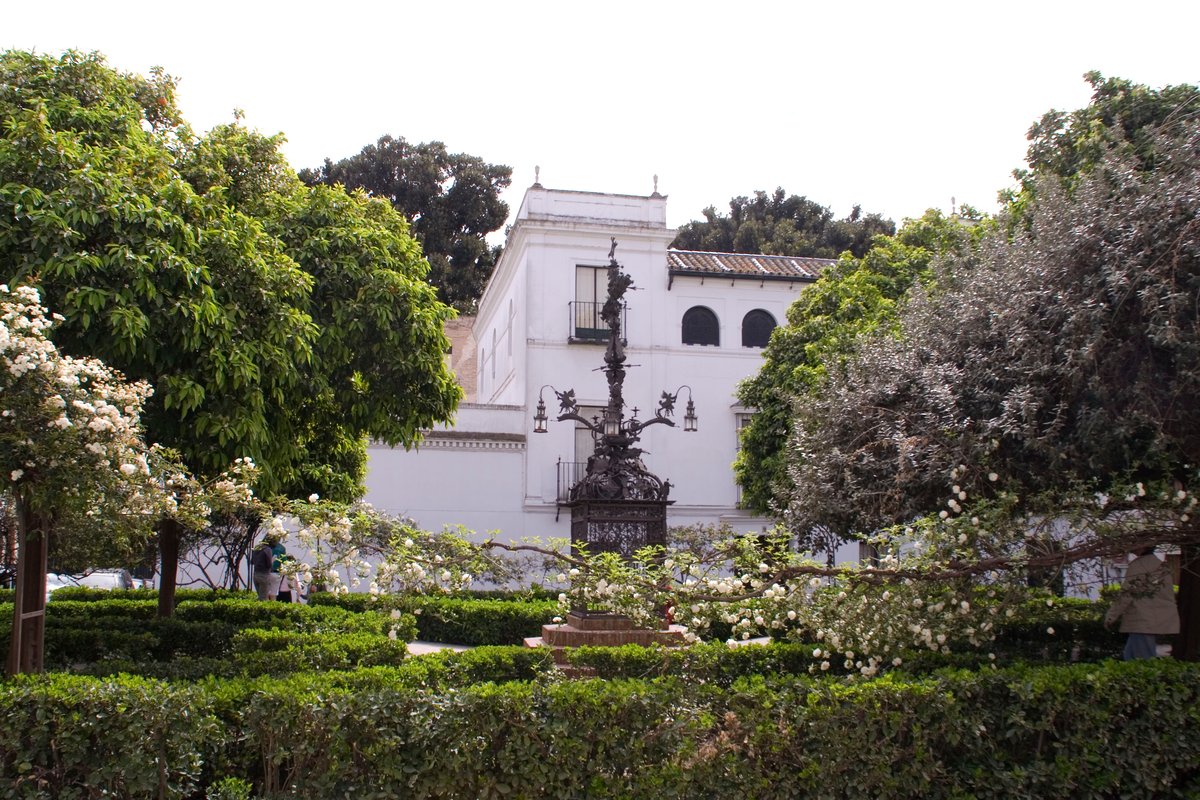

At the core of Seville's historic Jewish quarter, the Barrio de Santa Cruz, lies the Plaza de Santa Cruz, a space that has undergone a series of transformations. Initially, it housed a mosque following Seville's conquest in 1248. Over time, it was repurposed as a synagogue until a church was built in 1391. The plaza was initially called Plazuela de Santa Cruz, marking a smaller cemetery attached to the church. During the French occupation in 1810, the church was relocated to the Church of the Venerables and was subsequently demolished to make way for the plaza.
The plaza's current appearance can be traced back to the 1918 urbanization project overseen by Juan Talavera y Heredia, transforming the space into a medium-sized, rectangular area with a central garden.The plaza's central cross, known as the Cruz de la Sierpes, is a reproduction of a 1692 relic from the church, crafted by blacksmith Sebastian Conde. This relic, first erected at the crossroads of Calle Sierpes and Rioja, was moved to its present location in 1918 and 1921.
The cross commemorates the Exaltation of the Cross and was funded through popular subscription. Its base showcases vegetal and geometric designs, along with four serpents and four figures of uncertain definition. A replica of the base can be found in the Pension Hermandad respiradero of the paso de palio. Three houses in Plaza de Santa Cruz were constructed by Juan Talavera, including the house at the intersection of the plaza and Calle Santa Teresa, built between 1919 and 1922, and the house located at number 8, built in 1923.
Sources: Wikipedia, OpenStreetMap, Wikidata, Wikimedia Commons
Written by Nik Frost
Discuss this with the author and others
No comments yet. Be the first to start the conversation.