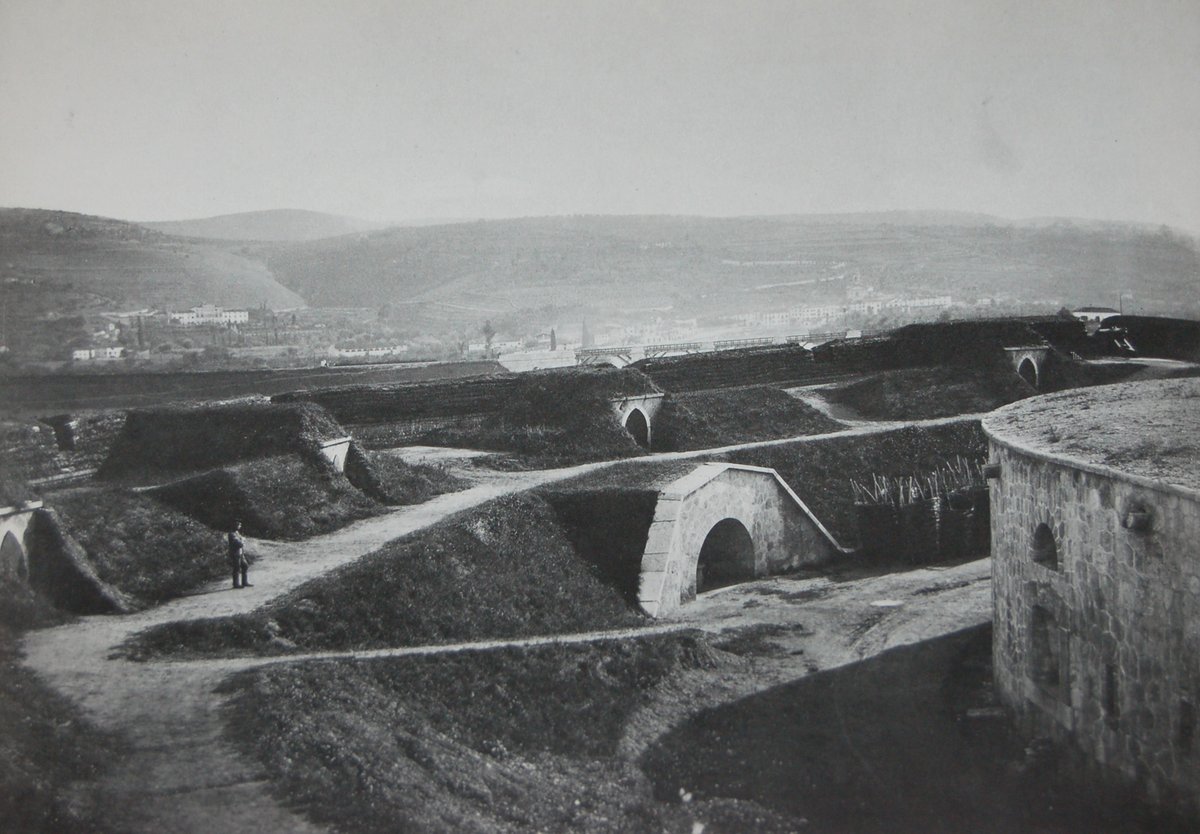

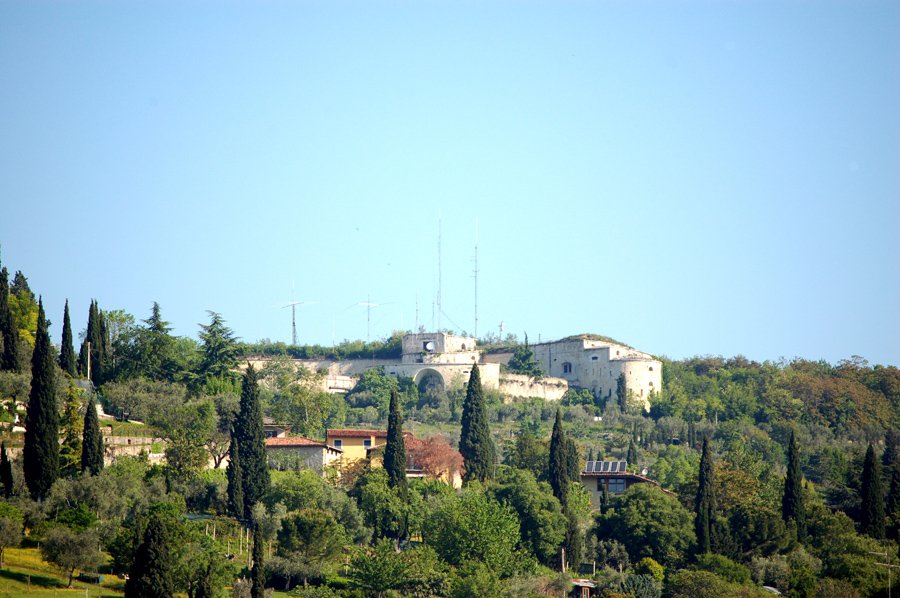
Forte Parona, originally named Werk Erzherzog Albrecht, was constructed between 1859 and 1860 as part of the second field entrenchment of Verona. Situated northwest of the city, it was built to serve as a self-sufficient stronghold, integrated into the northern hinge of the defensive system. Its position allowed its artillery to fire across the horizon, including the plain, the river, and the hills. Its primary function was to guard the railway bridge from Bolzano and to provide flanking and enfilade fire on the Brenner railway as it entered the stronghold.
The structure featured a large polygonal layout with a central redoubt. Initially built in a semi-permanent style with timber beams and earth, it was later transformed into a permanent work with detached walls, caponiers, and casemated covers. The central redoubt rose on a single floor with an earthen cover, designed for infantry defense. In its courtyard, a well provided a water reserve, while a second well was located inside the redoubt, and two more wells were accessible in opposite corners of the courtyard in protected casemated niches.
The fortress's military significance was shaped by its strategic overlooking of the Adige river. However, the structure met a violent end in 1944 towards the end of the Second World War. An allied aerial bombardment struck the fort, causing the explosives stored within to explode and reducing the building to complete ruin. Today, only the remains of the embankment and the ditch remain, completely overgrown with vegetation.
Sources: Wikipedia, OpenStreetMap, Wikidata, Wikimedia Commons
Written by Nicolo Ciampini
Discuss this with the author and others
No comments yet. Be the first to start the conversation.