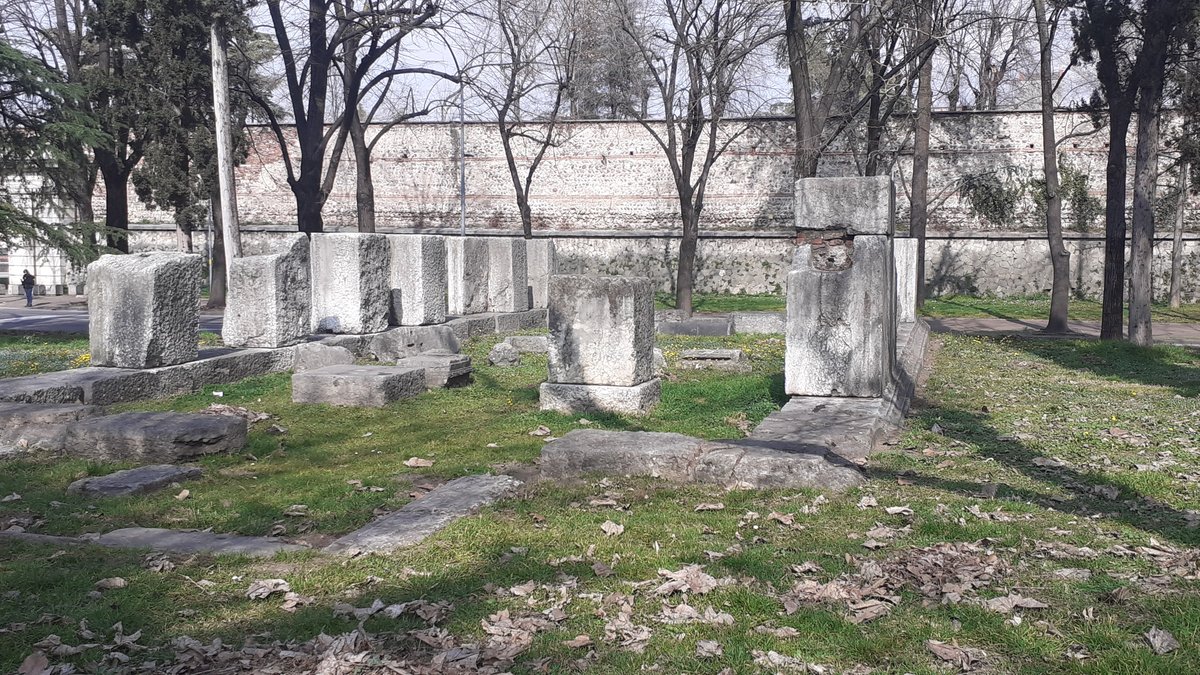

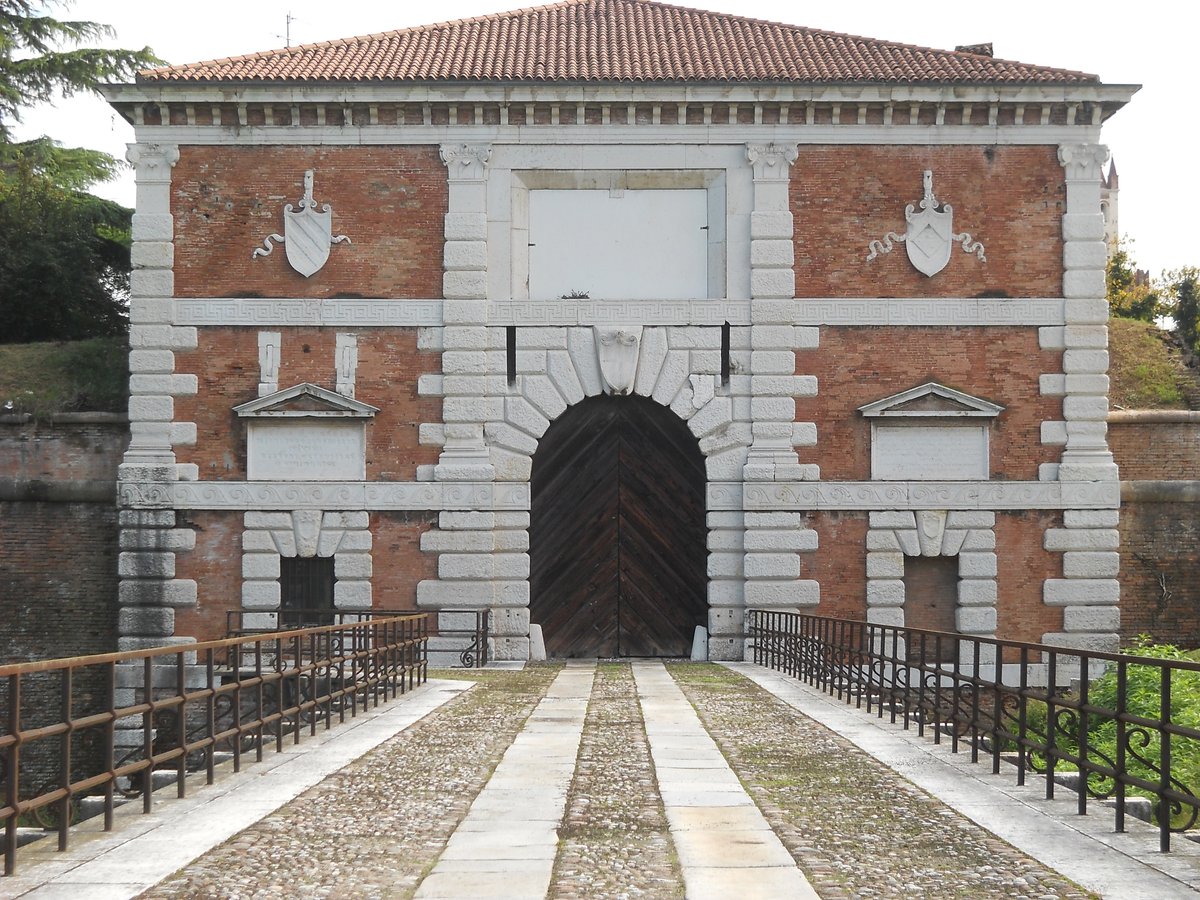
In the heart of Verona, lies a temple known as the Tempio di Giove Lustrale. Built in the first half of the 1st century, the temple was located along the via Postumia in the immediate vicinity of porta Iovia - today known as porta Borsari - which took its name from this nearby sanctuary. Ettore Ghislanzoni identified the structure as a temple and found two votive altars dedicated to Giove Lustrale about 75 meters away. While the remains of the Roman building were demolished in 1932, the stone elements from the podium were moved to the gardens outside porta Vittoria where they remain today.
The temple measured 18 meters long and 10 meters wide, and was tetrastilo and pseudoperiptero. It stood on a podium 2.40 meters high with a staircase and a large altar in front. Below the podium was a subterranean cellar covered with a barrel vault, which may have been used for water-related cult activities due to the presence of a basin and an inscription by a slave named Febo, who was in charge of the water distribution pipes.
The name Giove Lustrale is linked to the lustratio, an ancient purification ceremony performed through washing with water. Studies and surveys of the structure are preserved in the Archive of the Soprintendenza Archeologia Belle Arti e Paesaggio for the provinces of Verona, Rovigo, and Vicenza.
Sources: Wikipedia, OpenStreetMap, Wikidata, Wikimedia Commons

Written by Nicolo Ciampini
Discuss this with the author and others
No comments yet. Be the first to start the conversation.