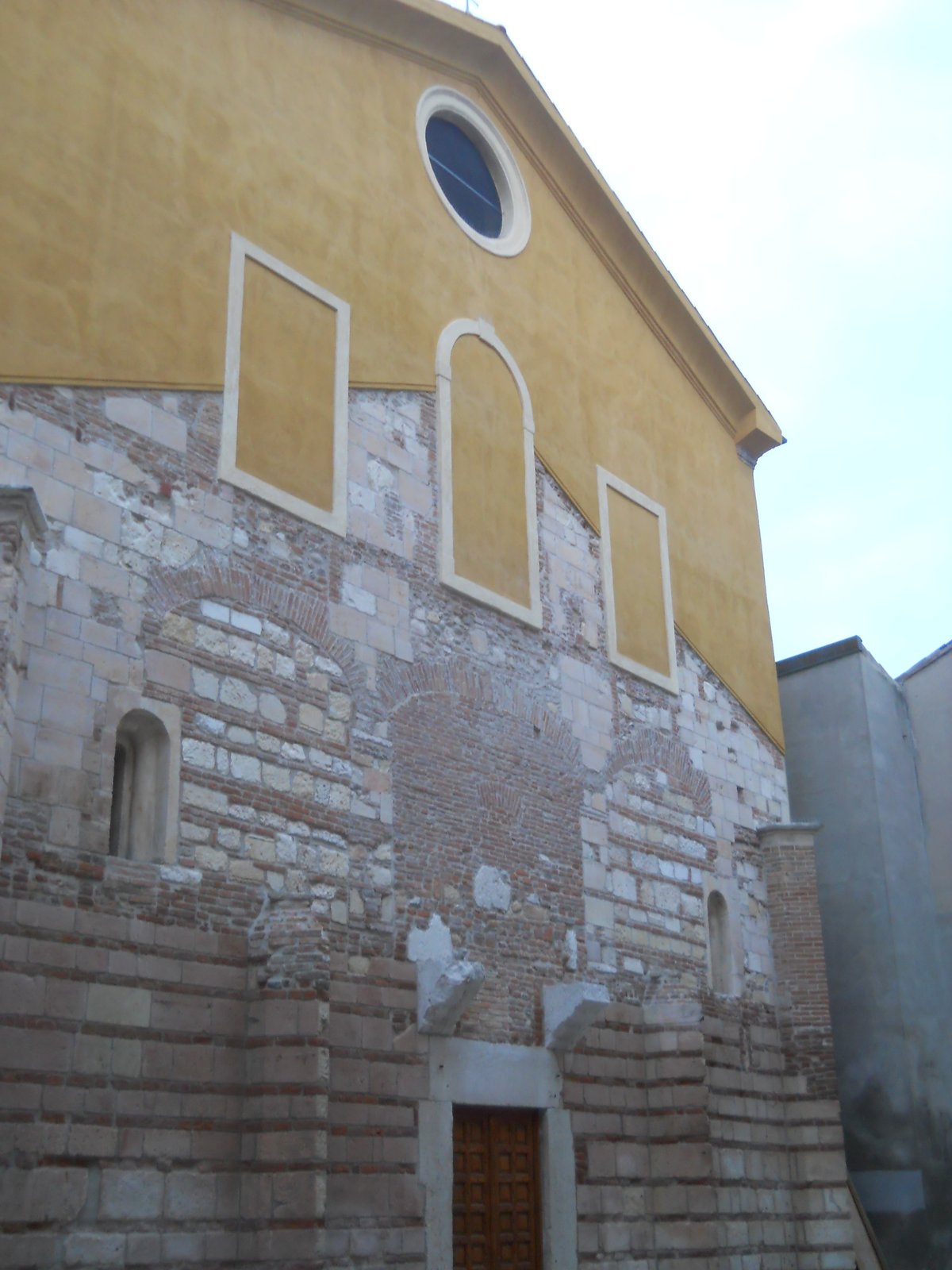

In central Verona, the Romanesque chapel of Sante Teuteria e Tosca stands as an ancient Roman Catholic site in front of a piazza off Corso Cavour. A church at this site was consecrated in 751 on an earlier fifth-century structure, but was reconstructed in the 12th century. Over the centuries, the chapel was linked to the larger church of Santi Apostoli, converting into almost a chapel. Restorations in the 19th century aimed to re-display the earlier construction and remove later accretions, while later work addressed damage from war bombardments.
The interior of the larger church was reduced from three naves to one in the 1500s. Through the sacristy, visitors can enter the partially subterranean brick chapel of Sante Teuteria e Tosca, located on the north side of the church. The cult of these saints developed around 1160, when their relics were discovered and entombed in a marble ark. This medieval ark is now present atop the Baroque main altar, featuring reliefs dating from 1428.
To the right of the altar sits the 1368 tomb of Francesco Bevilacqua. A marble monument for three brothers of the Bevilacqua was added in the 16th century, featuring sculpted images of the three theologic virtues. The church also features a tall pale brick and stone bell-tower containing six bells cast in 1817 that still ring in the traditional Veronese style.
To see these fragments of history, you can visit the site in central Verona at Vicolo Dietro Santi Apostoli 2.
Sources: Wikipedia, OpenStreetMap, Wikidata, Wikimedia Commons

Written by Nicolo Ciampini
Discuss this with the author and others
No comments yet. Be the first to start the conversation.