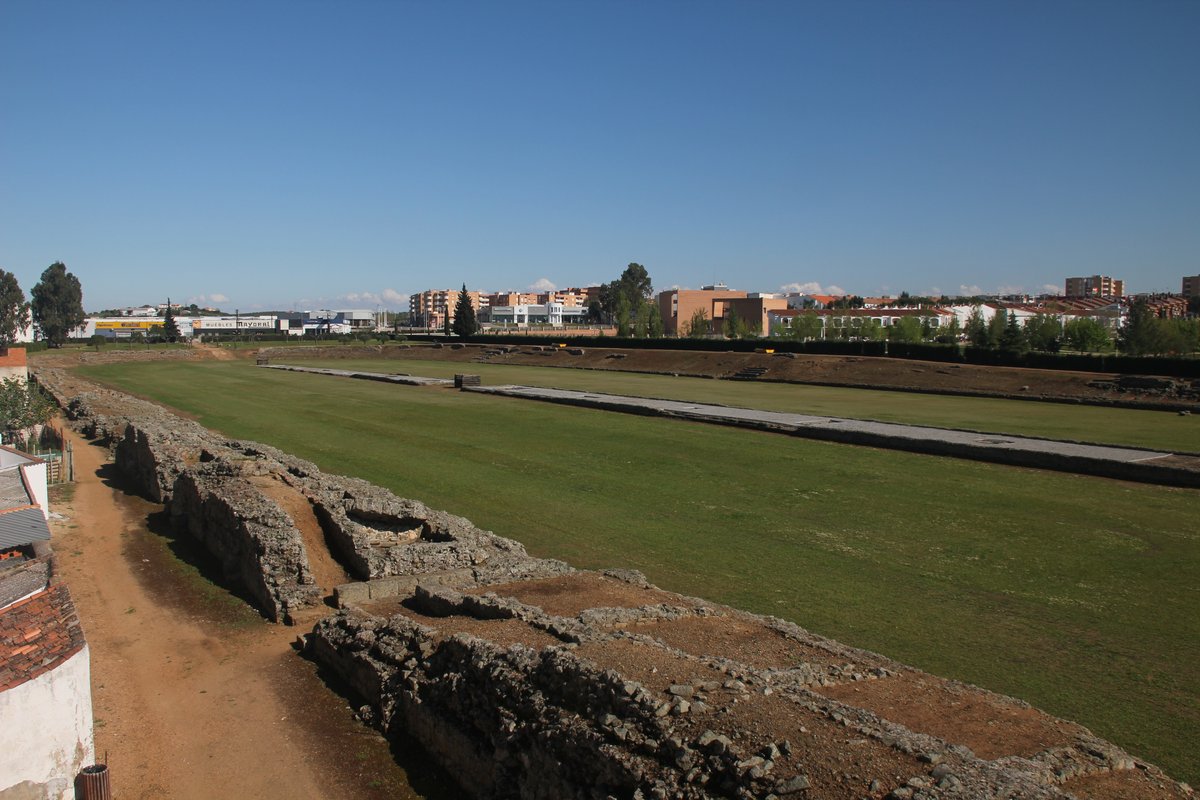

The Roman circus of Mérida, located in the heart of the region of Extremadura in Spain, is a testament to the grandeur and spectacle of ancient Rome. Dating back to 20 BC, the Circus Maximus of Mérida was built for chariot racing, a popular event during the Roman Empire. With a capacity to hold up to 30,000 spectators, it was one of the largest and best-preserved Roman circuses. Today, the circus is a key part of the Archaeological Ensemble of Mérida, a UNESCO World Heritage Site.
Although partially in ruins, the circus boasts numerous well-preserved structures, including the Porta Pompae, the Porta Triumphalis, the spina, and the tribunal iudicium. The city of Mérida even hosts an annual ‘Gran Circus Maximus’, a chariot race reenactment where the public can dress up in Roman clothing and witness the event similar to that of ancient Rome. This Roman circus is not just a reminder of the grandeur of the Roman Empire, but also of their love for entertainment and competition.
Sources: Wikipedia, OpenStreetMap, Wikidata, Wikimedia Commons
Written by Nicolo Ciampini
Discuss this with the author and others
No comments yet. Be the first to start the conversation.