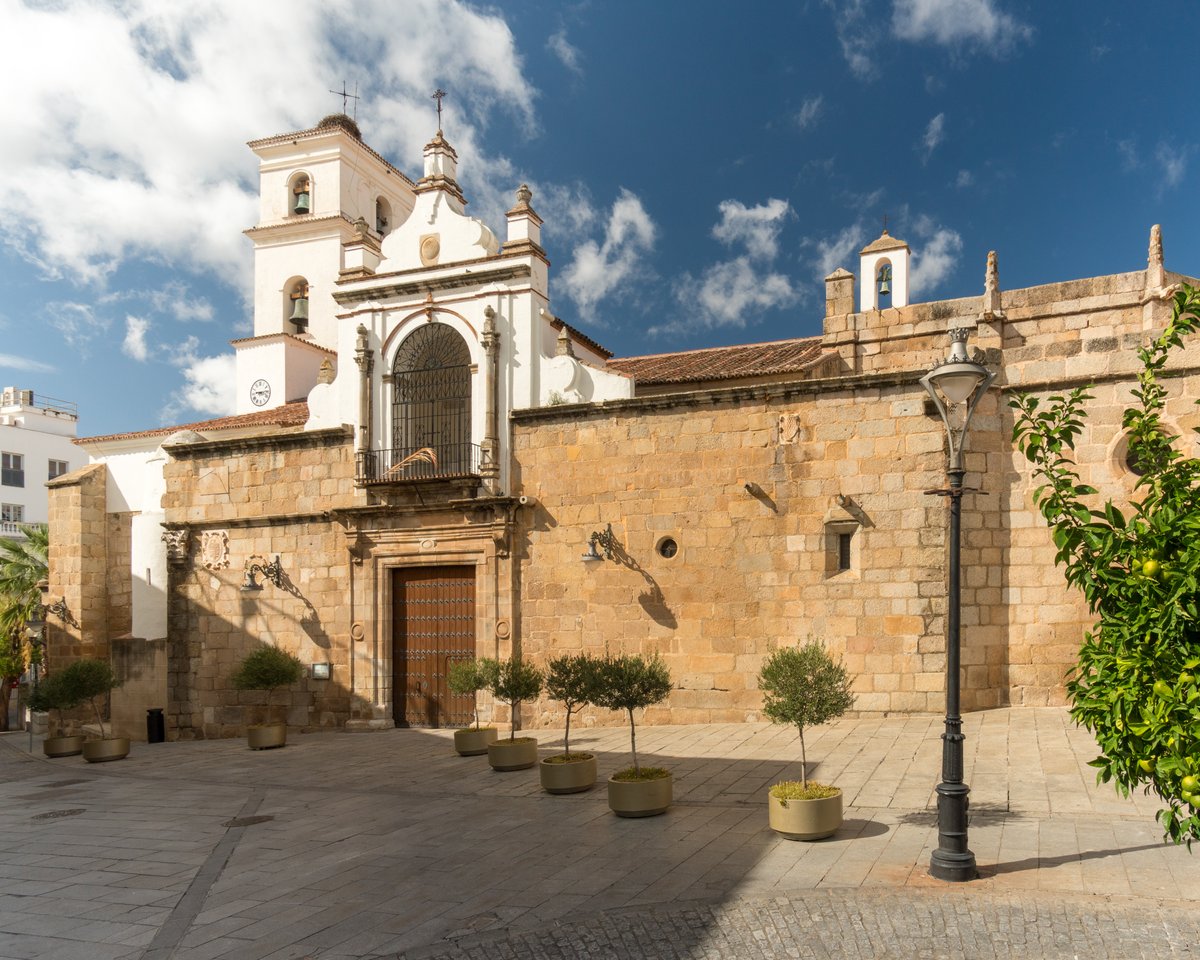

The Co-Cathedral of St. Mary Major in Mérida, Extremadura, is a Roman Catholic cathedral that serves as a seat of the Archdiocese of Mérida-Badajoz. Its origins date back to 1230, when construction began on a chapel dedicated to the Virgin Mary on the ruins of a Visigothic cathedral. In 1479, Don Alonso de Cárdenas ordered the extension of the chapel with the intent to make it the main church of the city. By 1620, the church was chosen as the see of a bishopric of the Order of Santiago.
The cathedral features a rectangular shape with three naves and a variety of notable architectural elements. The Portada de Santa Maria opens to the Plaza de España and houses a statue of Nuestra Señora de la Guía in a shrine erected in 1766. On the eastern side, the 18th-century neoclassical Puerta del Perdón faces the Plaza de Santa Maria, featuring Ionic and Corinthian pillars. Above this gate sits a bell tower housing a 16th-century music box with 10 bells and a historic clock.
Inside, the high altar features a vault of tierceron and an apse decorated with a large 1762 altarpiece surrounding a 13th-century window. Visitors can see the Chapel of the Epistola, which is divided into two sections with ribbed vaults decorated with its shield, and view the Mystic Lamb. The interior also houses significant artworks, including the 16th-century sculpture of Cristo de la O, the Santísimo Cristo de las Injurias, and an altar supporter from the Visigothic period.
The cathedral is a central site for religious life in Mérida. During the Immaculate Conception of Mary on December 8, the city council performs a Renewal of the Vow. Additionally, during the feast of the Martyr Saint Eulalia, the sculpture of the patron saint of Mérida is taken in procession from the basilica to the cathedral overnight before returning in a solemn procession.
Sources: Wikipedia, OpenStreetMap, Wikidata, Wikimedia Commons


Written by Nicolo Ciampini
Discuss this with the author and others
No comments yet. Be the first to start the conversation.