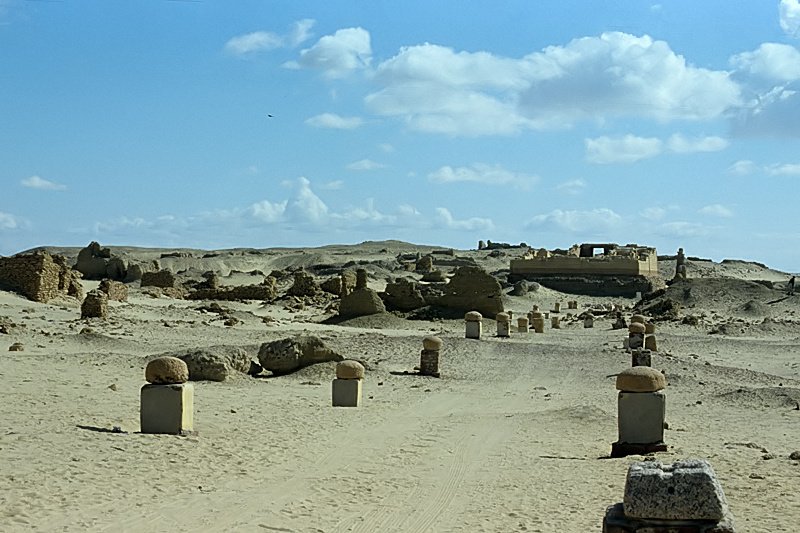

Located in the northeast corner of the Faiyum Oasis, the town of Karanis served as an agricultural center during the Ptolemaic and Roman periods. Following the conquest of Egypt by Augustus, the area saw a restoration of dikes and canals that brought prosperity to landholders. The town was inhabited by veterans who, despite their military service, were mostly poor, self-sufficient farmers who lived relatively isolated lives from other nearby towns.
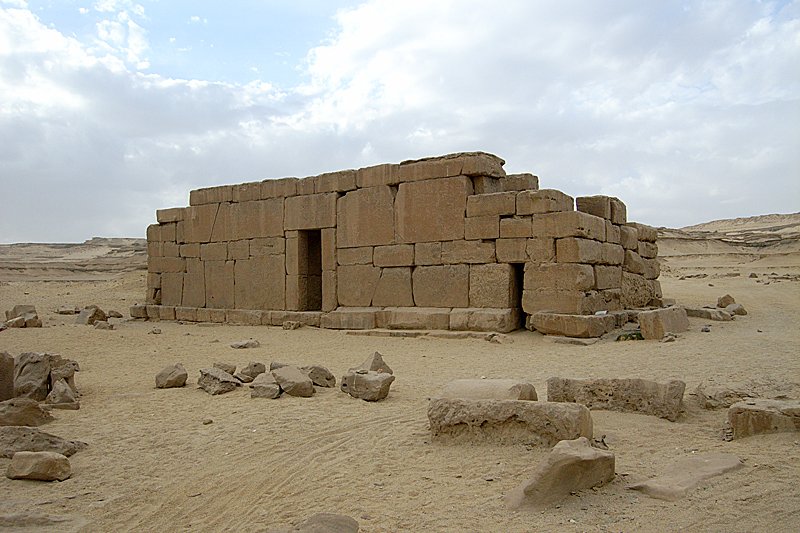
Large-scale excavations have uncovered various structures, including houses, granaries, a bath complex, and two significant temples. One temple, built in an Egyptian style of limestone blocks, was dedicated under Nero to the crocodile gods Pnepheros and Petesouchos. It featured shrine rooms, storerooms for priests, and a dining room in the southeast corner where local weddings and banquets could be held. A second temple from the early Roman period contains an altar for a crocodile mummy and a soft white limestone figure of a hawk-headed crocodile, likely representing the god Soknopaios.
Historical records preserved in papyri provide a microcosm of life for the ordinary people living under Greek and Roman rule. While some early excavators believed the town was abandoned by the fifth century due to dry conditions, radiocarbon dating of stockpiled seeds indicates the town remained consistently inhabited through the sixth century. It was gradually abandoned following the Sasanian conquest of Egypt in the seventh century.
Today, the site is home to the Kom Aushim Museum, which was built in 1974 to display artifacts unearthed from the town. Many of the historically significant papyri, which contain mainly tax records from the period between the reign of Diocletian and the 370s, are now held in the University of Michigan Papyrus Collection.
Sources: Wikipedia, OpenStreetMap, Wikidata, Wikimedia Commons
Written by Mutabor
Discuss this with the author and others
No comments yet. Be the first to start the conversation.