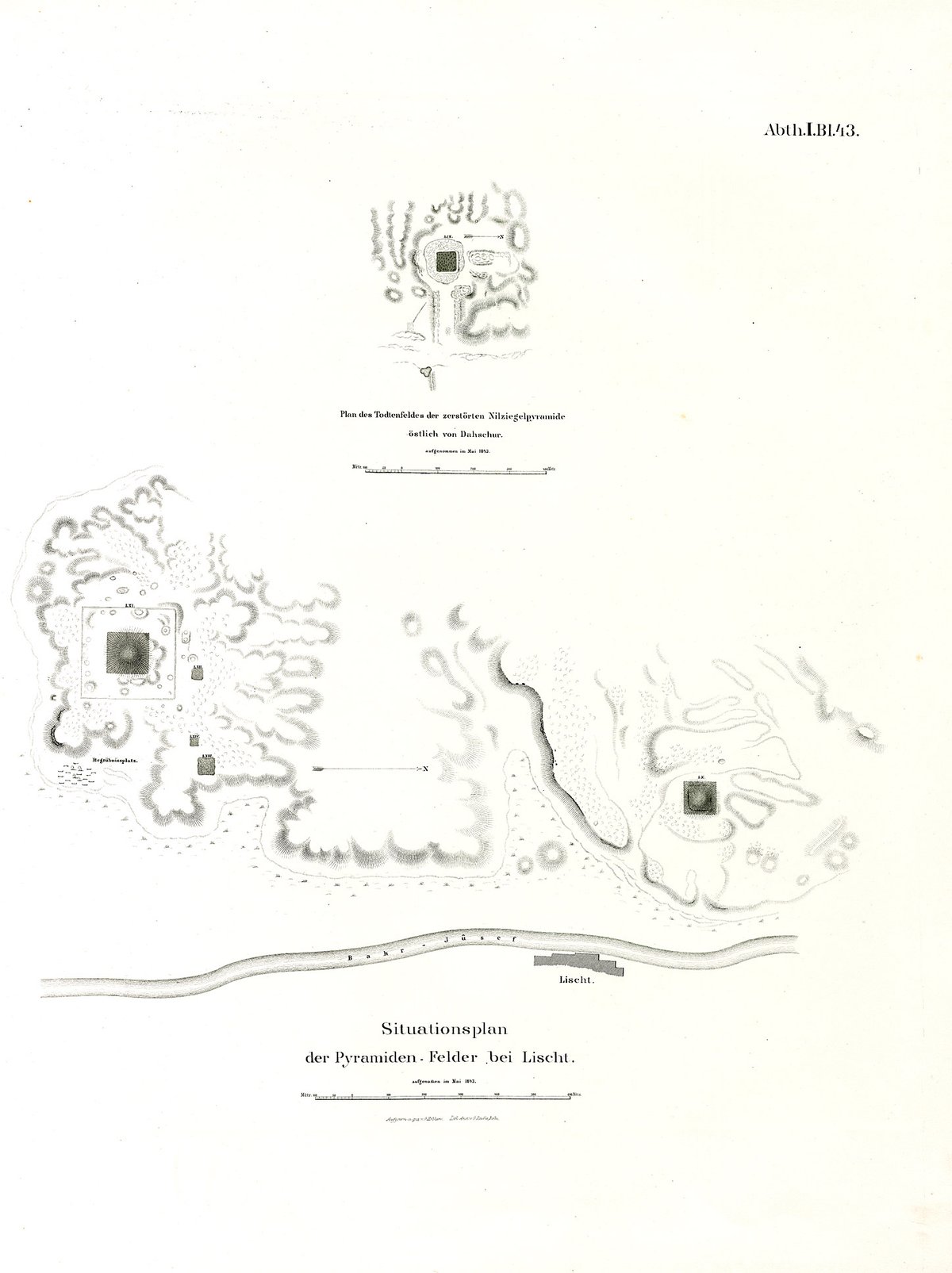

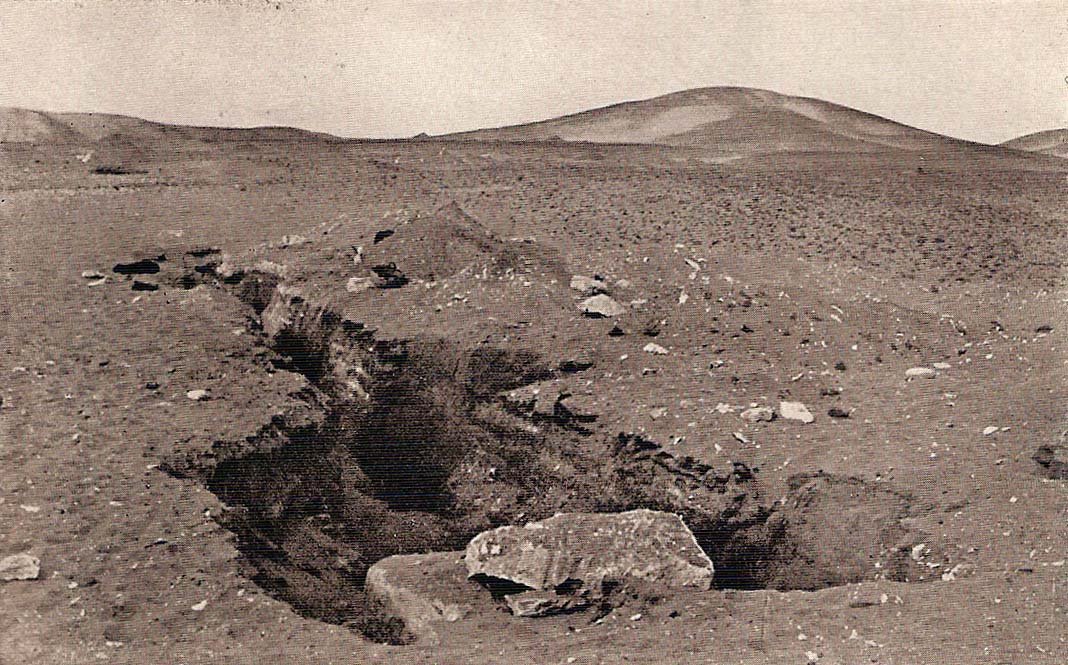
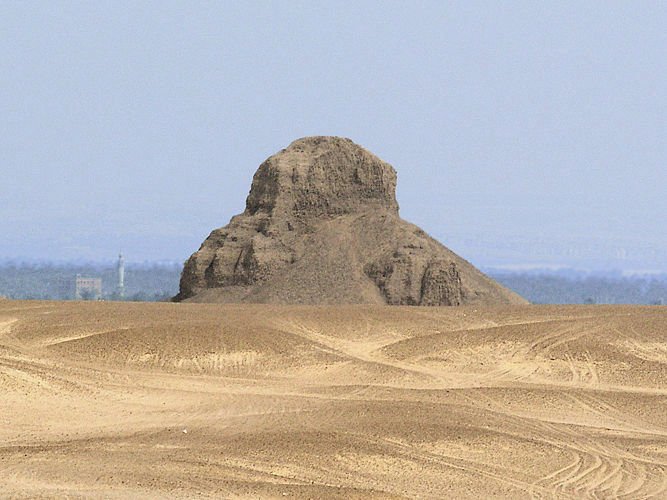
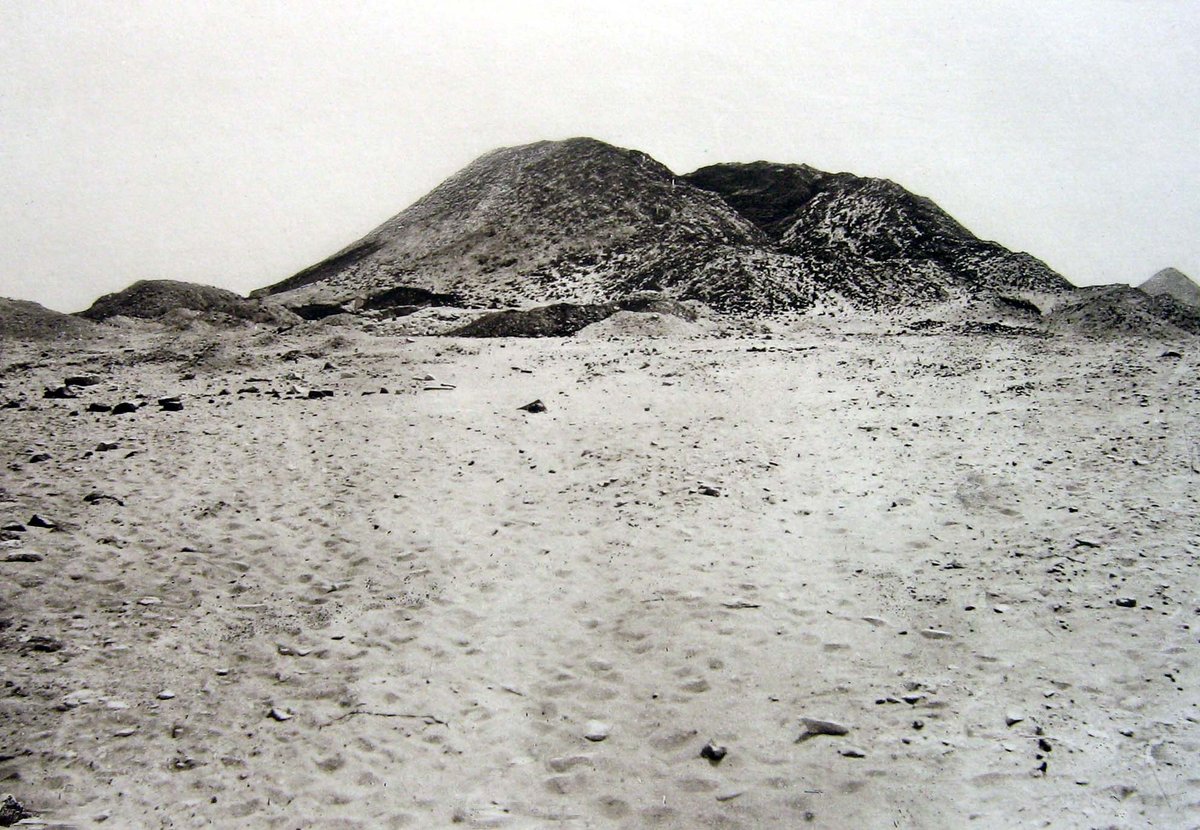
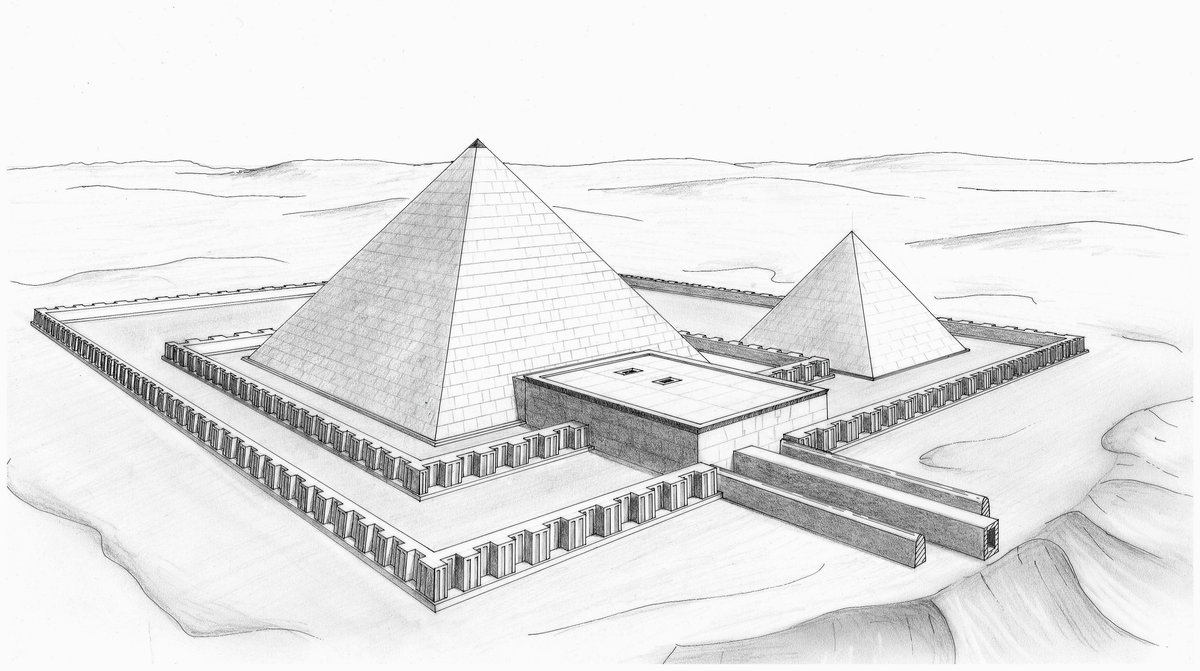
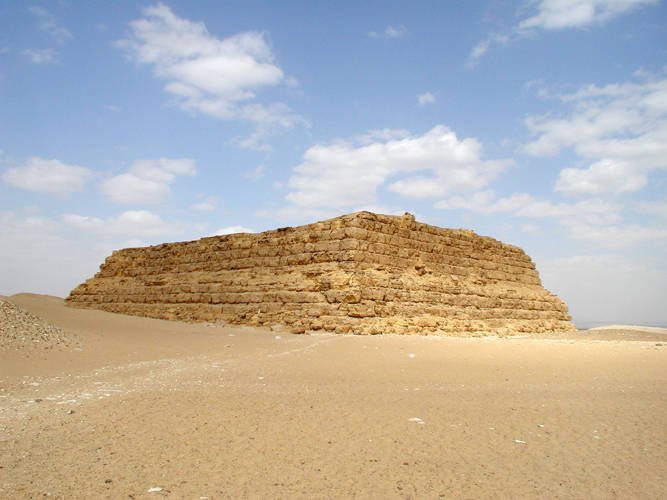
The northern Mazghuna pyramid is a funerary monument built for an undetermined Egyptian pharaoh of the 12th or 13th Dynasty in Mazghuna, 5 km south of Dahshur. The building remained unfinished, and it is still unknown which pharaoh was intended to be buried here since no appropriate inscription has been found. The pyramid was rediscovered in 1910 by Ernest Mackay and excavated in the following year by Flinders Petrie.
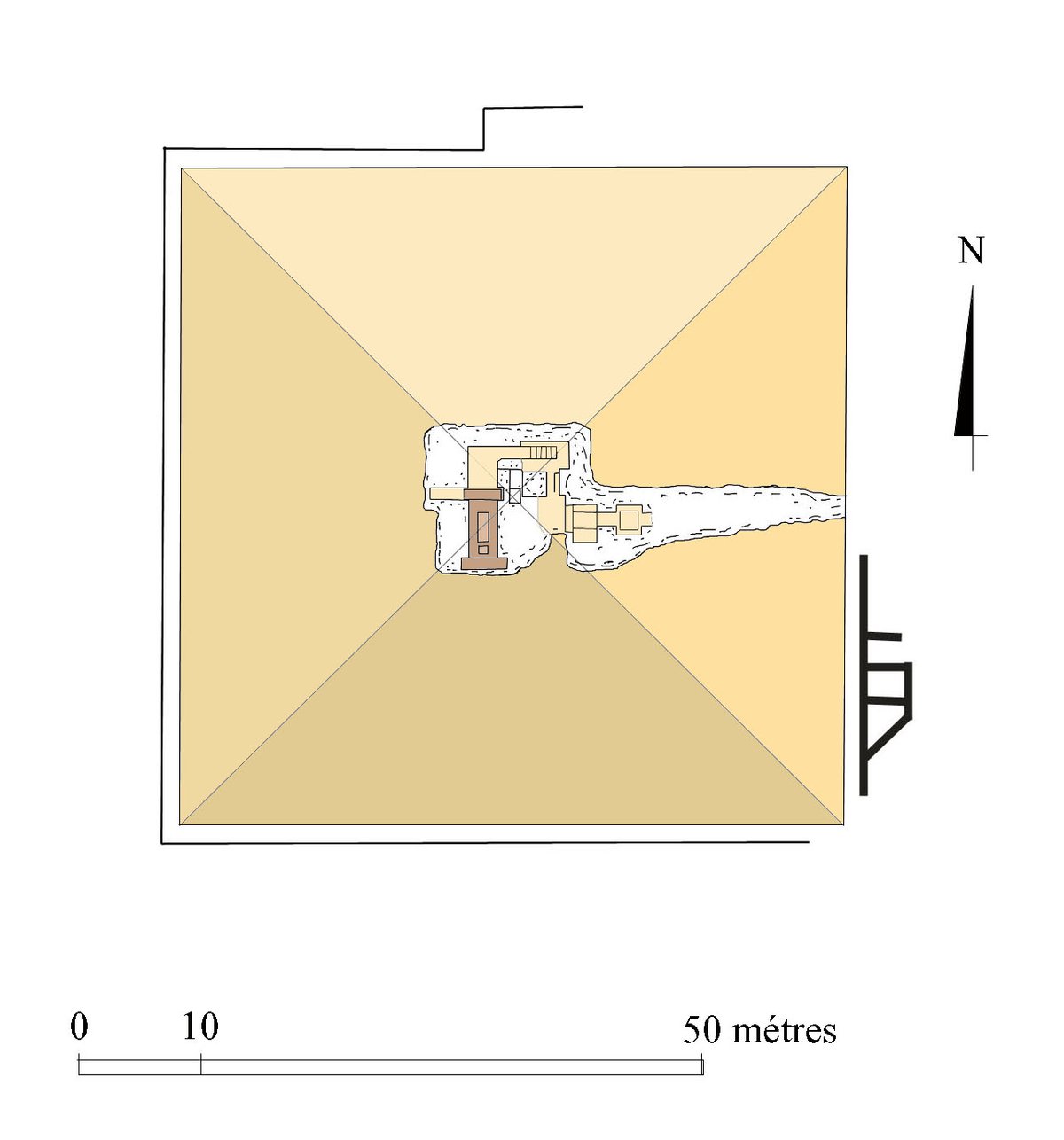
The hypogeum is similar to that of the southern pyramid but much more tortuous, changing direction six times. The entrance is on the north side. From there, a staircase leads down to a square chamber and then to another staircase and to the first quartzite blocking. After that, two other chambers are connected by a passage with a second, still unsealed blocking. After the third chamber, a stairway and then a corridor leads to the antechamber just prior to the large burial chamber.
This room, partially covered by an inverted V-shaped ceiling, is entirely filled by a huge sarcophagus-vault, which was carved from a single block of quartzite. The never-used sarcophagus lid, a 42-ton quartzite slab, still awaits to be fitted in the chamber. All exposed quartzite, which was built in the pyramid, had been painted with red paint and sometimes also decorated with vertical black stripes. The function of a large room behind the burial chamber remains unknown.
Scholars have attributed the northern pyramid to different rulers over time. It was initially attributed to Amenemhat IV, then to the female-pharaoh Sobekneferu, and some scholars have argued it belonged to the 13th Dynasty based on similarities with the pyramid of Khendjer. While the superstructure remains a mystery, some believe it was built of limestone and dismantled, while others suggest work on it never began.
Sources: Wikipedia, OpenStreetMap, Wikidata, Wikimedia Commons
Written by Mutabor
Discuss this with the author and others
No comments yet. Be the first to start the conversation.