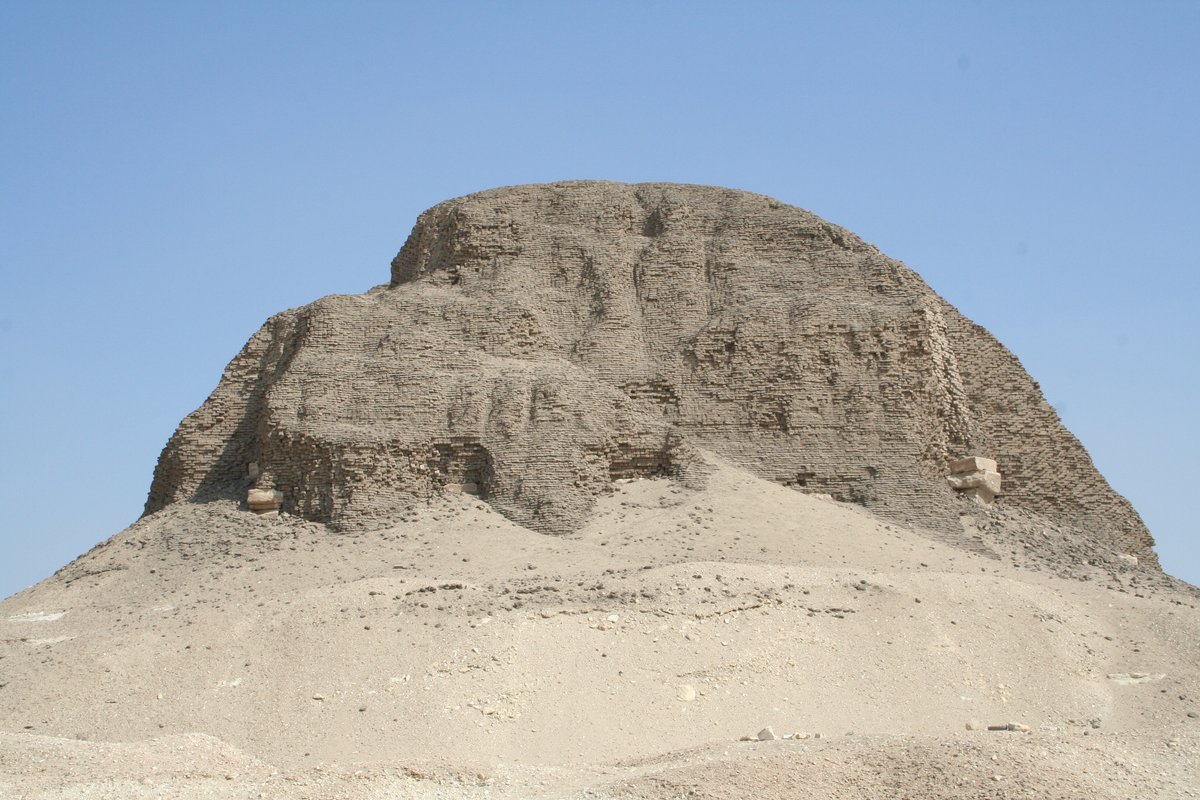

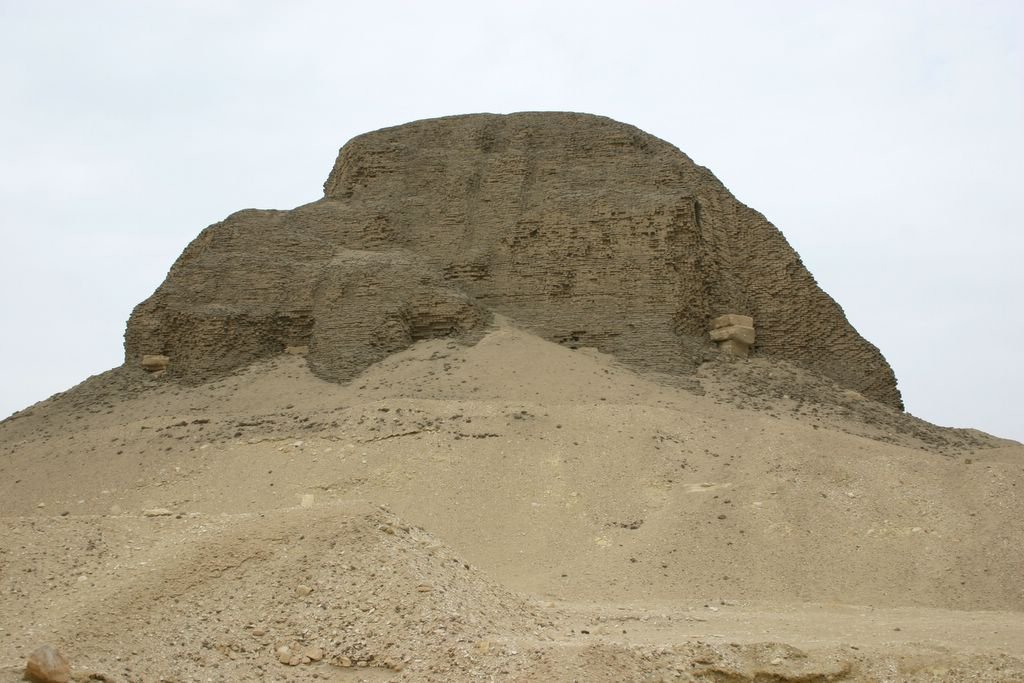
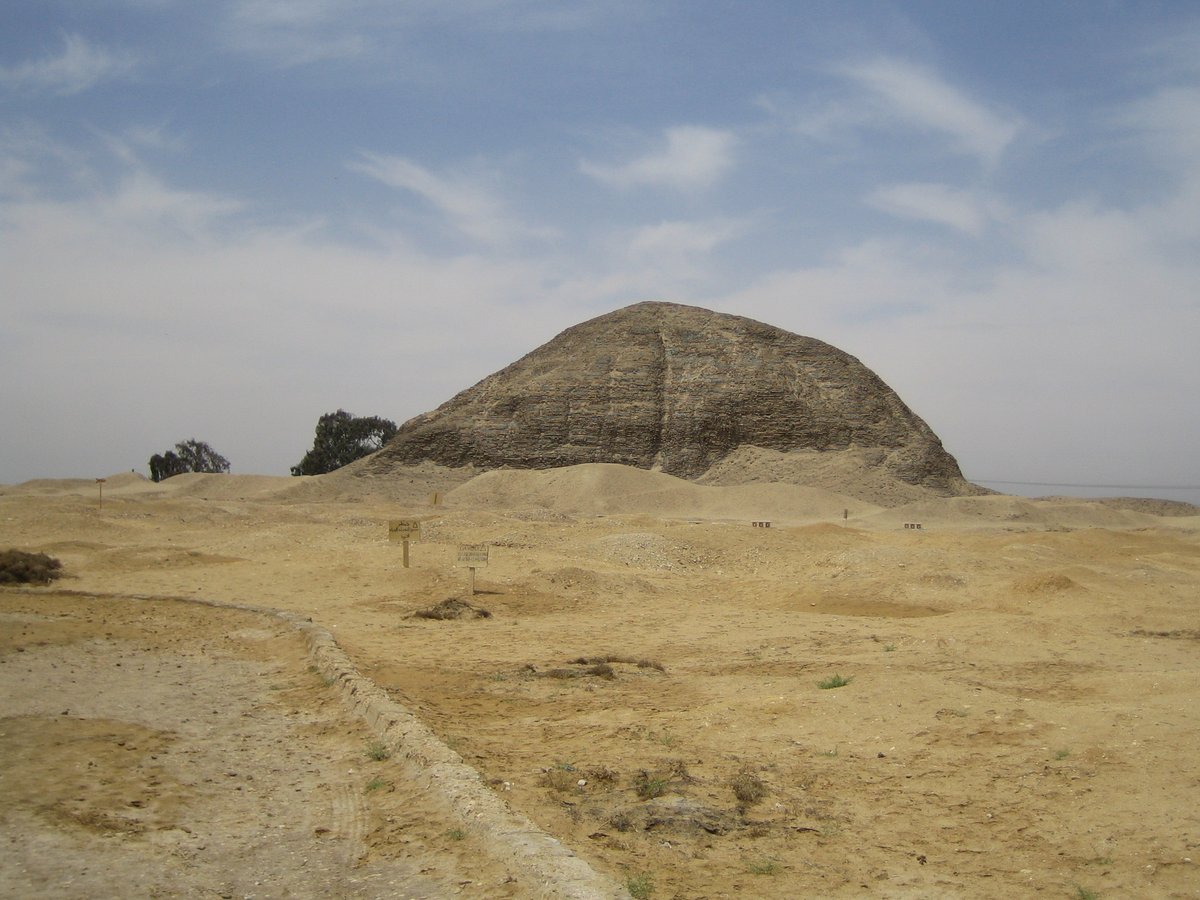
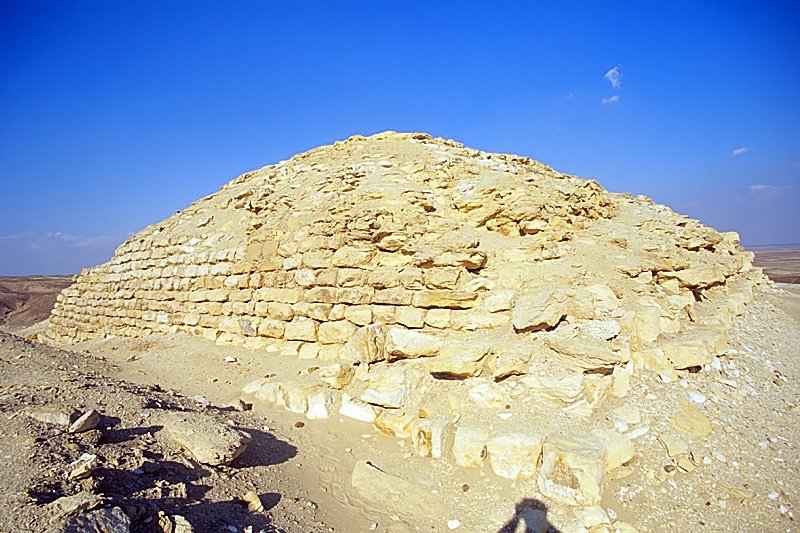
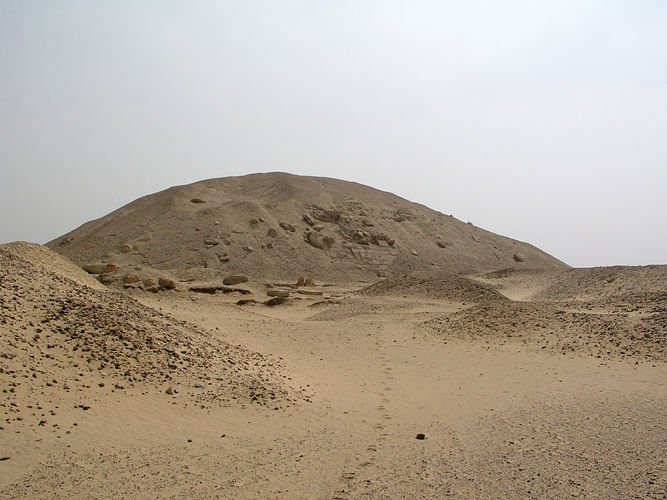
The pyramid of Senusret II is a mudbrick funerary monument built at El Lahun during the early 19th century BC. The complex centers on a pyramid built atop a yellow limestone outcrop, featuring a ground level base of 106 m and sides converging at 42°35′ to an apex 48.65 m high. It was originally encased in fine white Tura limestone and capped with a black granite pyramidion. To protect his tomb from future grave-robbers, Senusret II chose to hide his funerary chamber beneath a princess's tomb, designated 'tomb 10', located southeast of the main pyramid.
The princess's tomb was accessed from a wide shaft 8.64 m deep. Within the shaft, a small pit contained an immaculately thrown red pottery bowl and scattered bones of a calf. Beyond this lay the tomb's antechamber, hidden behind a set of fine limestone blocks. This chamber featured walls of fine white limestone and bare rock, with a pavement sloping down toward the burial chamber. The burial chamber itself had walls faced with fine white limestone, alongside two adjoining rooms comprising a canopic recess in the east and an offering hall in the northeast.
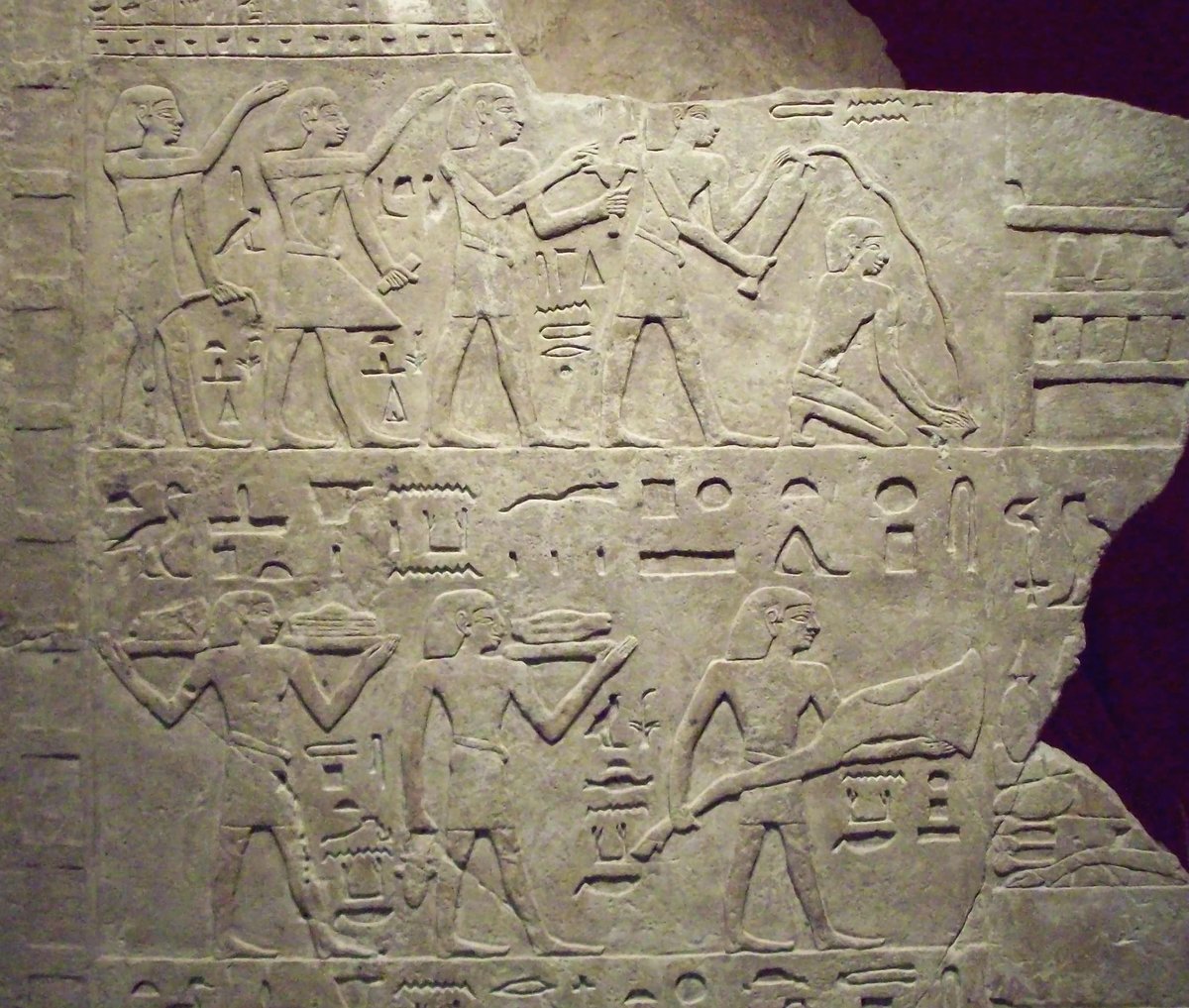
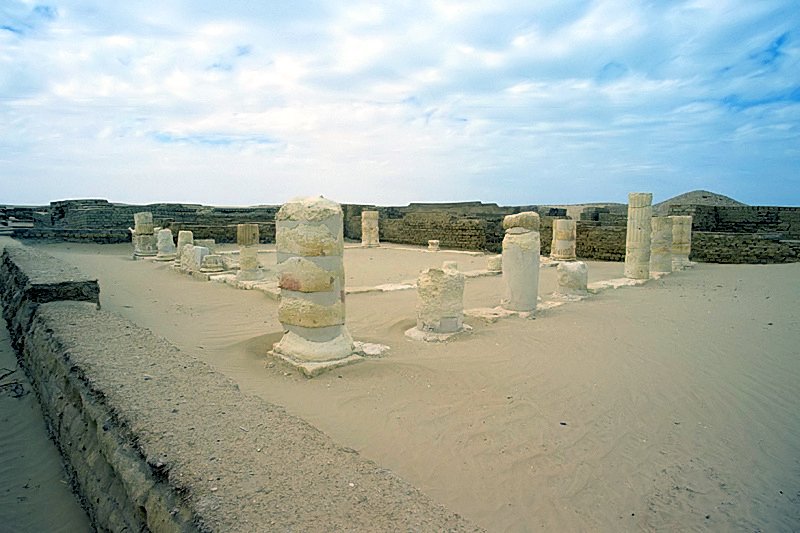
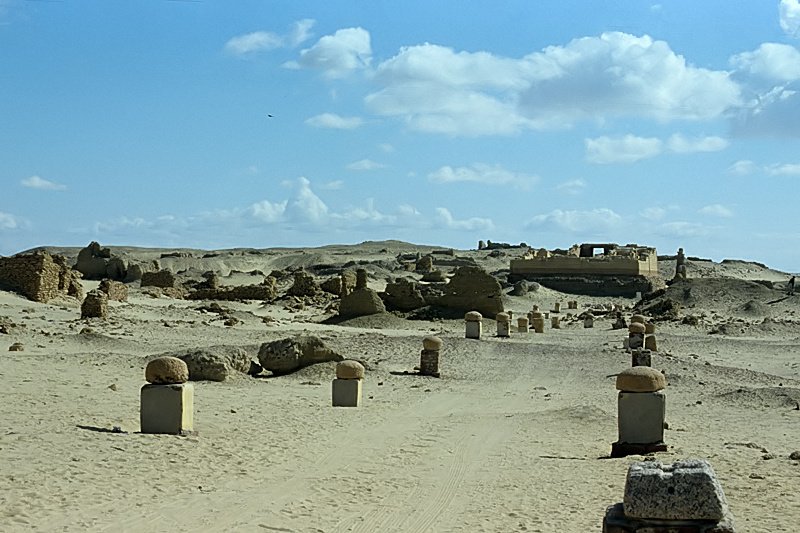
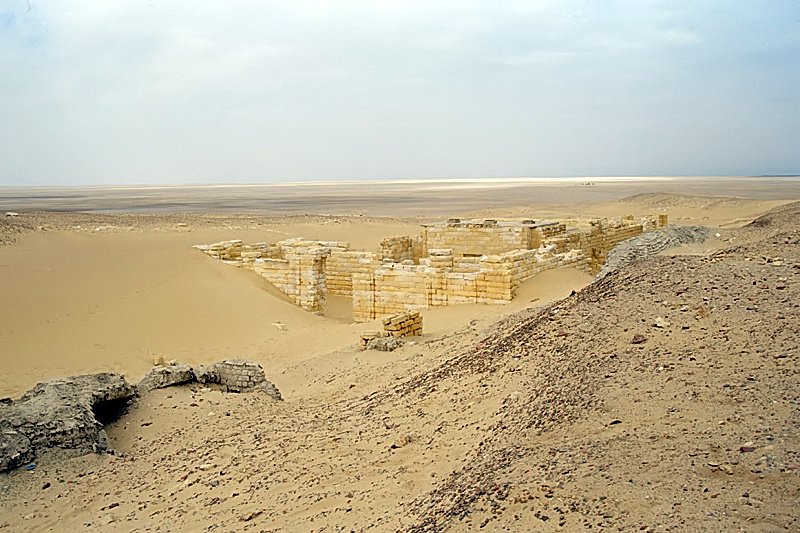
Senusret II's complex also included a small mortuary temple on the pyramid's east face, which was destroyed during the reign of Ramesses II. Relief fragments from the temple were recovered, including images of the king and inscriptions of his name. To the north lay the pyramid town of Ḥtp Sn-wsr-t, meaning 'May Senusret be at peace' or 'Senusret is contented', which is now known as Kahun. The site also featured an open causeway that remains unexplored and a distant valley temple.
Sources: Wikipedia, OpenStreetMap, Wikidata, Wikimedia Commons
Written by Mutabor
Discuss this with the author and others
No comments yet. Be the first to start the conversation.