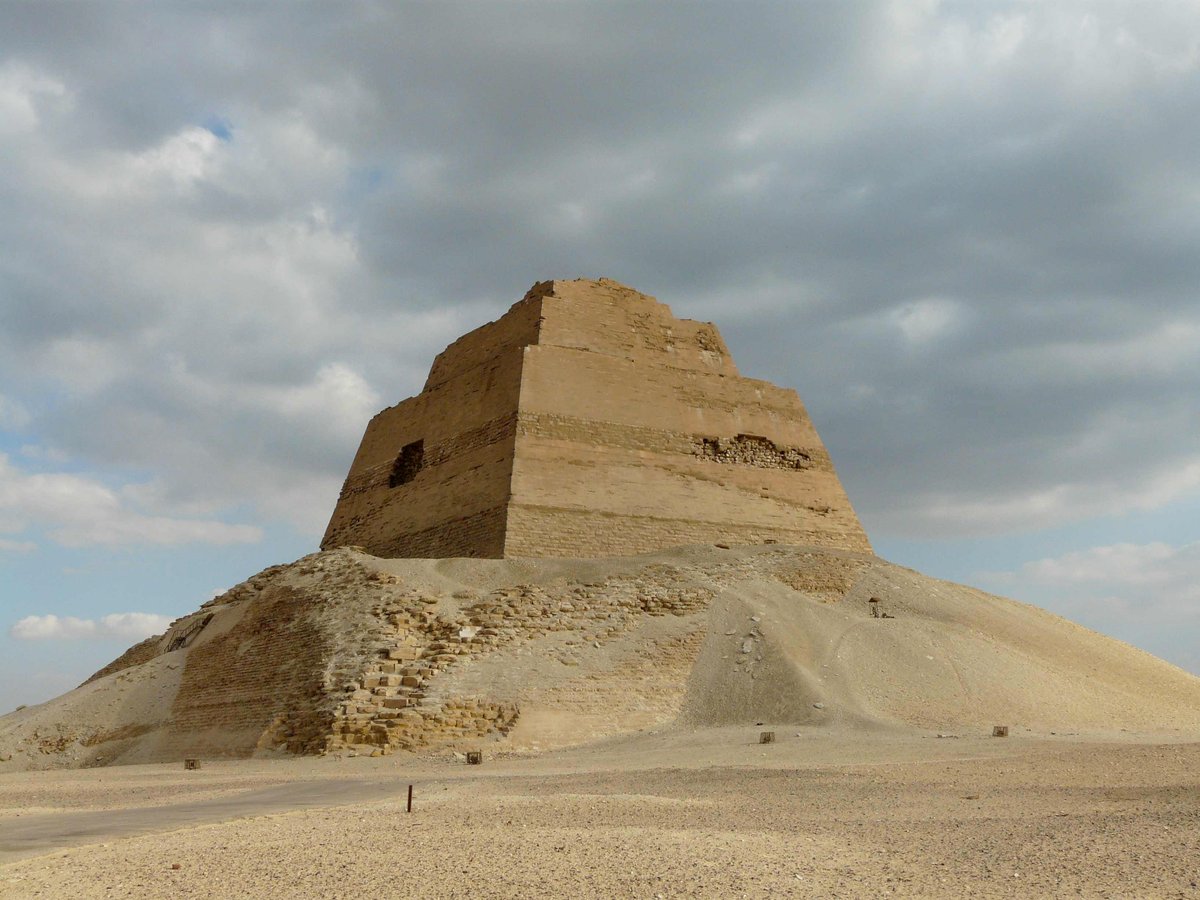

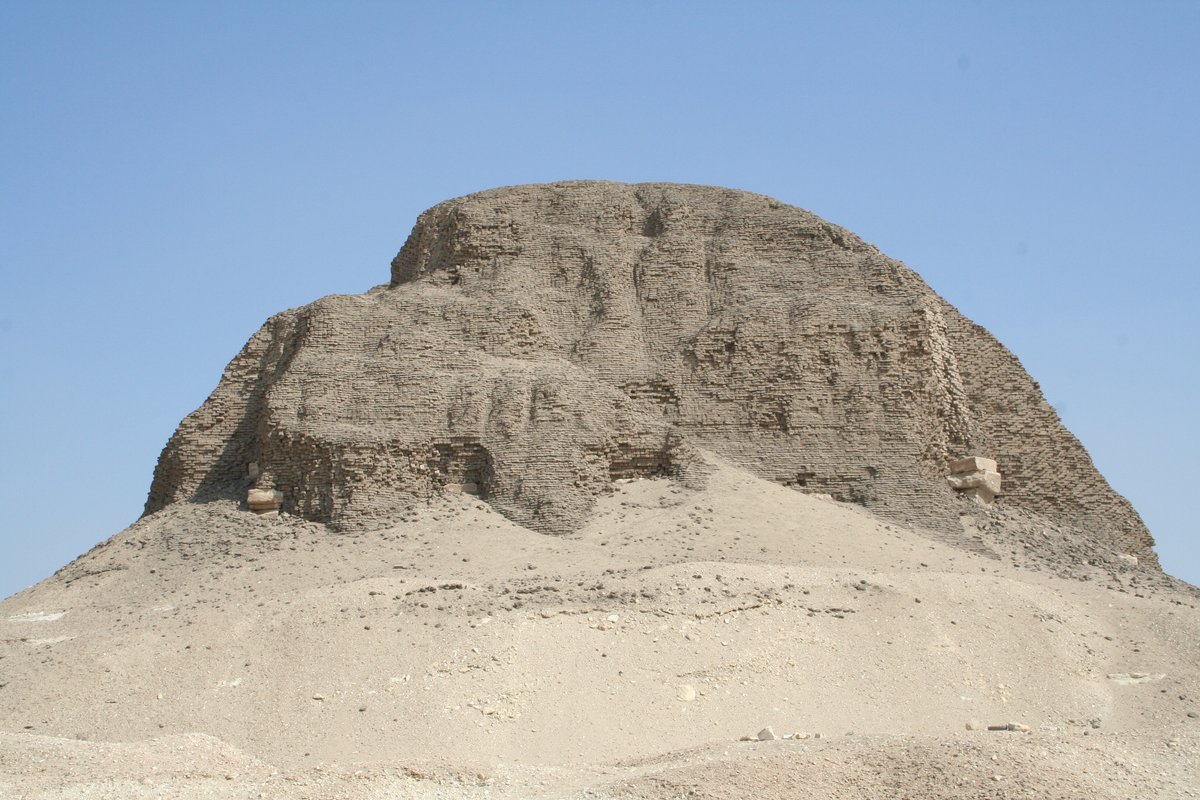
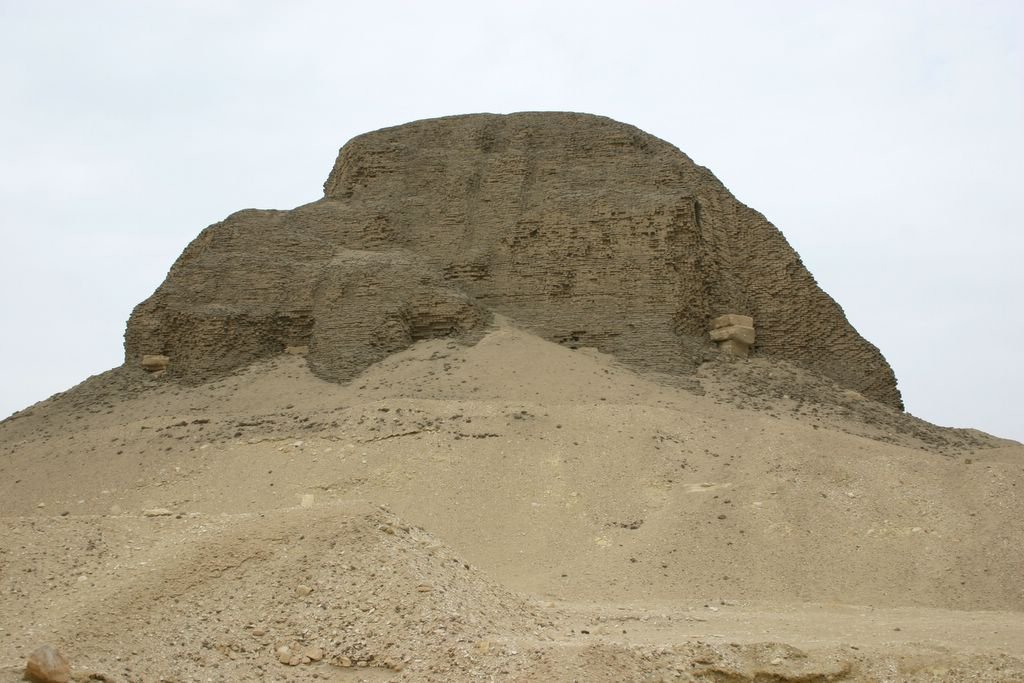
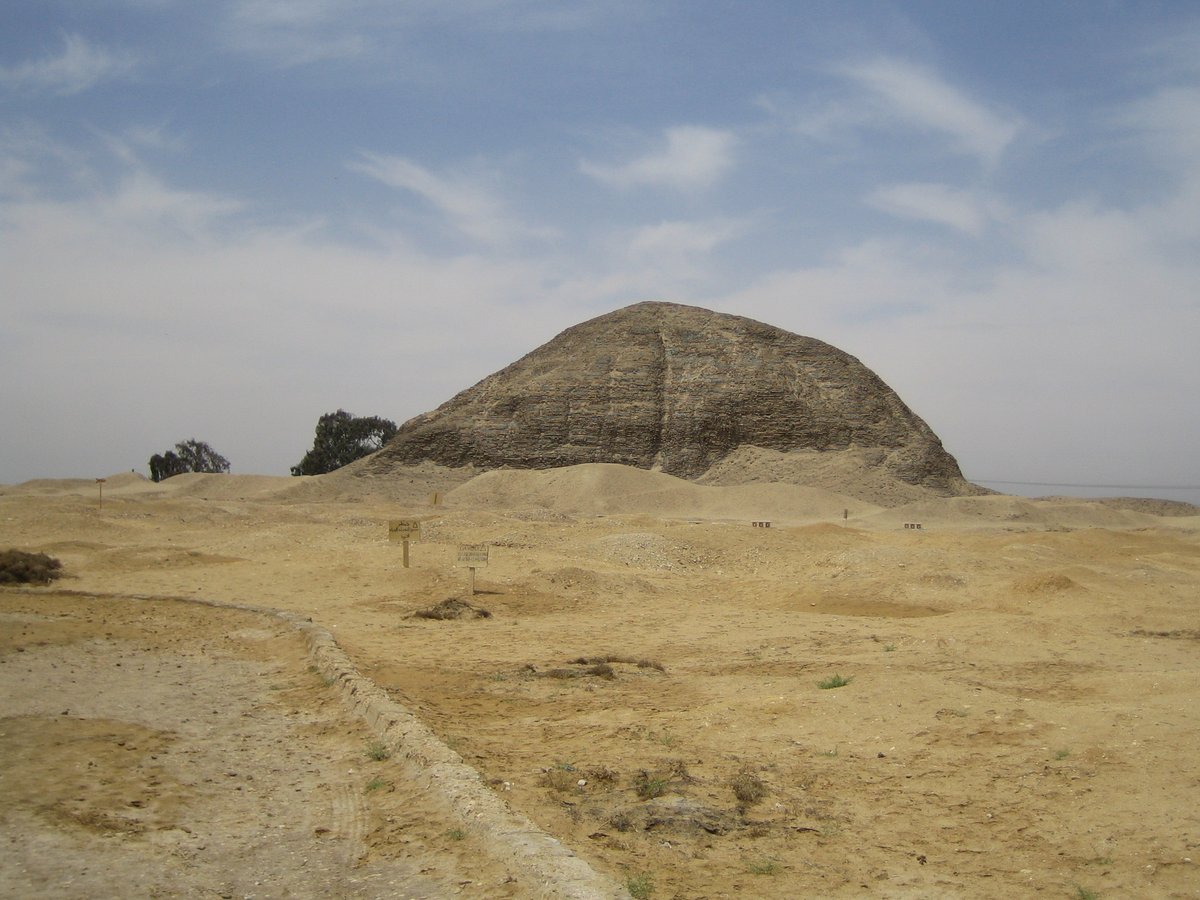
The pyramid at Meidum is thought to be the first of three main pyramids built by Sneferu. It is possible that construction began under the reign of Huni, the last pharaoh of the Third Dynasty, and continued by Sneferu. Because of its unusual appearance, the pyramid is known in Egyptian Arabic as el-heram el-kaddaab, or the false pyramid.
To turn the original step pyramid design into a true pyramid, the steps were filled in with limestone encasing. However, the construction suffered from significant errors. The outer layer was founded on sand instead of rock, and the platforms of the steps were not horizontal, but fell off to the outside. These flaws compromised the stability of the structure, which likely caused the Meidum Pyramid to collapse during a downpour while it was still under construction. This collapse is believed to be the reason Sneferu changed the slope of his second pyramid, the Bent Pyramid, from 54 to 43 degrees.
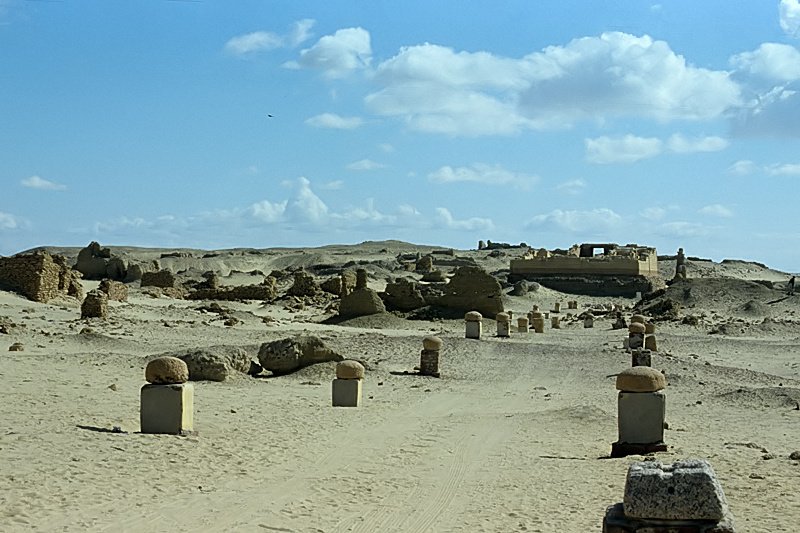
The Meidum Pyramid seems never to have been completed. While most pyramids from the time of Sneferu had a valley temple, Meidum is missing one. A mortuary temple was found under the rubble at the base of the pyramid, but it appears to have been left unfinished. Inside the pyramid, the burial chamber remains incomplete with raw walls and wooden supports, and two stelas are missing their inscriptions. The entrance to the pyramid is aligned north-south.
By the time of Napoleon's Expedition in 1799, the pyramid had its present three steps. While historical descriptions have varied, the dimensions of the pyramid show a ratio of 7:44, the same proportion used for the Great Pyramid at Giza. This suggests the four outer faces were intended to slope at a seked of 5 1/2 palms, approximately 51.84 degrees.
Sources: Wikipedia, OpenStreetMap, Wikidata, Wikimedia Commons
Written by Mutabor
Discuss this with the author and others
No comments yet. Be the first to start the conversation.