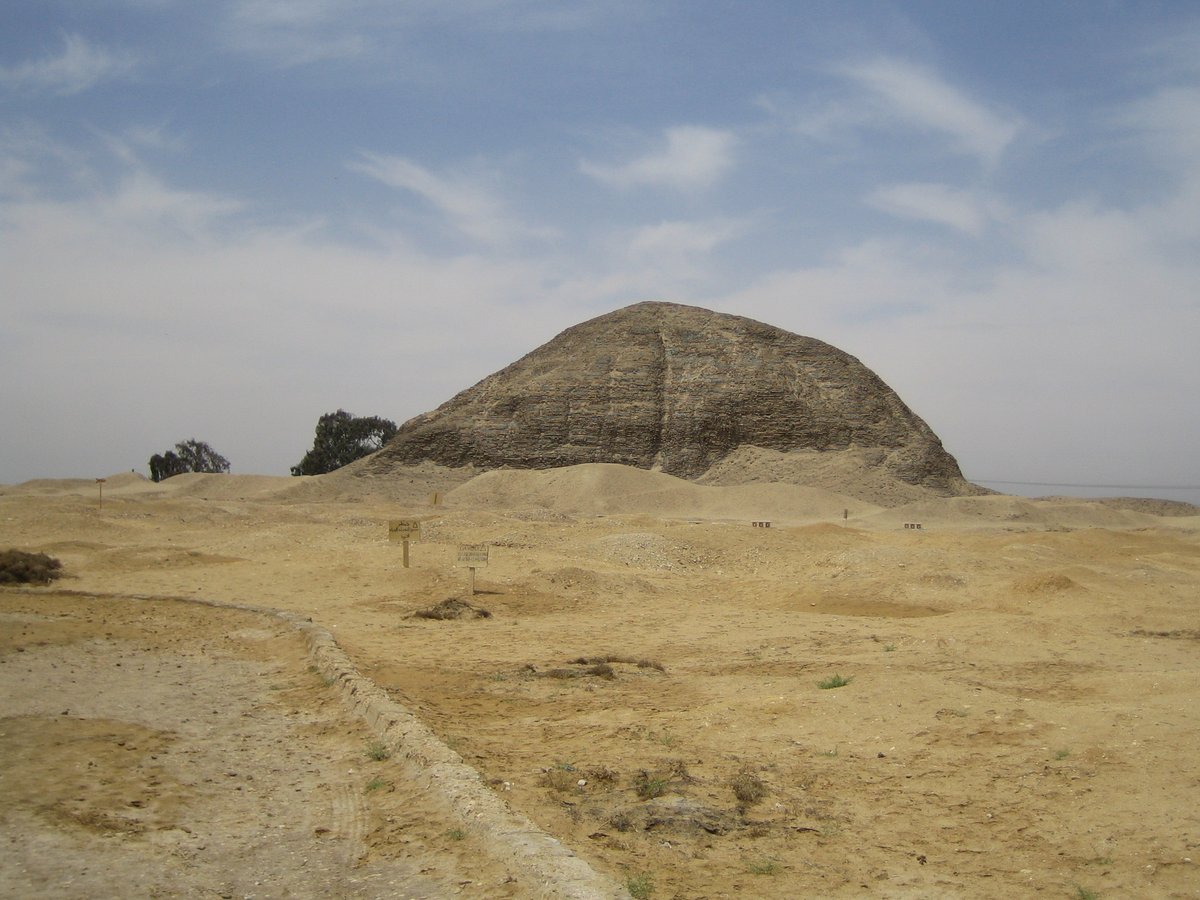

Located at the entrance to the depression of the Fayyum oasis, the Pyramid of Hawara was built by King Amenemhat III of the 12th dynasty between the 19th and 18th centuries BC. As the last powerful ruler of the 12th Dynasty, Amenemhat III built this pyramid as his final resting place, post-dating the "Black Pyramid" at Dahshur. The structure was built of mudbrick around a core of limestone passages and burial chambers, and was originally faced with limestone.
The interior of the pyramid features a complex system of protective measures. From the entrance, a sloping passageway leads to a room and a horizontal passage containing a 20-ton sliding trapdoor. This leads to a series of empty passages at right angles to one another, some filled with mud and stone blocking to waste the time of tomb robbers. The real entrance to the burial chamber was concealed between blind shafts in the floor and opposite a shallow alcove. Despite these defenses, archaeologist William Petrie found that the trapdoors had not been moved and the wooden doors were open.
Nearby, approximately 2 km south of the king's pyramid, lies the intact tomb of Neferuptah, the daughter of Amenemhat III. In a vast necropolis north of the pyramid, Petrie discovered 146 portraits on coffins dating to the Roman period, which are among the few surviving examples of painted portraits from classical antiquity. Petrie's excavations also uncovered papyrus manuscripts at the site, including a scroll containing parts of the Iliad.
Sources: Wikipedia, OpenStreetMap, Wikidata, Wikimedia Commons
Written by Mutabor
Discuss this with the author and others
No comments yet. Be the first to start the conversation.