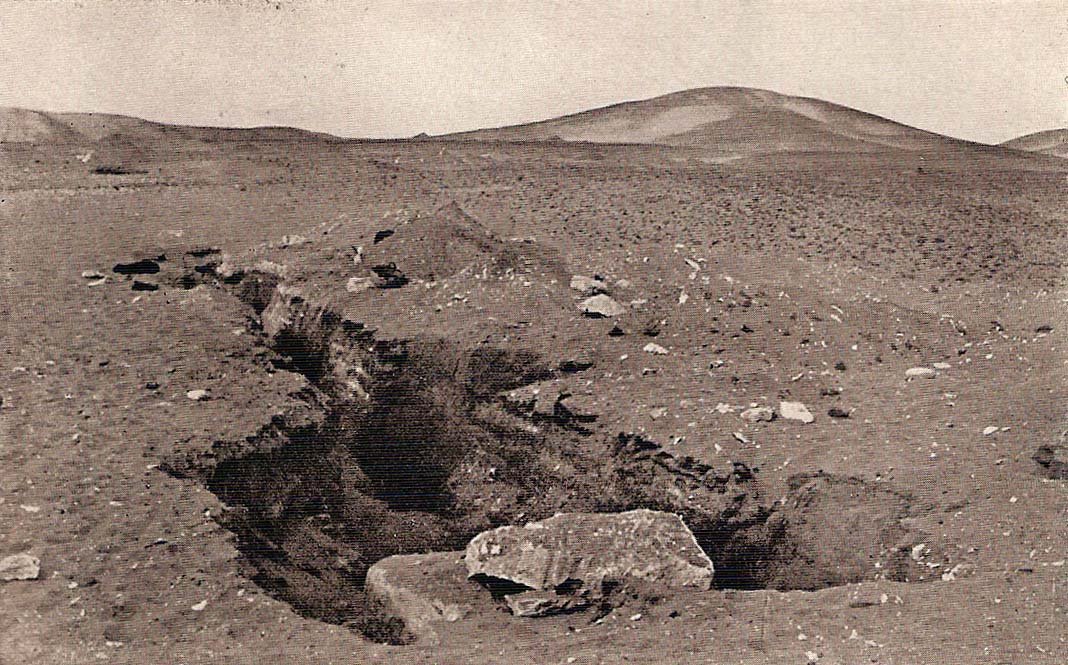

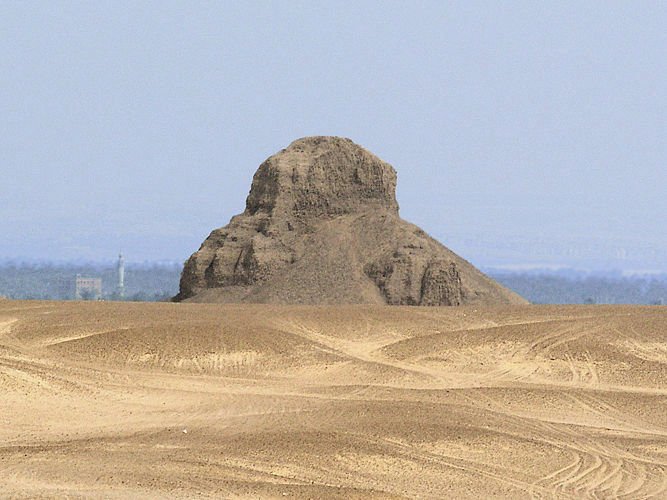
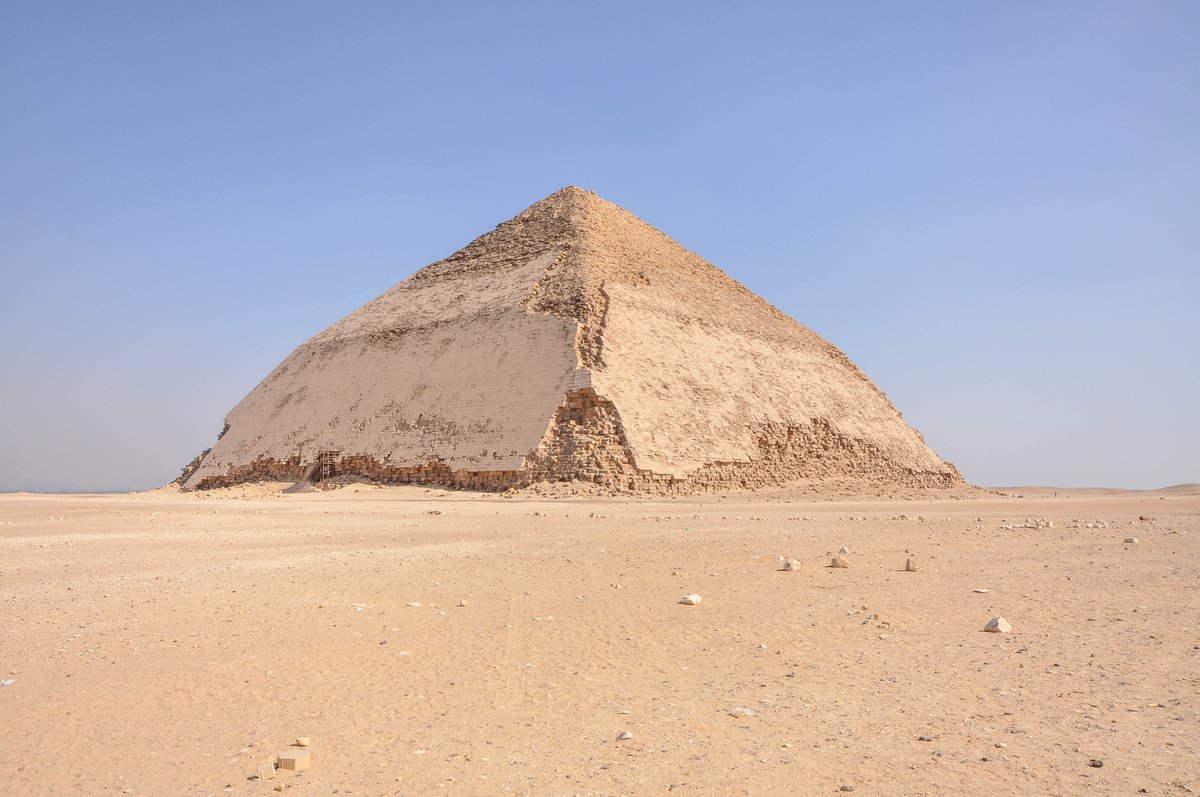
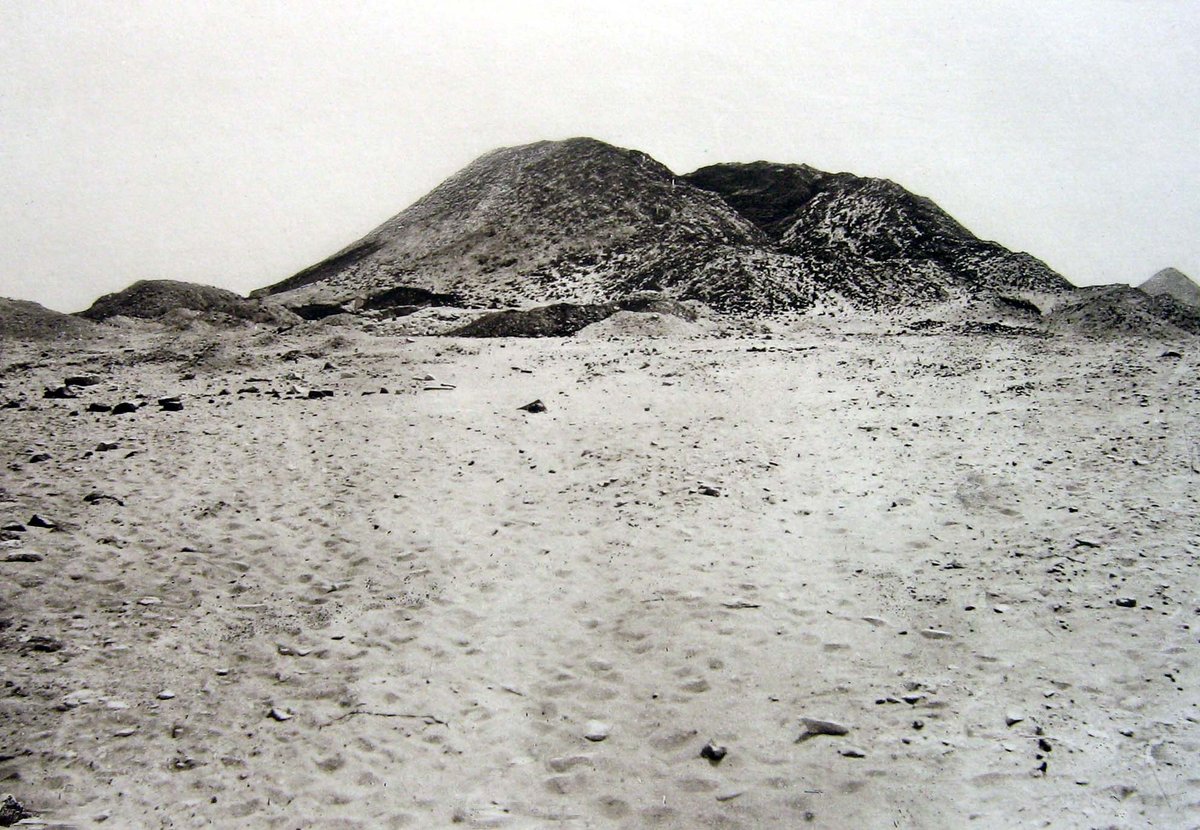
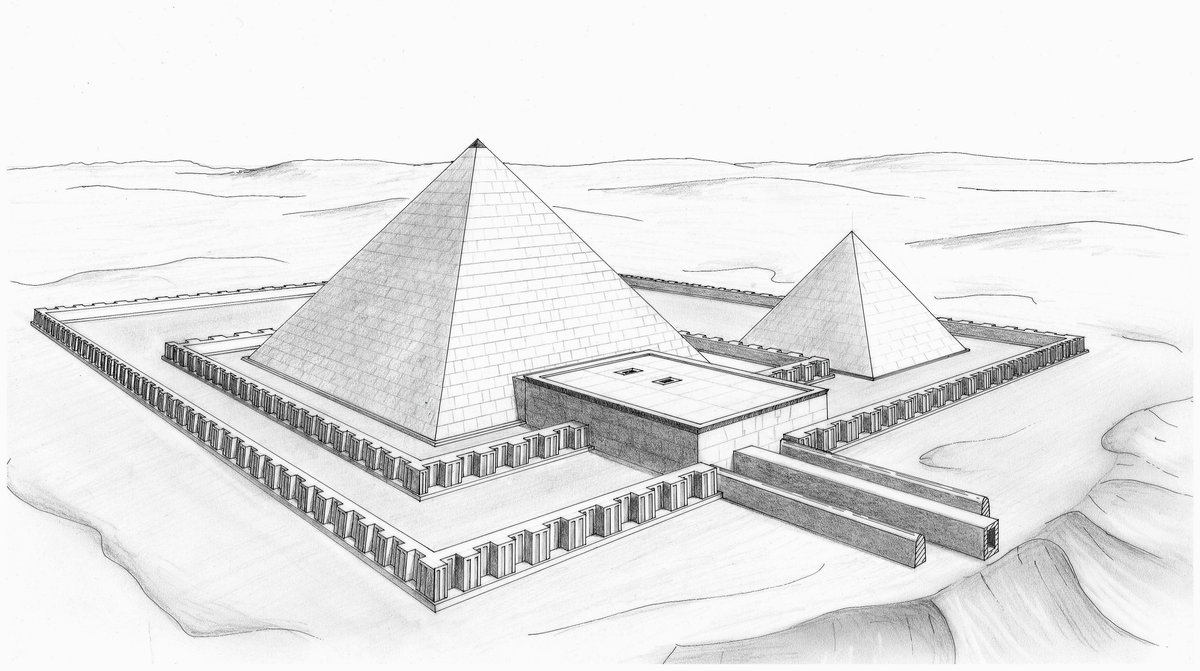
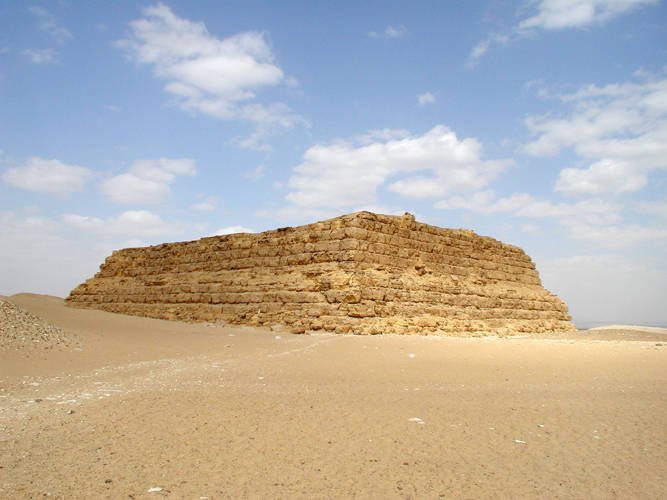
Located 5 km south of Dahshur, the southern Mazghuna pyramid is an ancient Egyptian royal tomb built during the 12th or 13th Dynasty. While it shares structural similarities to the Hawara pyramid of Amenemhat III, no inscriptions have been found to confirm its owner. The building was never finished, and it remains unknown which pharaoh it was intended for.
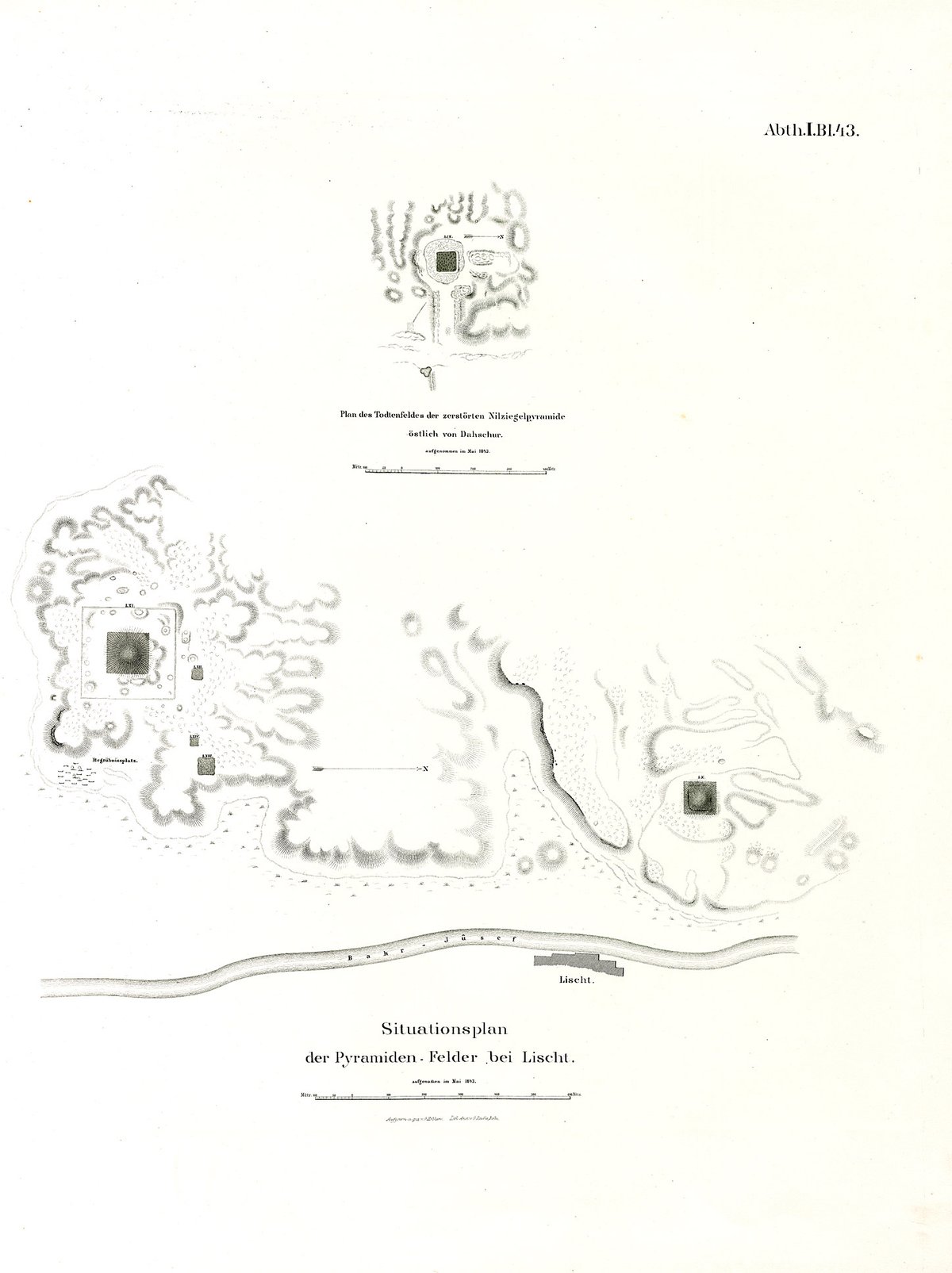
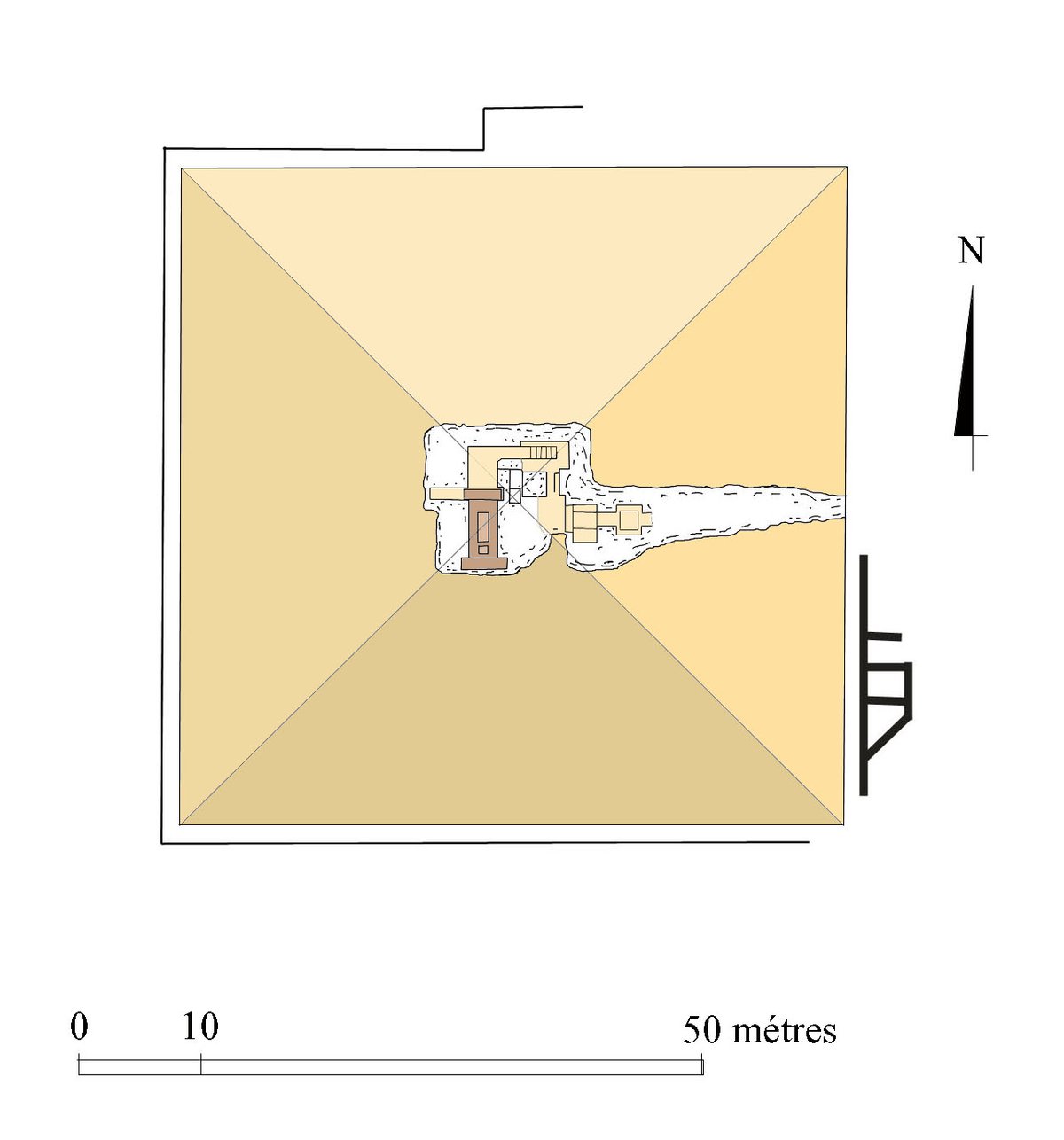
The pyramid has a side length of 52.5 m and a core masonry of mudbricks that reaches only one to two layers in height. Because casing stones were never found, the planned inclination angle and total height of the structure cannot be determined. The site was rediscovered in 1910 by Ernest Mackay and excavated the following year by Flinders Petrie.
An entrance on the south side leads to a short horizontal passage containing a wall niche where a blocking stone was once pushed. A second staircase leads to another block still in its niche, eventually opening into a U-shaped chamber system. This leads to a burial chamber topped by a gable roof, which contained an empty but used quartzite sarcophagus and several grave goods, including three limestone lamps, an alabaster duck-shaped vessel, and a piece of polished soapstone.
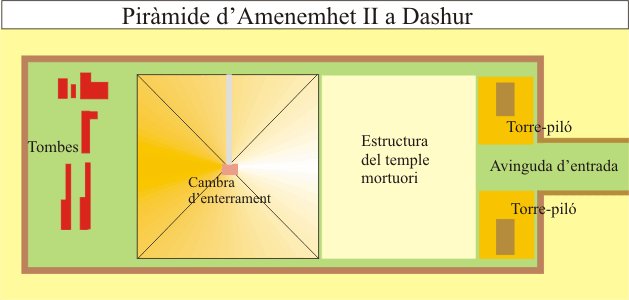
The complex is surrounded by a wavy wall that incorporates the remains of a chapel on the east side. This chapel consists of a large central chamber with two chambers on each side of a storehouse. The central chamber was attached at its southwestern corner to a sacrificial hall with a vaulted roof.
Sources: Wikipedia, OpenStreetMap, Wikidata, Wikimedia Commons
Written by Mutabor
Discuss this with the author and others
No comments yet. Be the first to start the conversation.