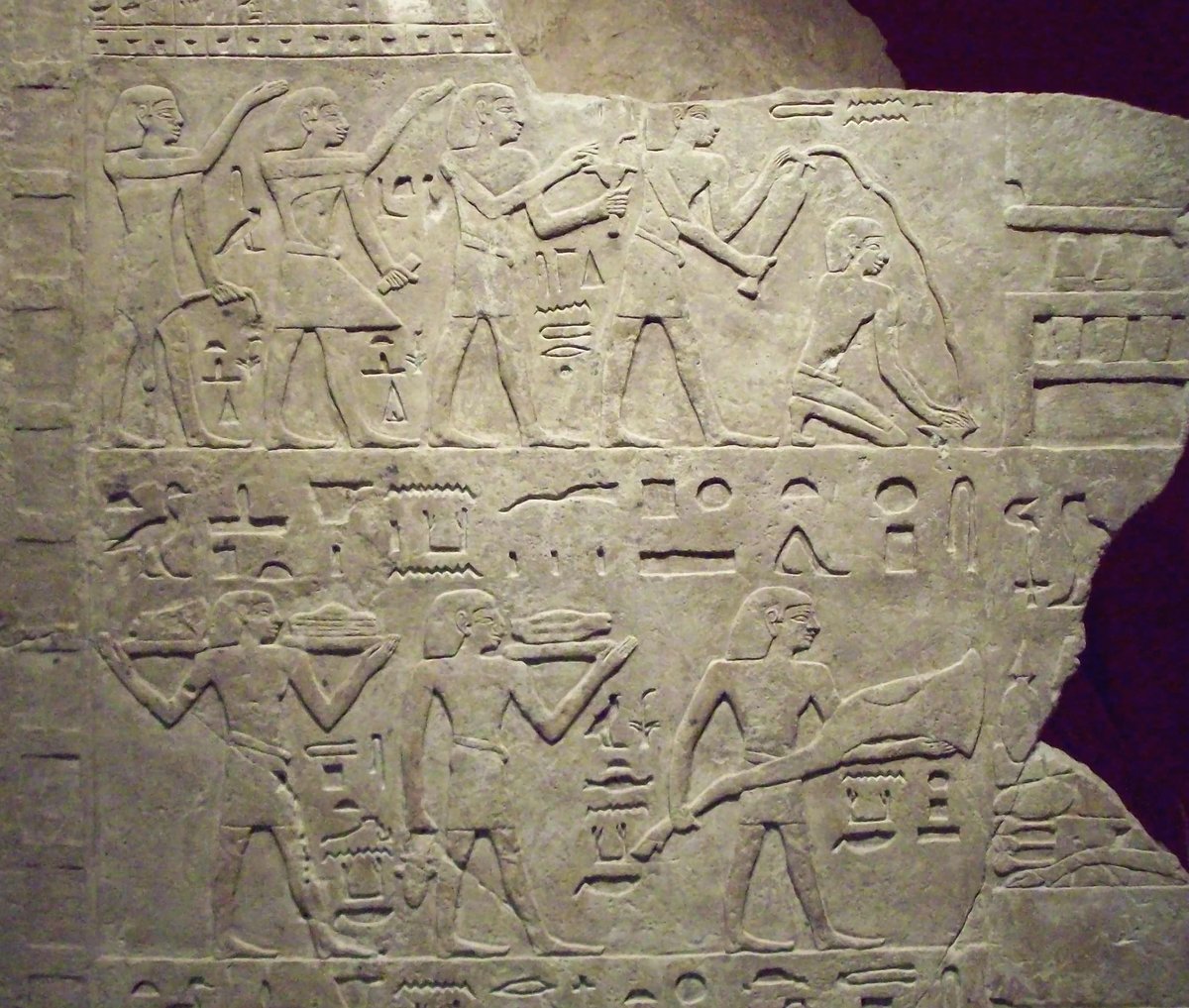

Heracleopolis Magna, known in ancient Egyptian as nn nswt, was the capital of Noret-Khent, the 20th nome of ancient Upper Egypt. The site is located approximately 15 km west of the modern city of Beni Suef in the Beni Suef Governorate. Its name, which means "City of Heracles," became more common during the Ptolemaic Kingdom, while the Roman Empire used a Latinised form of the Greek name.
Herakleopolis first came to prominence and reached its apogee of power during the First Intermediate Period, between 2181 and 2055 BC. During this time, it became the principal city of Lower Egypt and exerted great control over the region. From 2160–2025 BC, a period sometimes called the Herakleopolitan Period, the city often found itself in conflict with the de facto capital of Upper Egypt, ancient Thebes.
Between the latter part of the First Intermediate Period and the early Middle Kingdom, the city became the religious center of the cult of Heryshaf, and the Temple of Heryshaf was constructed. By the time of the Third Intermediate Period (1069–664 BC), the city rose in importance again, undergoing many renovations and new constructions of its temple and mortuary centers. By the Ptolemaic Kingdom, the Greek rulers associated Haryshef with Heracles in the interpretatio graeca.
Sir Flinders Petrie completed the excavation of the temple of Heryshaf and discovered features including a house from the Roman period of occupation. He also identified a temple attributed to the 19th Dynasty and uncovered numerous pot sherds associated with the 11th Dynasty. Other recent excavations have also increased knowledge of the site, such as a Spanish team in the 1980s that uncovered a libation altar and a pair of decorated eyes from a Third Intermediate Period temple.
In 2008, a Spanish team led by María del Carmen Pérez-Die revealed a previously unknown tomb with several false doors dating to the First Intermediate Period, as well as funeral offerings. More recently, an Egyptian archaeological mission led by Mohamed Ibrahim announced discoveries in 2026, including royal inscriptions and a reused limestone block bearing a raised-relief inscription of the pharaoh Senusret III. They also identified a second cartouche bearing the name of Osiris-Naref, a local manifestation of Osiris important to the city.
Sources: Wikipedia, OpenStreetMap, Wikidata, Wikimedia Commons
Written by Mutabor
Discuss this with the author and others
No comments yet. Be the first to start the conversation.