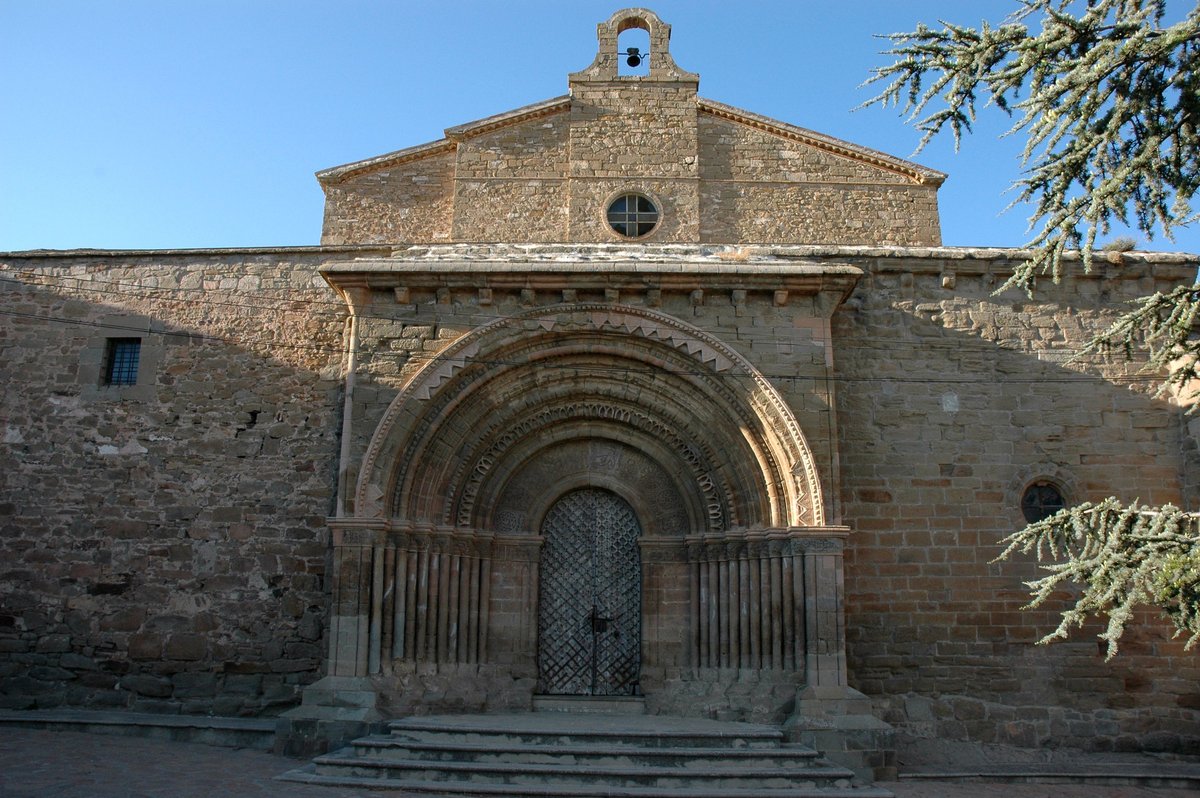

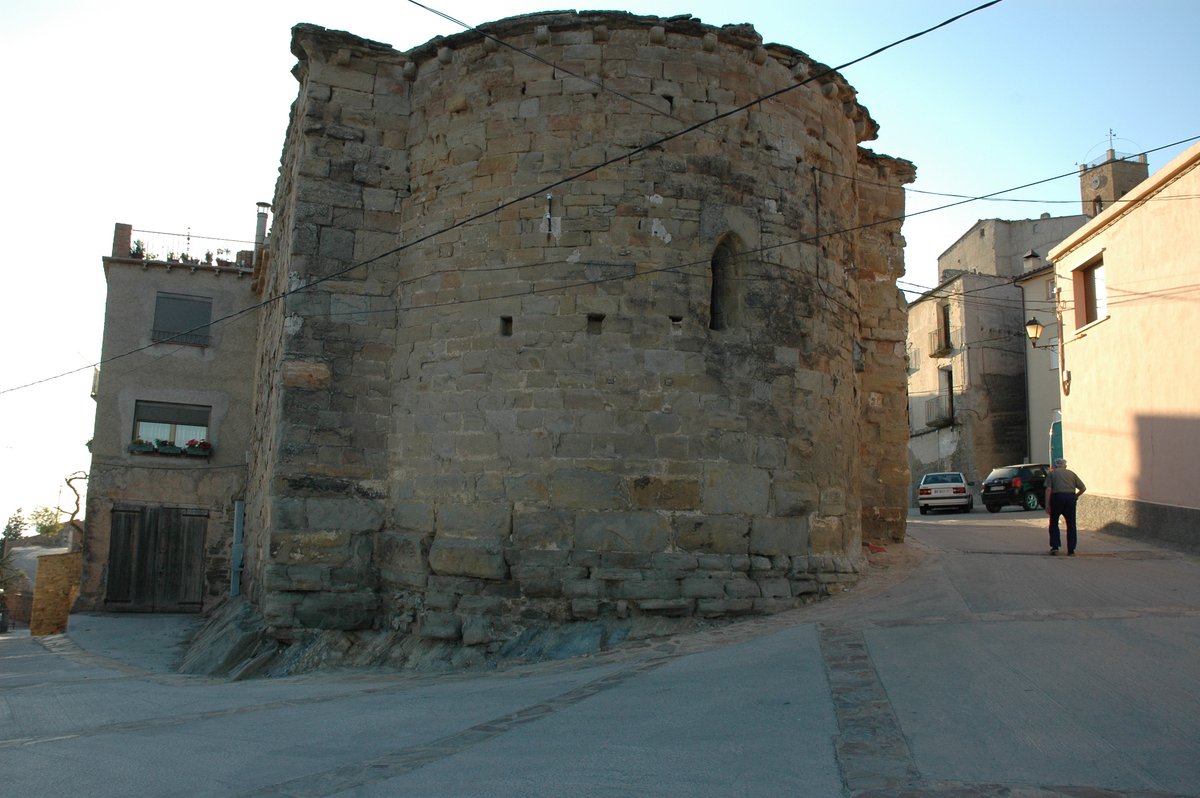
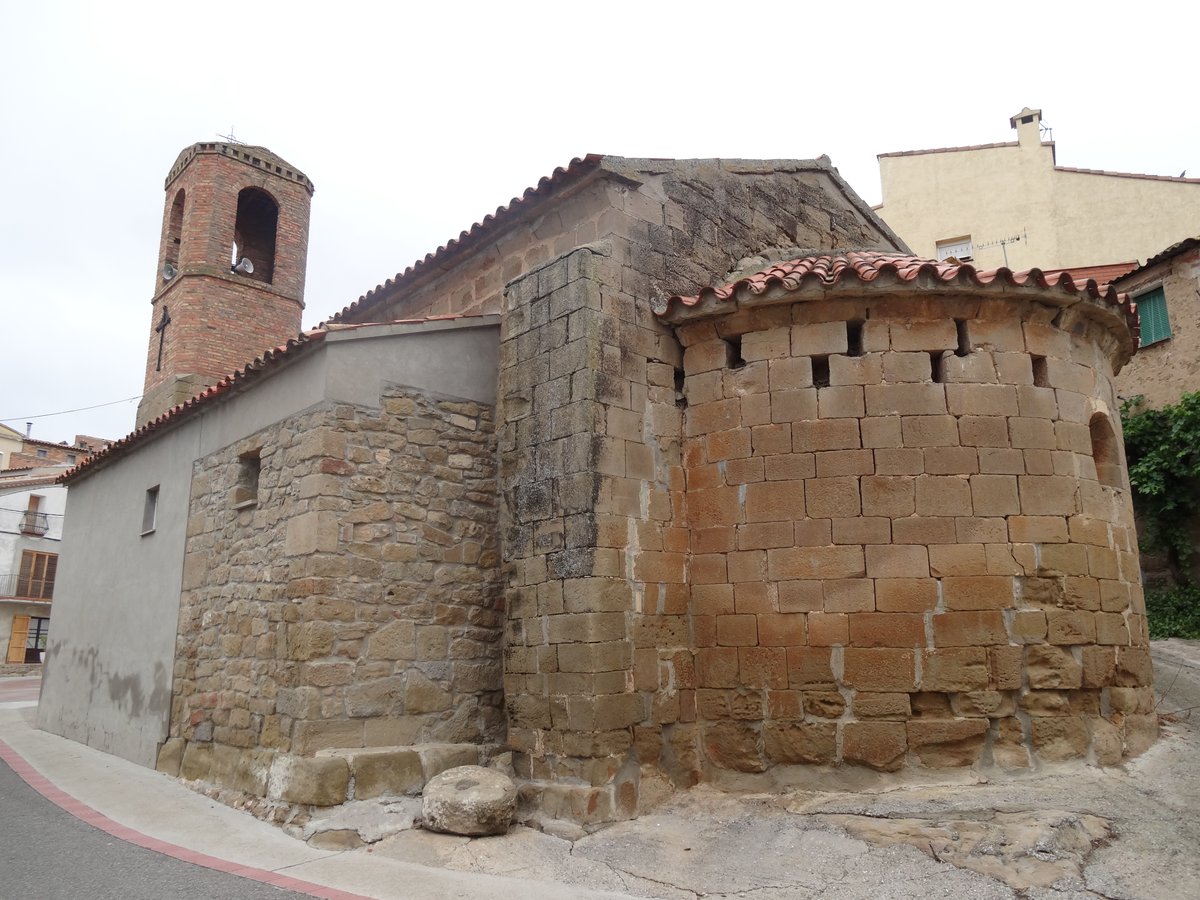
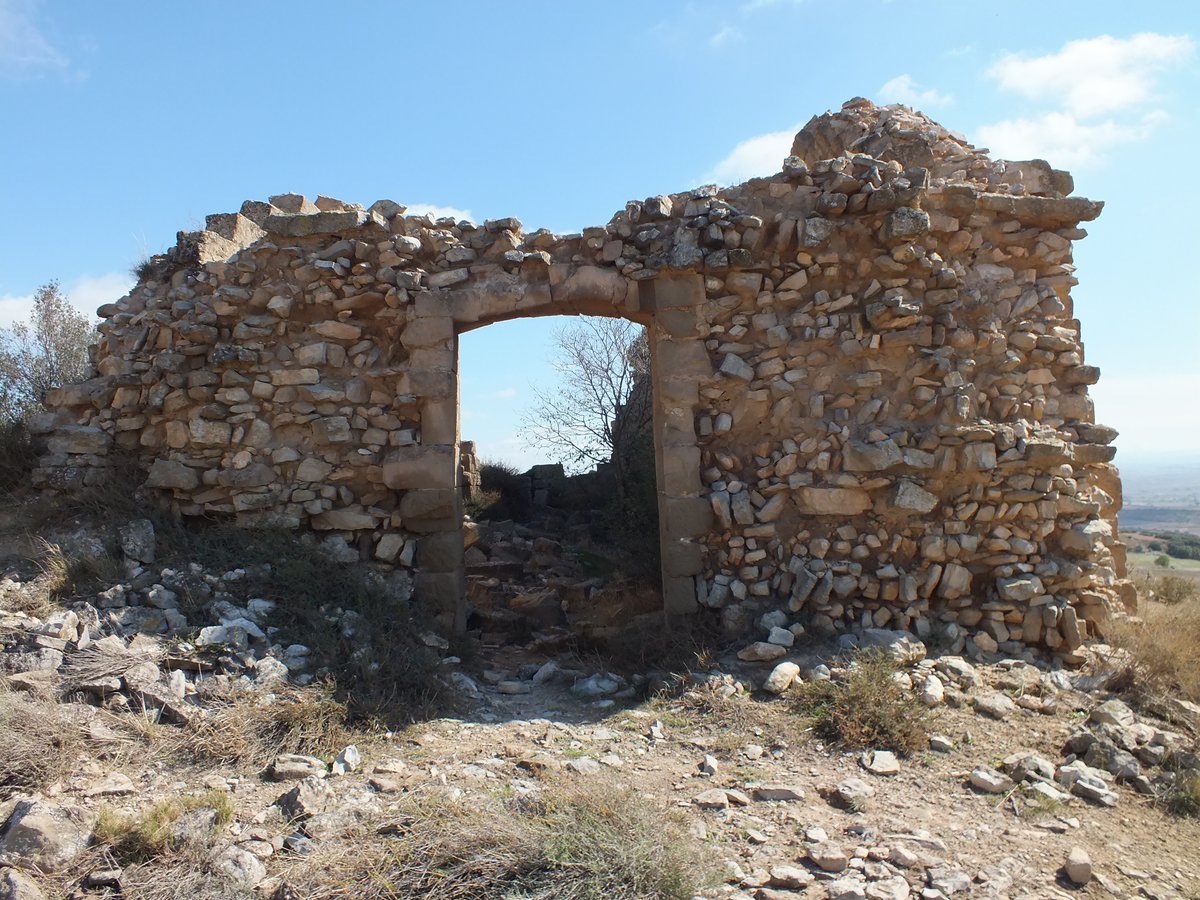
Santa Maria del Castell stands at the summit of Cubells as the sole remaining fragment of the ancient castle. While it serves as a premier example of the Lleida School of Romanesque architecture, it endured a long period of secondary use. During the 19th century, a new church was constructed perpendicular to this original building, effectively turning the medieval structure into a simple atrium. A recent restoration has now separated the two buildings, allowing the Romanesque church to exist as its own independent space once more.
Constructed in the 13th century, the building features a pointed barrel vault and a notable expansion from 1748. You should look closely at the magnificent Romanesque portal on the south wall. It consists of six archivolts resting on monolithic columns. Because the local sandstone is prone to erosion, the depth of these carvings has helped preserve the figures. Take a moment to observe the birds in various poses, the human figures, and even a lion.
These carvings reveal a clear influence from textile arts and the plaster work of the Moors, who were renowned for their skill in the region. You can find capitals featuring two serpents locked in a fierce struggle. While this specific chapel once served as an entrance, it also holds a separate piece of history. It was the original home of a Gothic alabaster image of the Virgin of Milk, which is now kept in the nearby parish of Sant Pere.
Sources: Wikipedia, OpenStreetMap, Wikidata, Wikimedia Commons
Written by Nik Frost
Discuss this with the author and others
No comments yet. Be the first to start the conversation.