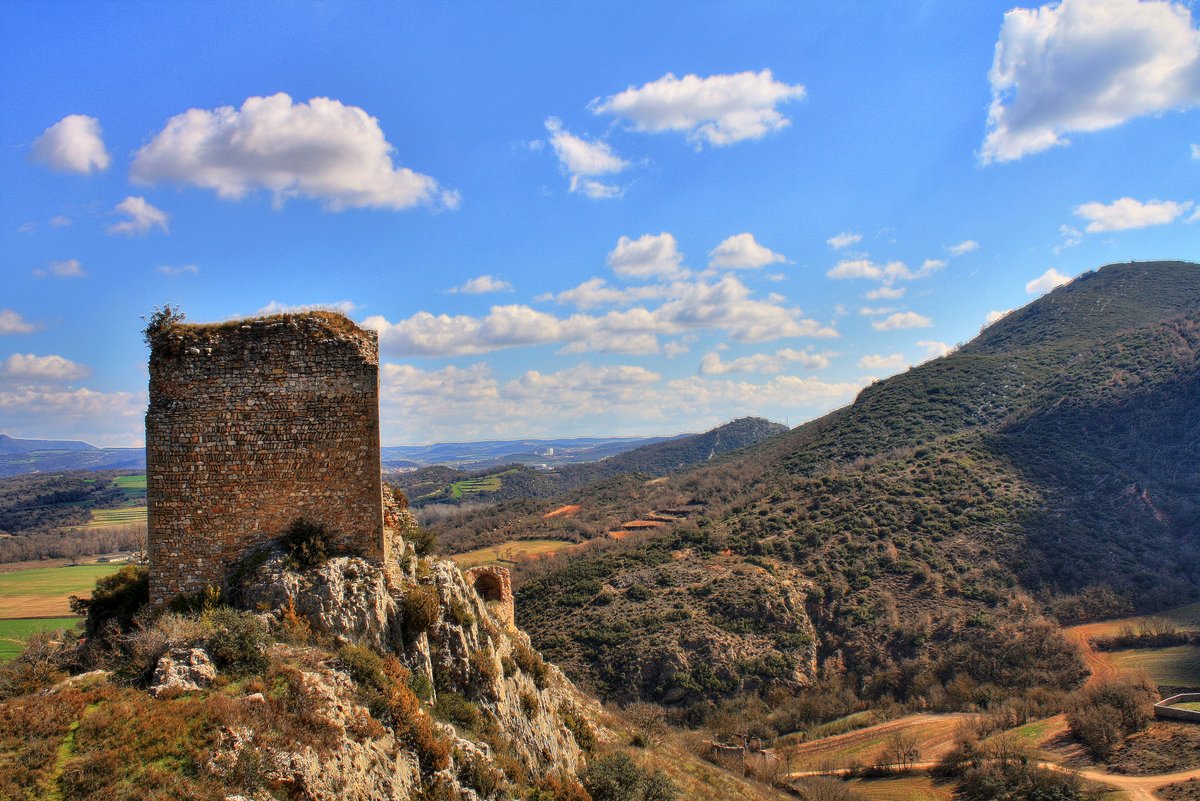

Constructed in the 11th century, the castle of Rubió de Sòls in the Noguera region of Catalonia, Spain, occupies a strategic position atop a rocky promontory. With origins likely traceable to the Islamic Marca d'Al-Andalus, it served as a vital border stronghold during a turbulent time of territorial conflicts and political consolidation. Although the castle remains in a ruinous state, its enduring presence offers a fascinating glimpse into the military architecture and feudal history of the region.
The earliest documented references to Castell de Rubió date to the mid-11th century, with mentions in records from either 1063 or 1069. By 1198, the castle was under the governance of Pedro de Bertran of Rubió, highlighting its role as a seat of local power. The castle's ownership changed hands through prominent noble families, reflecting the medieval practice of using marriage alliances to consolidate territorial control.
Sources: Wikipedia, OpenStreetMap, Wikidata, Wikimedia Commons
Written by Nik Frost
Discuss this with the author and others
No comments yet. Be the first to start the conversation.