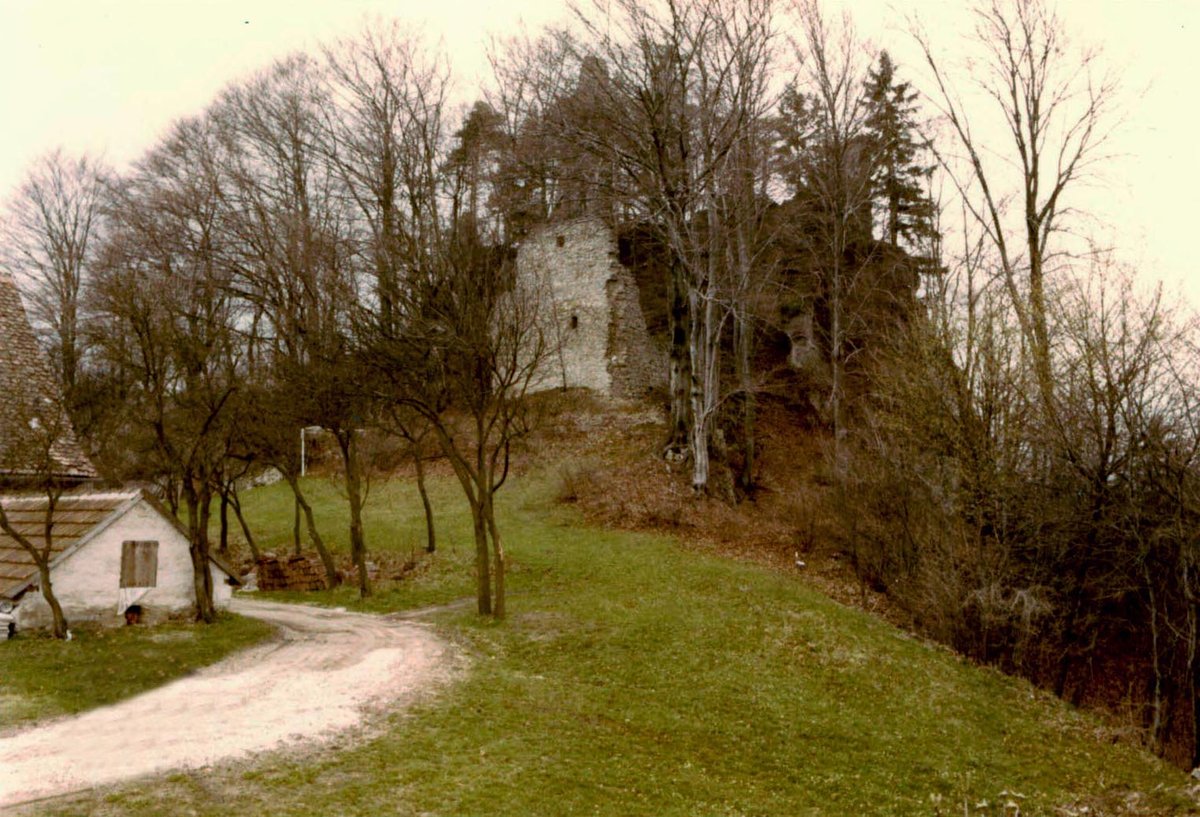
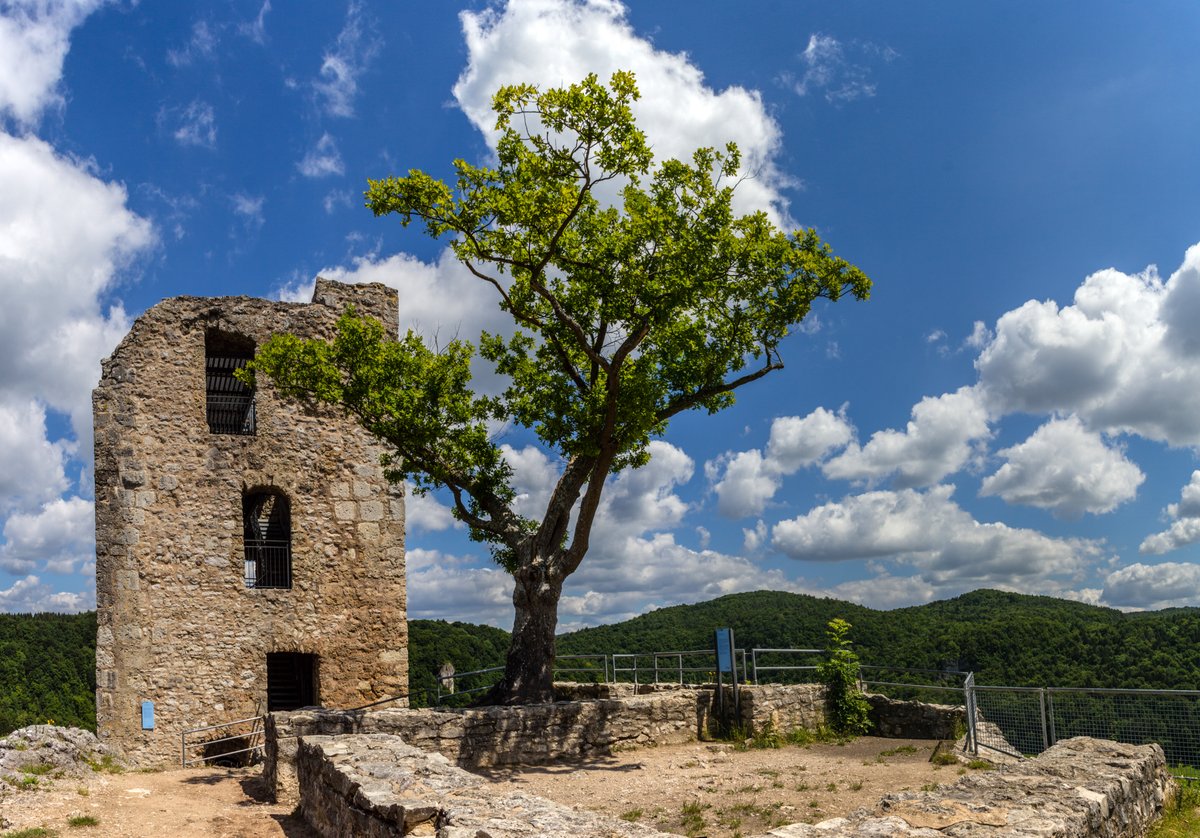
Wildenfels Castle sits high on a limestone summit at 586 metres, overlooking the village of Wildenfels in the Fränkische Schweiz – Frankenjura Nature Park. It is a skeletal ruin of limestone blocks, a place where the heavy weight of the late 13th century still rests in the fractured curtain walls and the remains of the palas. To reach it, you follow a sign from the northern part of the village, climbing into the Wildenfelser Wald.
Construction began in the late 1200s or early 1300s, though the local community of Simmelsdorf places the work more specifically between 1317 and 1323. It was built by the Lords of Wildenstein. History first caught the name in a deed from August 11, 1323, when Dietrich III. von Wildenstein first identified himself as 'Dietrich Wildensteiner von Wildenfels'. He was the son of Heinrich II. and the nephew of Dietrich I. His brothers and he traded land and rights, using a seal that depicted a millwheel with seven blades, a simple crown, and a high hat for a helmet crest.
By the middle of the 14th century, Dietrich III. purchased the village of Großengsee and other rights from the Burgraves of Nuremberg for 534 pounds of Heller. By 1350, he was recorded as 'Dietrich der Alte'. The castle remained in the family until the line of Alexander I. von Wildenstein ended. His daughter, Christina, married Christoph von Lentersheim around 1500, who took possession of the fortress. Wildenfels likely passed to the Wildensteiner von Strahlenfels by purchase in 1503. The Wildensteiner family sold the property to Conrad and Friedrich Pelck in 1509, who then handed the keys to the Imperial City of Nuremberg in 1511 for 1300 Gulden.
Nuremberg established an administrative office, a Pflegamt, at the castle in 1518. Stability was short-lived. During the Peasants' War in 1525, the castle was destroyed. The city attempted to rebuild the walls and halls, but Margrave Albrecht Alcibiades struck it again in 1553 during the Second Margrave War. The city chose not to rebuild it a second time. The ruin was left to the elements, eventually losing the western half of its square keep, the Bergfried, to a lightning strike in 1827.
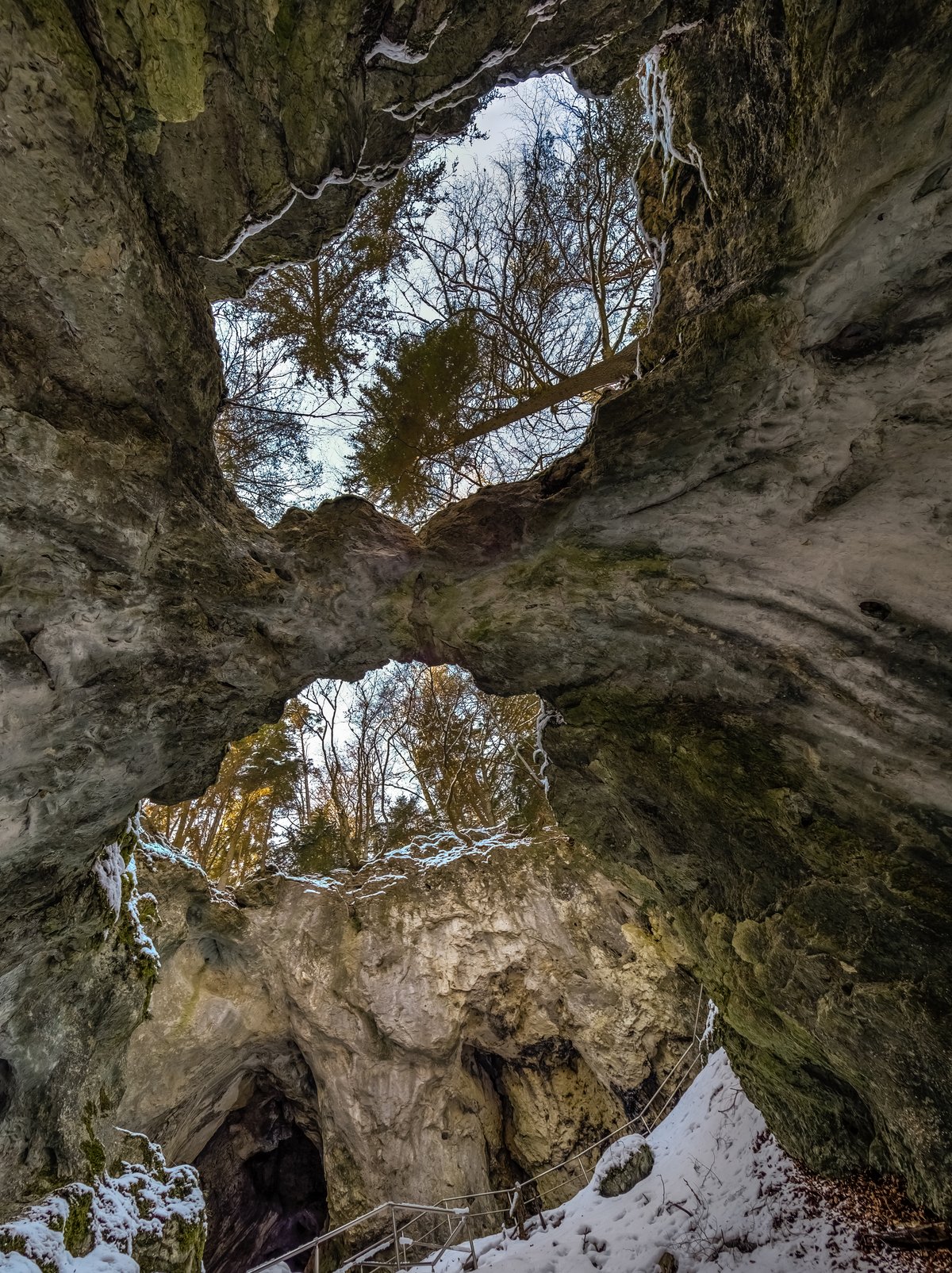
Today, the ruins are a landscape-defining monument. You can walk among the remaining walls of the keep and the curtain walls without a gate to stop you. At the foot of the ruin lies the Burghöhle, a small cave recorded in the Fränkische Alb cave register. Looking out from the summit, the silhouette of other medieval remains like the Burgstall Strahlenfels and the distant Burg Hiltpoltstein punctuate the horizon.
Sources: Wikipedia, OpenStreetMap, Wikidata, Wikimedia Commons
Written by Aurora
Discuss this with the author and others
No comments yet. Be the first to start the conversation.