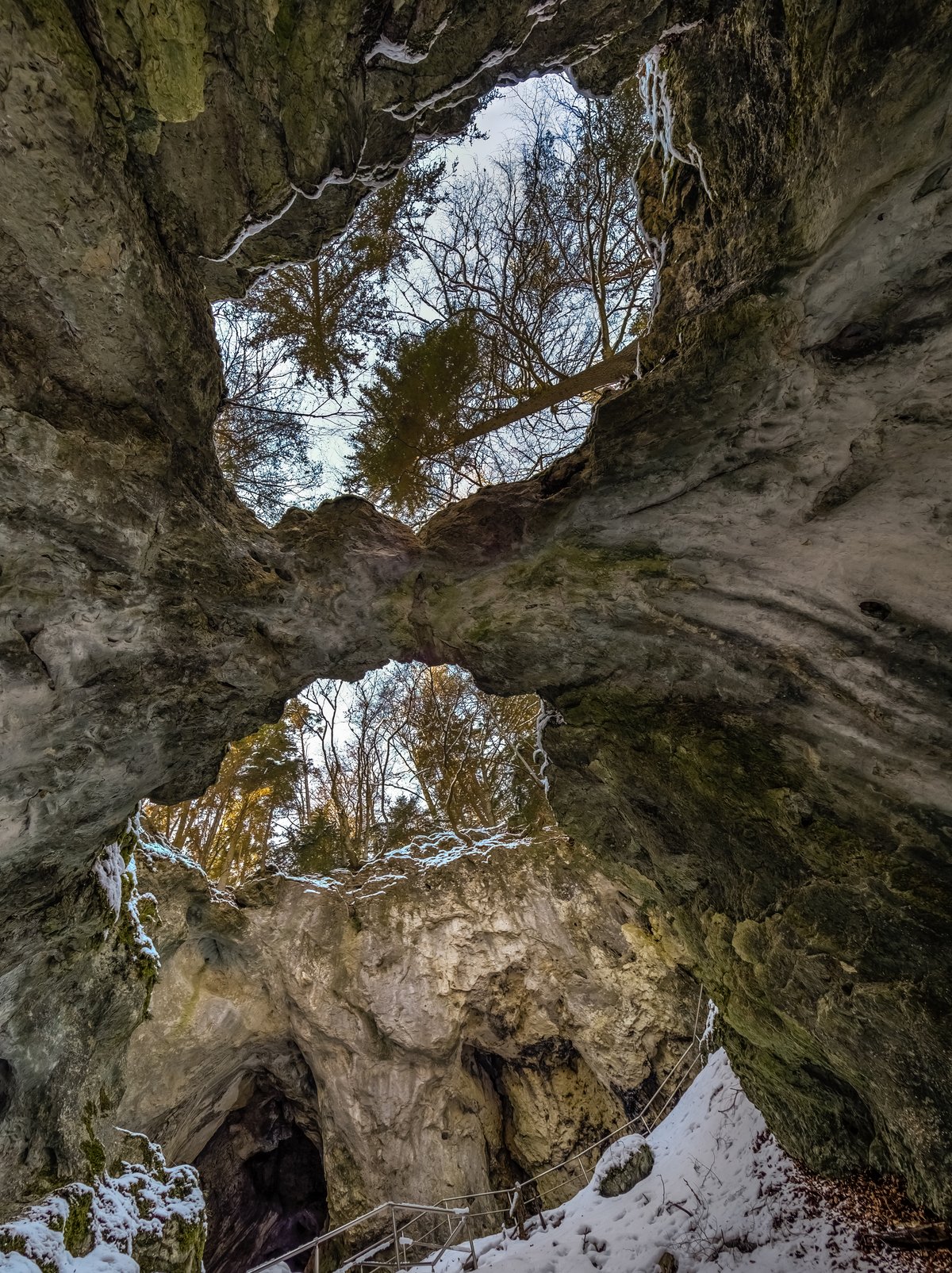
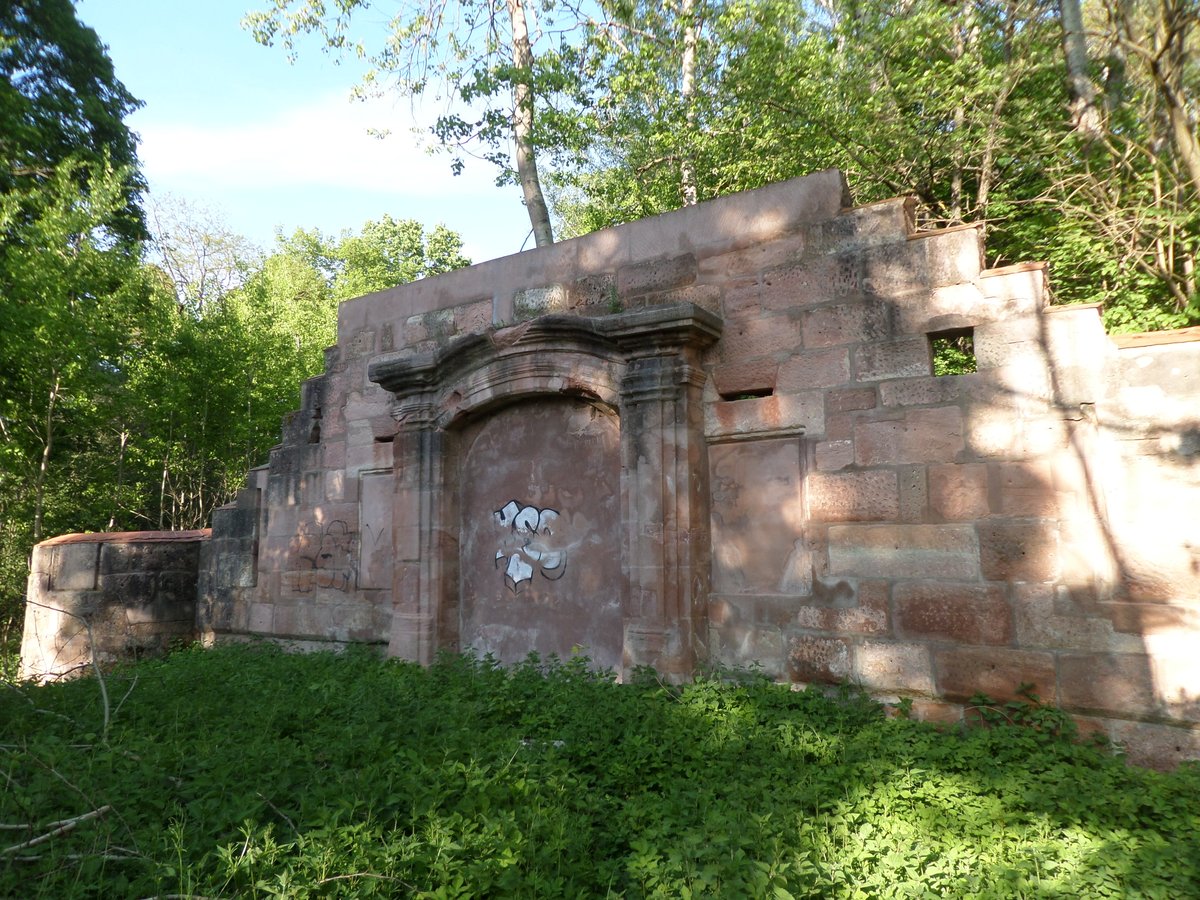
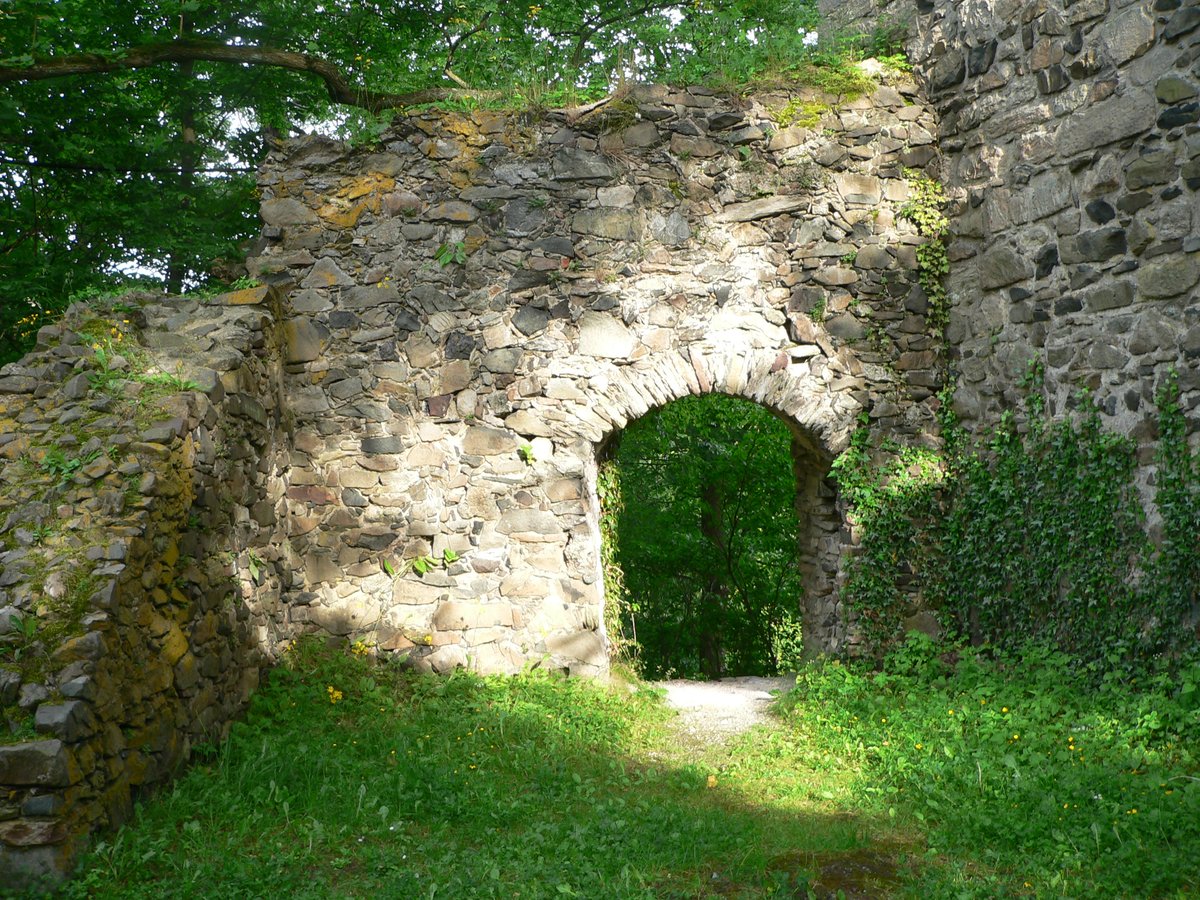
Three great arches remain, some rising over ten meters high. They are the remains of a former cave roof that collapsed almost entirely. Once a large karst cave, the Riesenburg is now a ruin of Frankendolomite, a place shaped by water erosion.
To understand its shape, one must look back 161 million years to a shallow sea. This was where the Jura sediments were deposited between 161 and 150 million years ago. During the Upper Cretaceous, a tropical climate led to karstification, hollowing out the stone. Later, a sea intrusion almost completely filled the cave with loamy sediments.
Then the sea receded and the river Wiesent flowed into the cave, expanding the cavity and washing out the sediment. The removal of this stabilizing material caused the cave ceiling to collapse almost entirely. Today, the remaining three arches stand as monuments to the lost interior. One of these arches is accessible via a path.
The landscape around the site feels intentional, a product of the Romantic period's aesthetic. In the 19th century, Graf Franz Erwein von Schönborn purchased the area and transformed the treeless slopes into a forest to increase the romantic effect. He built the paths and stairs that still lead visitors to the site. He was not alone in his admiration; King Ludwig I of Bavaria visited in the early 19th century, leaving a two-line inscription in the rock at the viewpoint above.
Before it became a destination for tourists and painters like Ludwig Richter, the locals called it Geißkirche. This was because of the sheep and goats that grazed there. Nearby, an old path still traces the route water took from the river to the village of Engelhardsberg, a route used for centuries until World War I.
Beyond the main ruins, a small portion of the original cave still exists in the rear, and a smaller cave, C 82, is located slightly below the Riesenburg. Overhanging rock formations called Balmen remain and host unique plant communities called Balmenfluren that cling to the vertical stone.
Sources: Wikipedia, OpenStreetMap, Wikidata, Wikimedia Commons
Written by Aurora
Discuss this with the author and others
No comments yet. Be the first to start the conversation.