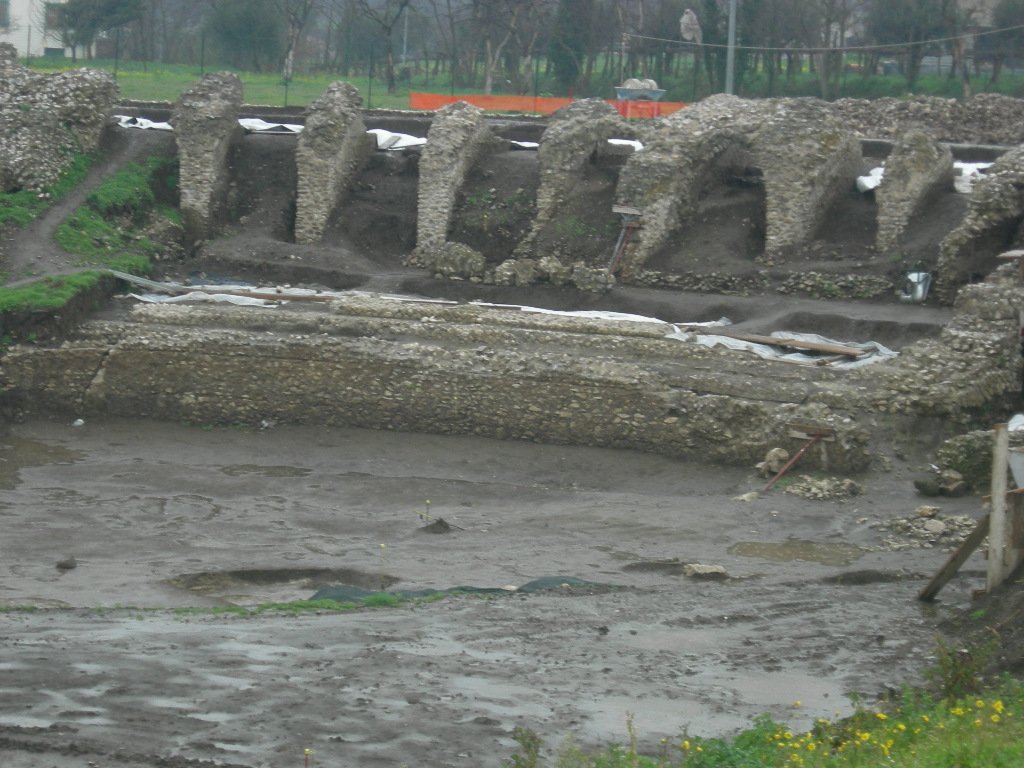

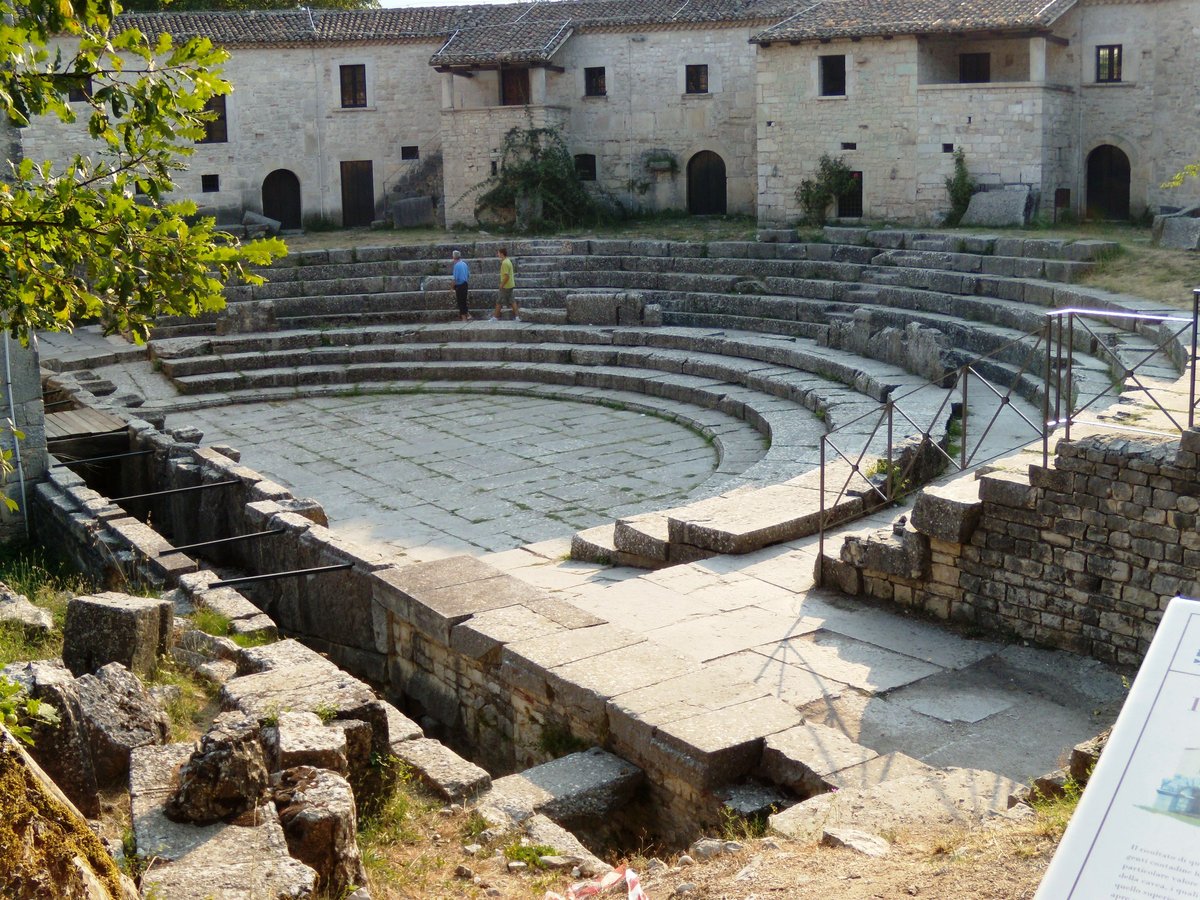
Telesia was a Roman city of Sannite origin located in the Valle Telesina, halfway between San Salvatore Telesino and Telese Terme. Its placement offered a strategic advantage in the road system of the Sannio region, situated at the confluence of the Calore and Volturno rivers. The city's original defensive technique was unique, anticipating the technology of the bastioned fort by sixteen centuries because its external ballistic coverage was very wide.
There is no information regarding the city prior to 217 BC. At that time, the general Annibale occupied the city in 217 BC, and it was later conquered by Quinto Fabio Massimo in 214 BC. While the city held great strategic and commercial importance, Polibius narrates that it was without defensive walls at the time of Annibale's attack. Historians Tito Livio and Polibius attribute great importance to this conquest by the Carthaginian leader.
Excavations in the region reveal evidence of Sannite habitation, with five tombs found in the Truono area, near archaeological Roman remains. In Roman times, Telesia became a significant commercial crossroads and underwent rapid urban expansion. Its walls eventually housed thousands of inhabitants. An inscription also bears witness to the presence of a gladiators' school in the city.
Sources: Wikipedia, OpenStreetMap, Wikidata, Wikimedia Commons
Written by Nicolo Ciampini
Discuss this with the author and others
No comments yet. Be the first to start the conversation.