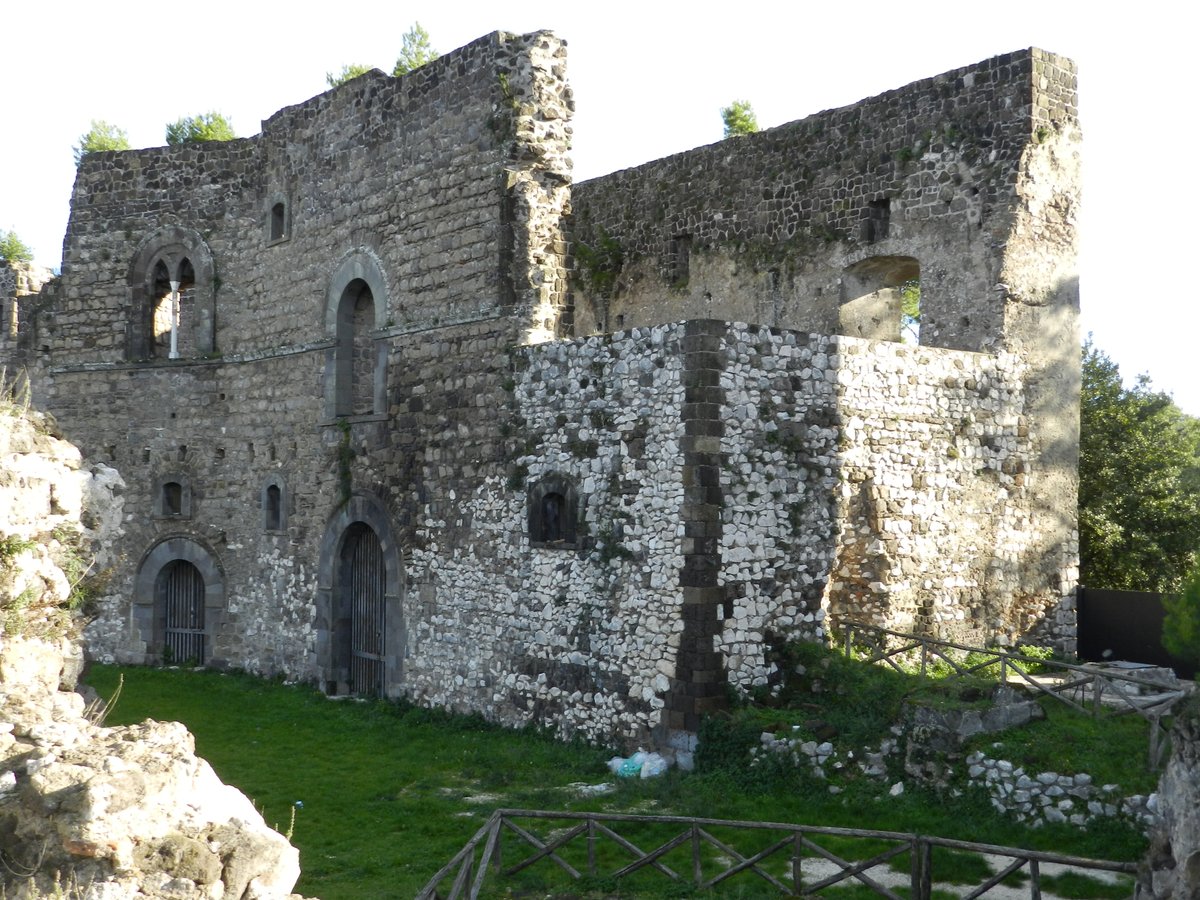

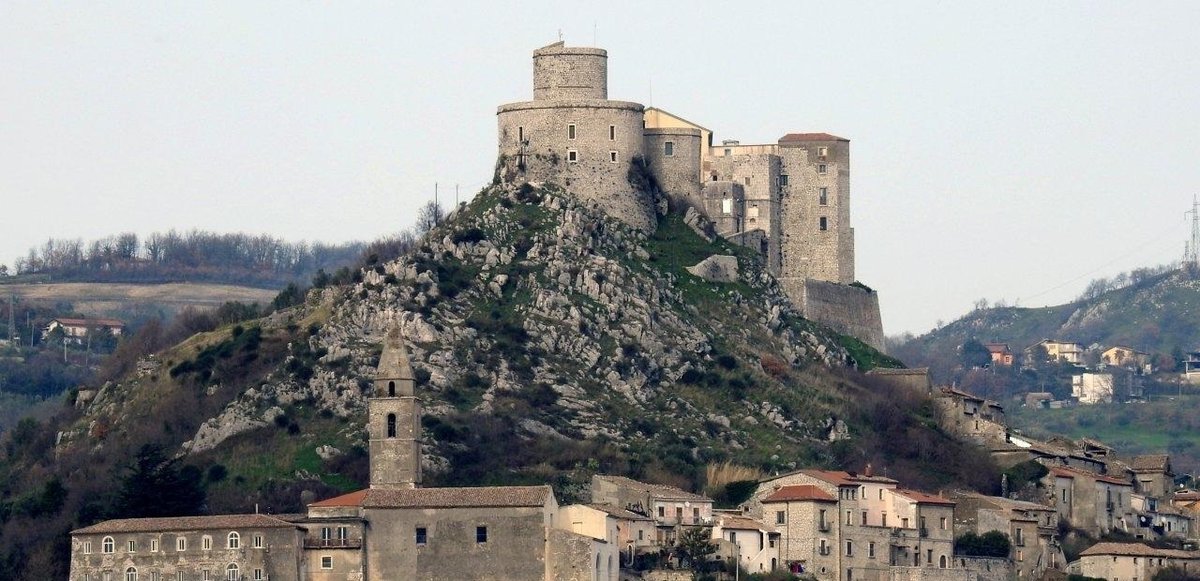
In the heart of Casertavecchia lies the Castello di Casertavecchia, the primary fortified site and military defense of the village. While the walls of the city have disappeared from historical records, the castle remains a significant landmark. The castle complex is split in ownership: the Municipality of Caserta owns part of the enclosure, while the Italian State (Ministry of Culture) owns the large keep.
Archaeological research at the site began with preliminary surveys in 2018 and 2019, leading to the first excavations in 2021 by the University of Campania Luigi Vanvitelli. These studies aim to clarify the structure's timeline. The most accredited theory suggests that the first walled enclosure was built during the Norman era, using rough-hewn and squared limestone blocks. This theory aligns with the first certain records of the Norman county of Caserta between the 11th and 12th centuries, coinciding with the 1113 establishment of the diocesan seat.
Subsequent development occurred during the Swabian era after 1246, which saw the construction of two towers in the center of the eastern and western walls, a bath or stove, a palace attached to the eastern wall, and the great keep. The circular keep provides a vast panorama overlooking the northwestern Campanian plain, visible as far as the castles of Marcianise and Capua. To the north, the castle's view was obstructed by the Baccalà mountains, necessitating the tower of Lupara to secure the territory connecting to the Volturno.
Sources: Wikipedia, OpenStreetMap, Wikidata, Wikimedia Commons

Written by Nicolo Ciampini
Discuss this with the author and others
No comments yet. Be the first to start the conversation.