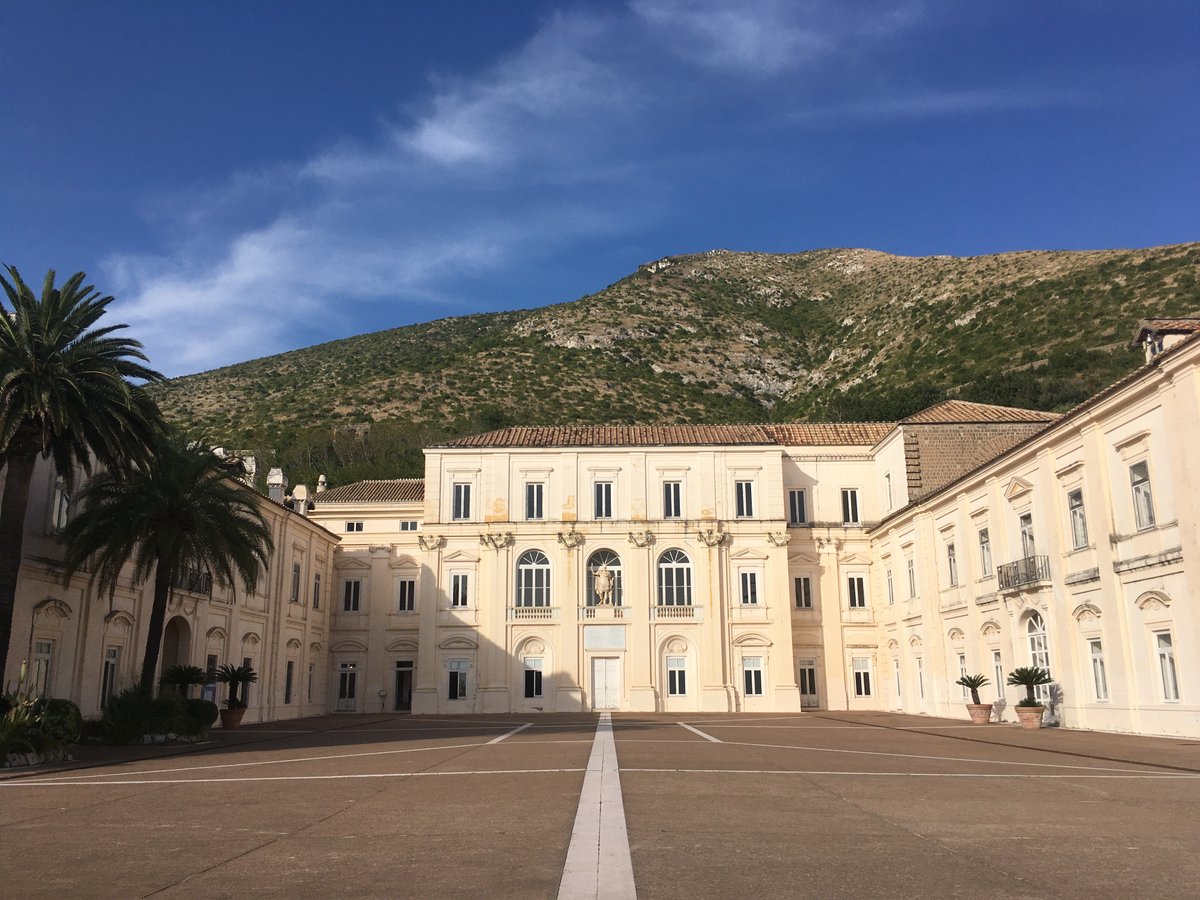

The Monumental Complex of the Belvedere of San Leucio, a UNESCO World Heritage Site, is a grand palace and park complex in the town of Caserta, Italy. It was originally part of King Ferdinando's utopian project of Ferdinandopoli. The complex houses a Museum of Silk, where visitors can see 18th-century silk weaving machinery. San Leucio silk became famous worldwide thanks to the Real Colonia di San Leucio, established in 1778 on the design of architect Francesco Collecchi.
Initially, the Real Colonia di San Leucio provided houses for the artisans, which were designed according to urban rules of the time to last, and provided with running water and sanitary services. The Real Colonia di San Leucio had a female school, the first modern school of obligation in Italy, which taught professional subjects. The Real Colonia di San Leucio had 11 hours of work while most of Europe had 14 hours. The Real Colonia di San Leucio ended with Italian unity, when the site was incorporated into the state domain and lost its particular status.
The utopian project of King Ferdinando was ahead of its time and a model of justice and social equity rare in the 18th century.
Sources: Wikipedia, OpenStreetMap, Wikidata, Wikimedia Commons
Written by Nicolo Ciampini
Discuss this with the author and others
No comments yet. Be the first to start the conversation.