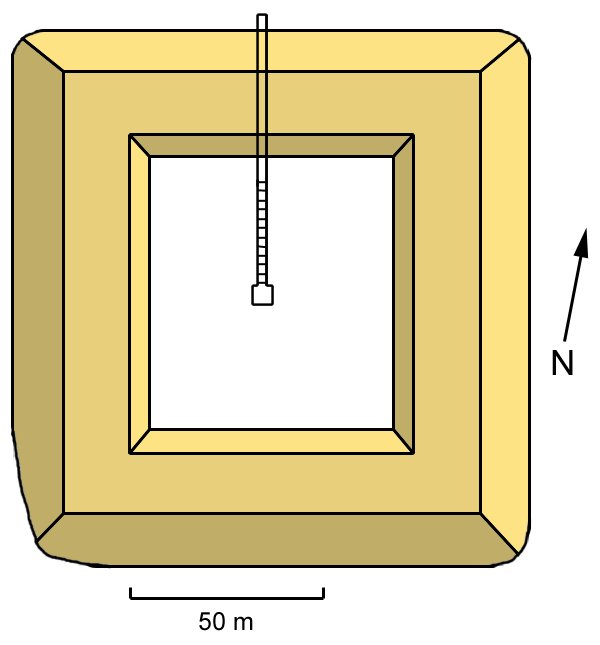

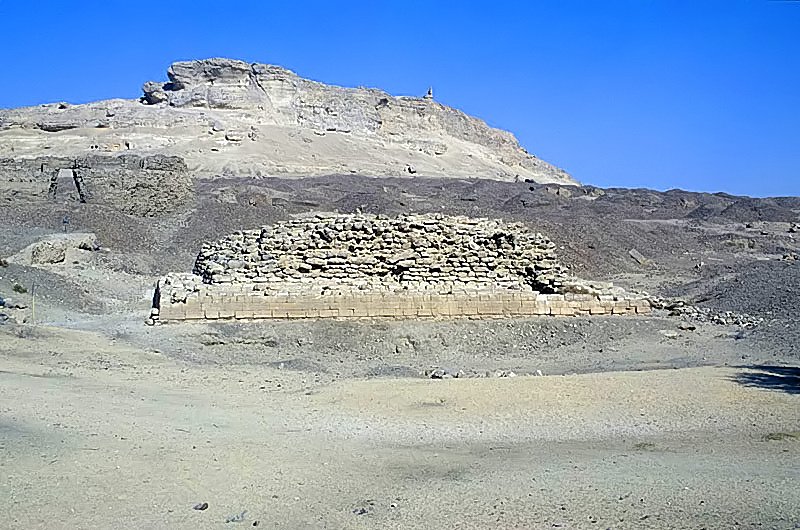
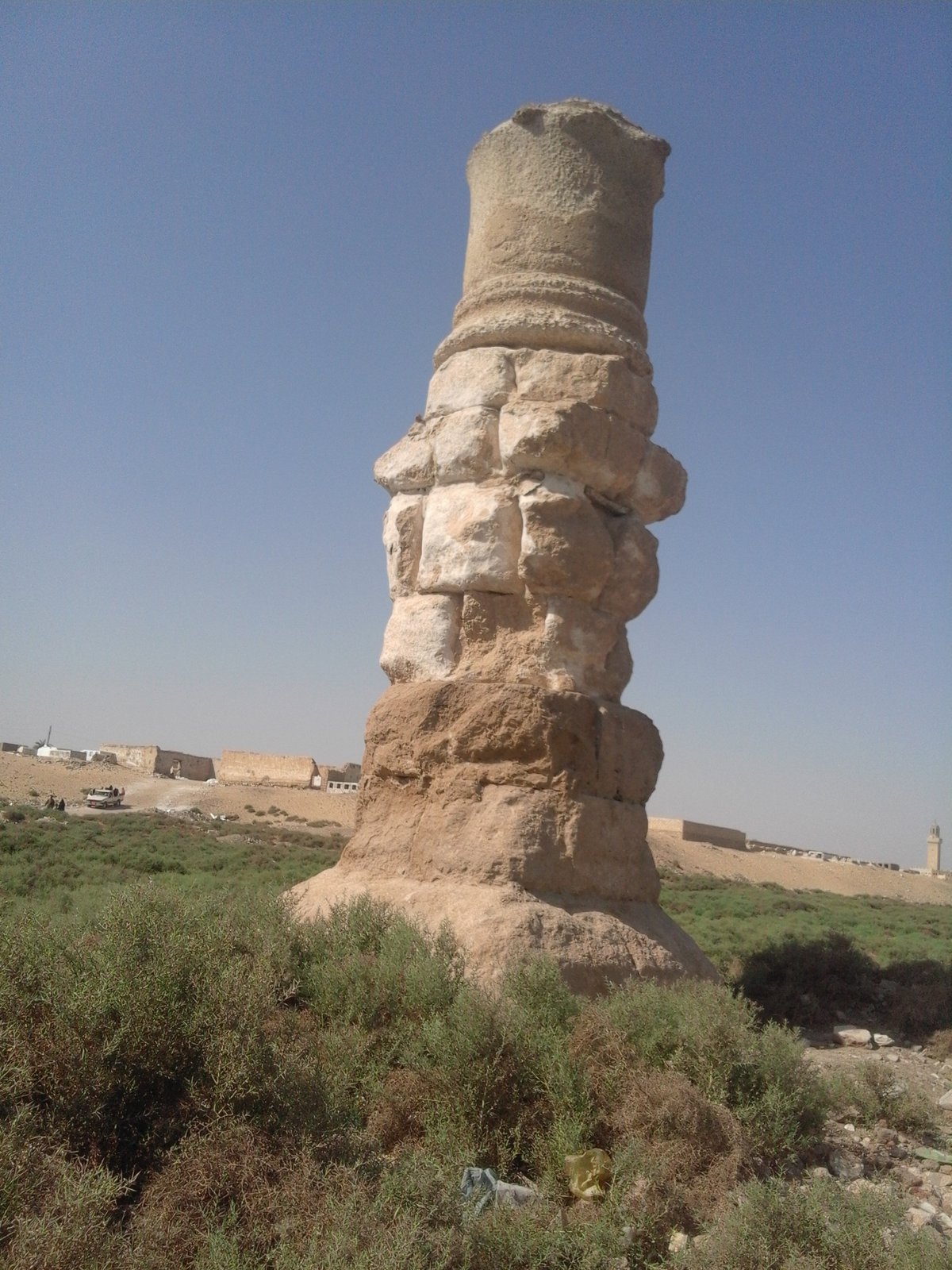
The pyramid of Khui is an ancient Egyptian funerary structure datable to the early First Intermediate Period and located in the royal necropolis of Dara, near Manfalut in Middle Egypt. It is generally attributed to Khui, a kinglet belonging either to the 8th Dynasty or a provincial nomarch. While commonly considered a pyramid and possibly a step pyramid, it is not possible to determine with certainty which type of tomb it was, as one cannot exclude that it was indeed a mastaba.
The ground plan of the main structure is rectangular and measures 146 metres by 136 metres. The mudbrick walls are slanted inwards and are up to 35 metres thick. This large shell surrounds an empty inner space which was probably filled by sand and gravel. If the building really was a step pyramid, it would have had a base larger than that of the Step Pyramid of Djoser, while as a mastaba, it would have exceeded the size of the Mastabet el-Fara'un of Shepseskaf.
From the North face, a horizontal corridor leads to a descending gallery lined with limestone and topped by eleven arches. This leads to a rectangular burial chamber located 8.8 metres under the ground level. The walls are made of roughly worked limestone blocks, presumably taken from a nearby, older necropolis of the 6th Dynasty. The hypogeum was found completely empty during excavations and was certainly robbed and nearly destroyed in antiquity, making it impossible to say if anybody had indeed been buried here.
Sources: Wikipedia, OpenStreetMap, Wikidata, Wikimedia Commons
Written by Mutabor
Discuss this with the author and others
No comments yet. Be the first to start the conversation.