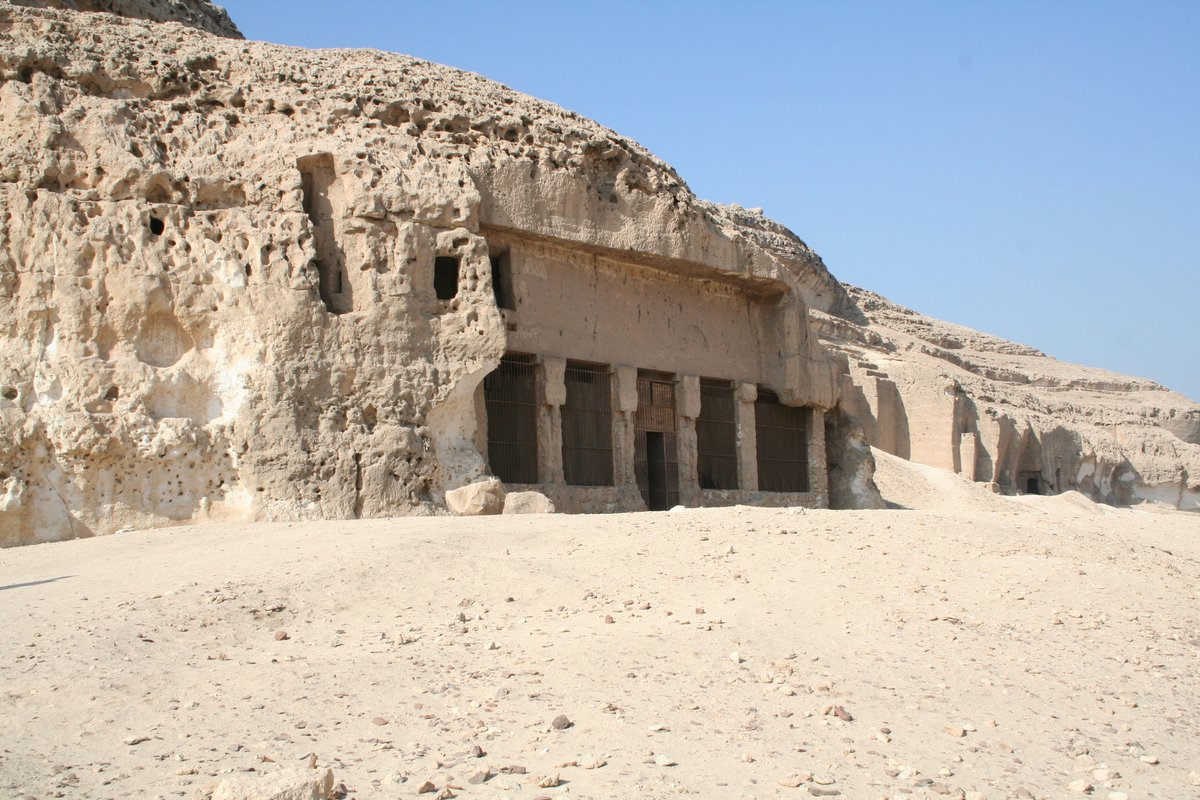

The Speos Artemidos, located about 2 km south of the Middle Kingdom tombs at Beni Hasan and 28 km south of Al Minya in Egypt, is an archaeological site dedicated to the goddess Pakhet. Today, the site is a small village known as Istabl Antar. In antiquity, the Greeks identified this site as the Speos of Artemis, identifying the goddess Pakhet with Artemis. There are two temples here, both cut out of the rock into the cliffs on the eastern side of the Nile.
One of these temples was built by the pharaoh Hatshepsut and features an architrave bearing a long dedicatory text. In this famous text, she denounces the Hyksos and records her actions in rebuilding the damage they caused to legitimize her own reign. The temple is composed of two chambers connected by a short passageway. The outer portico originally had eight stone columns arranged in two rows, though only three of the facade columns remain relatively intact today. The rock face above these pillars is dressed and inscribed with text bearing Hatshepsut's name.
The decorations inside the site have been usurped in places by Seti I, whose name replaced that of Hatshepsut. Seti I altered the text to replace Hatshepsut's name with his own and changed representations of the queen to depictions of himself. He also added further dedications and replaced an image of a priest with that of the god Thoth, likely due to the increasing influence of Thoth's temple in Hermopolis during his reign. Furthermore, Brand notes that Seti added three scenes to the depictions of the coronation of Hatshepsut, though he found no evidence that he had usurped these scenes from her.
While an earlier temple was probably located at the site, no traces older than those of Hatshepsut have been found. Research suggests that Seti I may have first excavated the smaller inner sanctuary, which was not inscribed by Hatshepsut. The site also contains a small shrine bearing the name of Alexander IV of Macedon. These rock-cut structures remain significant for their inscriptions, which provide insight into the changing religious and political landscapes of different pharaohs.
Sources: Wikipedia, OpenStreetMap, Wikidata, Wikimedia Commons
Written by Friendly Jane
Discuss this with the author and others
No comments yet. Be the first to start the conversation.