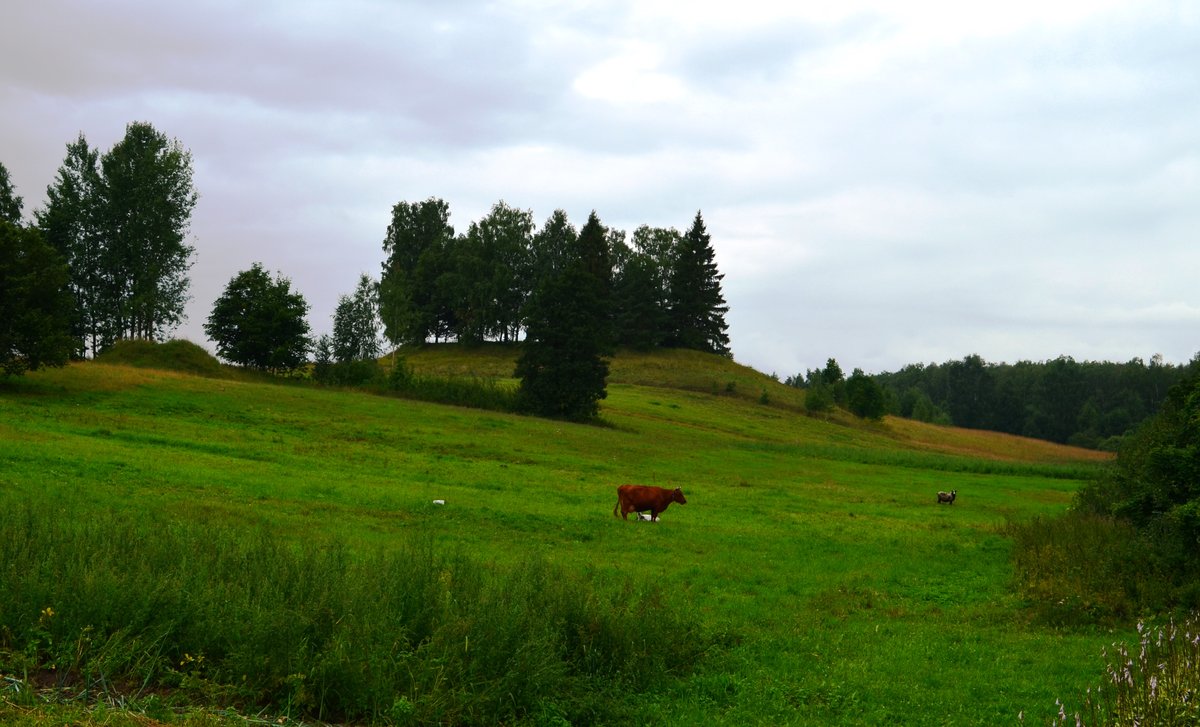

The Petrešiūnai hillfort, located near Rokiškis, Kriaunų seniūnija, Lithuania, is a rare example of an Iron Age fortification. Situated at the confluence of the Audros and the right bank of the Neris river, the hillfort has remained for more than a millennium. With an oval shape and walls made of timber, the hillfort has a base of about 48 by 29 metres and stands about 4.5 metres high. A plateau, built with a thickness of 1 metre and a width of 1 metre, covers the top of the hillfort.
Excavations conducted from 1909 to 1910 by Liudvikas Kšivickis revealed a cultural layer up to 1.2 metres deep. The central part of the hillfort was excavated to a depth of 5-8 metres. A horizontal layer of grindstones was found in the cultural layer, with two levels: the lower one near the surface and the upper one towards the centre. Artifacts such as flint pieces, pottery remnants, animal bones, and iron tools were found in the cultural layer.
Today, the hillfort is managed by the Lithuanian Archaeology Institute and is legally protected as a cultural monument. The site covers an area of 22,900 square metres.
Sources: Wikipedia, OpenStreetMap, Wikidata, Wikimedia Commons
Written by Nicolo Ciampini
Discuss this with the author and others
No comments yet. Be the first to start the conversation.