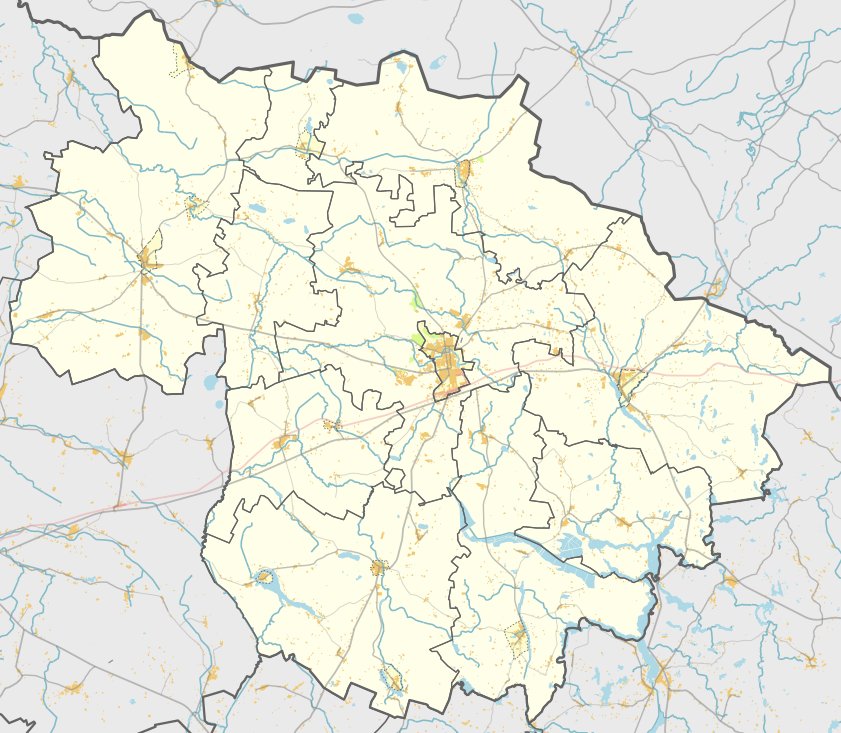
The hillfort in Papiliudio village is a well-preserved archaeological site, located in the Rokiskio region, in Obeliai seniunija. Dated to the 1st millennium BC, it has finds dating back to the 6th to 8th centuries. The hill has a trapezoid shape, approximately 50 meters long and 35 meters wide, with two crypts on the right and left. Archaeological research conducted by the History Institute in 1949 and 1972 found remnants of pottery and bricks, as well as a pit from which a 0.2-meter high, 4-meter wide chamber was excavated. A 5-6-meter wide terrace can also be found at the foot of the hill. Statues, 10 meters high, can be found on the hill, with a height of 5-6 meters at the top. The hill is very fortified, with ditches, and piles were found in the lower part. The site covers an area of 50,800 m² and is one of the best preserved archaeological sites in Lithuania.
Sources: Wikipedia, OpenStreetMap, Wikidata, Wikimedia Commons
Written by Nicolo Ciampini
Discuss this with the author and others
No comments yet. Be the first to start the conversation.