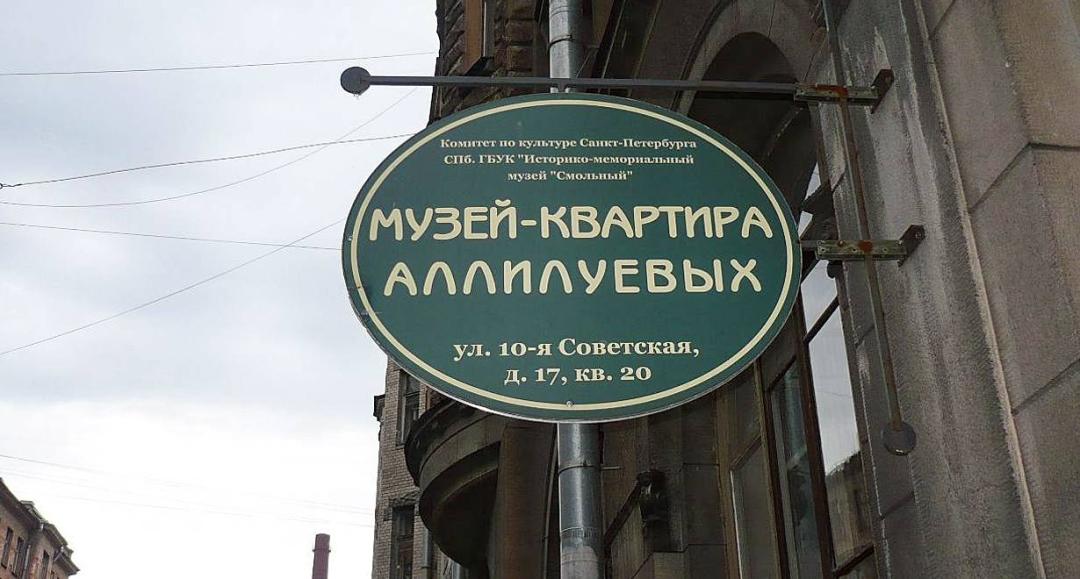

This part of the city in pre-revolutionary Petrograd was neither a center nor a place where members of high society lived. It was a factory outskirts, the Peski district, with a crime rate not much lower than the famous Ligovka. In March 1917, the family of a highly skilled worker, Alliluyev — Sergey Yakovlevich, his wife Olga Evgenyevna, and their four adult children — Anna, Nadezhda, Pavel, and Fyodor, moved into one of the tenement houses on 10th Rozhdestvenskaya Street (now Sovetskaya). Apartment No. 20 was located on the 6th floor, had an area of 104 square meters, and consisted of four rooms. It was a new building, constructed in 1911 in the Art Nouveau style. At that time, the house had almost all the comforts one could dream of — a doorman, a fireplace on the first floor, an elevator, central water supply, and a telephone. Many apartments already had water heaters, spacious bathtubs, and towel dryers, so tenants did not experience problems with steam heating and hot water. The kitchen was small, but there was a large stove and oven — all still in working order today. Also, although the windows of apartment 20 faced the courtyard well, on clear days the sun constantly shone here, and the silence was such that not even the sound of rain could be heard. There was another reason why this address was chosen. For the Bolshevik worker Alliluyev, closely connected with the revolutionary movement and conspiracy, this was an important factor. Looking ahead, it should be said that it was precisely this convenient location that brought Stalin, Lenin, and later influenced the fate of all the household members to 10th Rozhdestvenskaya.
The "apartments" were on the top sixth floor and had a second exit through a service staircase. Olga Evgenyevna worked as a nurse in a hospital, and Sergey Yakovlevich was initially a worker, then a cable transformer operator, and by 1917 he had become the head of the electrical station on the Vyborg side with a salary of 140-180 rubles, half of which he paid for renting this apartment without firewood. In winter, firewood cost 30 rubles per month. Alliluyev would achieve great heights and give the most important thing to his children — he would educate them all. Anna and Fyodor even studied at higher educational institutions. Only Nadia, due to the outbreak of the Civil War, did not complete her gymnasium course. The house was lucky. It was not damaged during the revolution, survived the blockade without serious damage during the war. Several bombs hit neighboring buildings and houses opposite, but this fate protected it. It must be said that the house was remarkable in every respect. Built for workers on the factory outskirts of Peski, it had an excellent layout and almost modern comfort. All apartments were large, with high ceilings and spacious rooms.
To this day, many original items remain here, and things stand as they did in 1917. In the center of the room stands an original large dining table and chairs — it was on these that members of the Central Committee (Kamenev, Stalin, etc.) sat. It was here, at this table, on July 7, 1917, that a meeting of the Central Committee of the RSDLP(b) took place, where they discussed whether to participate and fight the accusations of the Provisional Government or to flee. Both were accused of espionage in favor of Germany. As a result, the decision was made not to appear before the trial of Lenin and Zinoviev by the Provisional Government.
On the table stands a samovar with drying rings and tea accessories: a glass in a holder, a sugar bowl, and sugar tongs. There is also an album here that you can leaf through to see the history of the Alliluyev and Jugashvili families.
One of the rooms was occupied by the boys — Pavel and Fyodor, another by the girls — sisters Anna and Nadia. The furnishings everywhere were extremely modest, even ascetic. A bed with several pillows, a dressing table... They ate sparingly too, peas, rations by cards, and were glad if party comrades brought food. Nadia was then 16 years old and studying at a gymnasium. Of the four children, she alone had a talent for music, so a German piano, made in 1903, was specially bought for the youngest daughter. The instrument is still tuned today. At home, Nadia mostly took care of the household and worried that she did not work like her mother or brother, who tutored.
This cheerful, friendly Nadia was exactly the one Stalin saw when he returned to Petrograd from Siberian exile in 1917. He came to the Alliluyevs as old friends, whom he had met back in Tiflis, and was warmly welcomed. He looked at Nadia in a special way. The girl had grown up before his eyes, but then she was a child, and now an interesting young woman stood before him. Affection arose naturally. Especially since Stalin lived with the Alliluyevs as a family member. He ran for office in the Petrograd district and listed 10th Rozhdestvenskaya as his address.
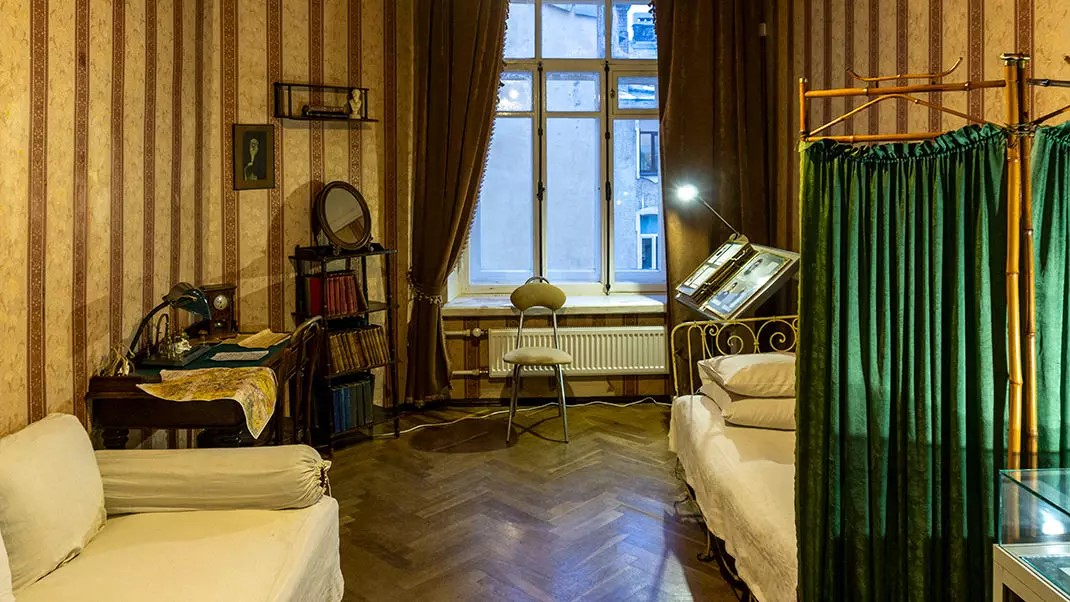
The room that in 1938 became known as the "Lenin room" was occupied by Fyodor Alliluyev and also housed the head of the family's office. Almost all the furnishings there are original, while smaller artifacts are partially so. In 1917, this room sheltered Stalin after the Turukhansk exile and before the government's move to Moscow, and then, after the July 1917 events, Lenin and Zinoviev stayed here for several days before their escape to Razliv. Here, as in the dining room, all items are authentic.
By the way, this apartment is the only one in the extensive memorial heritage of the revolutionary leaders where Stalin and Lenin were present simultaneously. It was in the house's dining room that the decision was made whether Lenin should appear before the Provisional Government's trial or not. Stalin insisted — no need to go to the trial: "The Junkers won't take him to prison, they'll kill him on the way." As a result, Vladimir Ilyich spent three days in July 1917 locked in a small room with windows facing the courtyard, and from here he left for safety to Razliv. Before going out via that very black staircase, he shaved off his mustache and beard, put on Alliluyev's old coat and cap. Lenin's razor is also kept in the exhibition.
Few know that the romance of 16-year-old Nadezhda
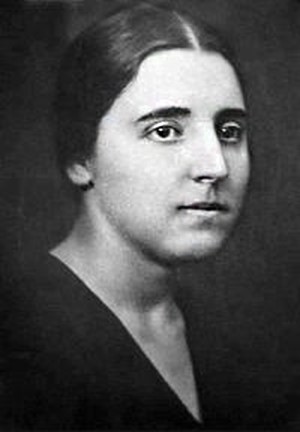
and Joseph began in Petrograd in 1917. Of course, Nadia did not delve deeply into all these political upheavals. However, she fully shared the convictions of the elder Alliluyevs and their comrades. She helped as much as she could, assisting her mother, who sewed up the wounded. What exactly her feelings for Stalin were at that time is unknown, but she certainly liked the courageous revolutionary. At least when the question arose that it was necessary to urgently move to Moscow following the Bolshevik government, she did not object. The fact that everything happened in a hurry is evidenced by this: Nadia studied at a gymnasium on Vosstaniya Street and even paid for the next semester, from January to March. But she never attended classes and left for the capital in an emergency.
Unfortunately, the fate of almost all the apartment’s inhabitants turned out tragic. When the repressions began, Nadezhda Alliluyeva’s parents took opposite positions and divorced after the arrest of their daughter Anna. The father immediately said he would go nowhere and would not plead for anyone. The mother, Olga Evgenyevna, went to Stalin, begging him to spare relatives and friends, but — unsuccessfully. Pavel, a prominent military leader, died of a heart attack when he saw how his comrades and colleagues disappeared. His wife was accused of poisoning him and sent to Vladimir Central Prison.
By the way, Anna, Nadezhda’s older sister, was also held in solitary confinement just next door. She was arrested in 1948 "for espionage," but in reality for a book about the fate of her husband, the prominent Chekist Stanislav Redens, who was executed in 1940. It is said that after reading "Memoirs," Stalin flew into a rage, which resulted in a terrible prison sentence for Anna Sergeyevna. The fact that this concerned the fate of his close relative, in whose house he had lived, meant nothing to the "father of nations." She was rehabilitated in 1954, but the years in solitary confinement undermined her health and affected her psyche…
As for Nadezhda herself, having become the "Kremlin wife" in 1919, after another scandal with her husband, on November 9, 1932, she shot herself. An important fact: even in that difficult environment, she never wished to take his surname, remaining Alliluyeva to the end. By the way, the apartment on 10th Sovetskaya was initially a Stalin museum-apartment, then Lenin’s, and now the Alliluyevs’. History pays its debts.
Sources:
https://spb.aif.ru/society/people/dom_gde_mama_byla_schastliva_istoriya_muzeya-kvartiry_alliluevyh
https://aleksblog.com/kvartira-alliluevyh/
https://sinekvan.livejournal.com/937730.html


Written by Jermaine
Discuss this with the author and others
No comments yet. Be the first to start the conversation.