

The first Soviet nuclear submarine was designed as a carrier of a single colossal-caliber torpedo—one and a half meters in diameter—aimed at enemy naval bases! This idea did not arise out of nowhere. By the early 1950s, when work on the first nuclear submarines in both the USSR and the USA moved beyond preliminary projects, the Soviet Union lacked adequate means to deliver nuclear weapons to the territory of its main adversary—the United States. The Tu-16 bomber was only just beginning testing, and intercontinental missiles, especially sea-based ones, simply did not exist. And the initiator of the project—the First Main Directorate under the Council of Ministers of the USSR—was reluctant to waste a submarine with unique capabilities on installing ordinary torpedoes.
The official start of the development of "Object 627," the code name for the first Soviet nuclear submarine for secrecy purposes, was given on September 9, 1952, by a special government decree. This document also specified the deadline for completing the design and construction of the submarine—1955. The decree did not specify that the domestic nuclear submarine should have an advantage over American ones in speed, especially underwater speed, but Soviet designers immediately set this as a goal. After all, there was no other way to break through the anti-submarine defense lines in the Atlantic and Pacific Oceans, which had been honed over the years of World War II.
An unexpected situation for the USSR, where the project, tactical and technical characteristics, as well as the ship’s purpose, were defined not by sailors, led to an expectedly negative result: work on the project was almost halted. This happened in 1954 when the nuclear engineers, realizing their own knowledge was insufficient to complete the work, nevertheless involved experts from the Soviet Navy to evaluate their work. A group of specialists led by Rear Admiral Alexander Orel reviewed the project and presented their findings not only to the customers from the First Main Directorate of the Council of Ministers but also to their immediate superior—the Navy Commander-in-Chief Admiral Nikolai Kuznetsov.
The verdict was unequivocal: the project was useless in the version armed with the T-15 torpedo, which had a diameter of one and a half meters, a length of over 23 meters, and weighed about 40 tons. Primarily because it could only be launched at a target from a distance of up to 50 km, while the US anti-submarine defense line at that time began 100 miles, or nearly 200 km, from the shore. There was also another circumstance that effectively turned the submarine’s crew into kamikazes. After launching the giant torpedo, which was almost a quarter of the submarine’s total length, the vessel acquired enormous positive buoyancy and a large stern trim. In other words, immediately after firing the torpedo, the submarine almost certainly popped up to the surface like a devil out of a box and had no chance to dive immediately, becoming an easy target. And for defense, it had only two ordinary torpedo tubes with two torpedoes—and that was all!
The project had to be urgently revised. As a result, the submarine was equipped with eight bow torpedo tubes with a total ammunition of about twenty torpedoes. Among them were to be nuclear torpedoes: by that time, their warheads had already begun testing. And the main weapon of the submarine, as planned, became speed. The Soviet Union already knew that American shipbuilders had placed the new power plant in a hull little different from the classic hulls of World War II submarines. This significantly limited their underwater speed: the world’s first nuclear submarine, the Nautilus, had a speed of 23 knots, and the second, the Seawolf, 20 knots. Soviet designers immediately decided to seek the most streamlined shape for the new type of submarine. The search was not long: as is well known, the most optimal shapes for underwater movement belong to marine mammals, including whales. The first Soviet nuclear submarine came to resemble them and during trials developed an underwater speed of 28 knots even without full power. For its shape, which was inherited by all subsequent submarines, the first nuclear submarine earned the respectful nickname "Whale" among sailors.
Despite many problems and difficulties accompanying the creation of any new mechanism, the K-3 submarine was built, albeit with delay. It was laid down on September 24, 1955, launched two years later, and a year after that, the submarine joined the Navy and moved under nuclear power for the first time. The primary and reserve crews of the first nuclear submarine, by the way, began training in Obninsk as early as 1954. To allow sailors to study their ship in advance, they were provided not only with the world’s first nuclear power plant but also a specially built nearby working stand with a reactor identical to the one on the submarine. Moreover, sailors had to test many design and engineering solutions of the new submarine themselves, for which wooden mock-ups of its compartments were built. This allowed not only to properly equip the submarine but also to avoid many problems. One known mishap was that the commander’s and navigator’s workplaces in the central post were designed so that both sat with their backs to the ship’s course, which was simply impossible for sailors.

The construction of the submarine and its entire service became one long experiment, as is always the case with ships that open a new era. This primarily concerned the main power plant. Of the three options the designers began working on by the 1952 decree—graphite-moderated, liquid-metal cooled, and classic water-water reactors—the third was ultimately chosen as the most developed. But even with it, there were many troubles and problems, since all units and assemblies were built and used for the first time. For example, the first circuit steam generators, through which radioactive water circulated, caused many problems for the sailors. They constantly developed microcracks, which often prevented the reactor from being brought to full power, and the submarine simply could not even reach normal speed. It goes without saying that constant leaks in the reactor equipment caused increased radioactivity in the submarine’s air.

For obvious reasons, the first Soviet nuclear submarine had to be not only a testbed for various technical innovations for the nuclear fleet. It had to test the capabilities of nuclear submarines on its own steel skin. Already in 1959, it began regular voyages under ice—first under the edge, then under thick pack ice, eventually reaching the North Pole.
This was the third long voyage of the K-3 submarine, which took place from July 11 to 21, 1962. First and foremost, the crew had to confirm that the submarine and similar vessels were capable of long voyages under ice. Additionally, Soviet sailors had to pass the North Pole point underwater and surface through the ice. All tasks were successfully completed; over 178 hours, the submarine traveled 1,294 miles underwater and surfaced almost exactly at the pole three times—on July 15, 18, and 19. This was not just an achievement: in this way, Soviet submariners confirmed that Arctic ice would not be an obstacle for nuclear missile submarines. This meant that if necessary, a missile strike could be launched from there, significantly increasing the missile’s strike range. Thus, parity was restored, which had been broken in March 1959 when the first-ever surfacing at the pole was made by the American submarine Skate.
Of course, the service of K-3 "Leninsky Komsomol" was not limited to successes alone. And although the sad record of accidents on Soviet nuclear submarines was opened not by it but by the first nuclear missile carrier K-19, the events of September 8, 1967, led to the most severe consequences at that time. The submarine was already finishing its combat service in the Norwegian Sea when a fire broke out in the first two compartments, claiming the lives of 39 sailors. The rest of the crew was also affected when, to prevent a torpedo explosion, the commander ordered equalization of pressure in the compartments, and poisoned air from the combustion products flooded inside from the first two compartments. As a result, the submarine had to return to base on the surface. Later, during the investigation, it was revealed that the cause of the tragedy was either greed or stupidity of one of the workers who, during scheduled repairs, replaced a copper gasket in the high-pressure hydraulic system with a paronite one (a mixture of asbestos and plastic).
Despite periodic problems related to the submarine’s operation under extremely harsh conditions, the K-3 remained in the Navy’s combat fleet until October 1987—almost three decades! During this time, it went on combat patrols six times and traveled a total of almost 129,000 miles over 14,000 operating hours, which is nearly six times around the Earth at the equator. After the submarine was finally decommissioned, it awaited a decision on its fate for a long time. There was a desire to turn the first Soviet nuclear submarine into a museum, similar to how the nuclear icebreaker Lenin became a museum, but the Ministry of Defense lacked funds for this for a long time.

After repairs, the "Leninsky Komsomol" returned to the combat fleet of the USSR Navy, from which it was withdrawn in 1991. From that moment, the K-3, so to speak, changed hands. First, it was under the balance of Rosimushchestvo, then Rosatom, and the United Shipbuilding Corporation. Civilian and military officials repeatedly stated that history must not be disposed of and that "Leninsky Komsomol" would become a floating museum. While awaiting the project’s implementation, the submarine was cut in half, the reactor was removed and sunk in the Kara Sea. Since 2003, the idea of transporting K-3 to St. Petersburg for permanent museum installation has been discussed. In 2008, at the Maritime Collegium under the Russian government, the Malakhit Design Bureau was commissioned to develop a museum project based on "Leninsky Komsomol."
In October 2020, it became known that by 2023 the K-3 submarine would become a key exhibit of the planned Museum of Naval Glory in Kronstadt. Work on restoring the submarine’s light hull, manufacturing support foundations, and preparing K-3 for towing to Kronstadt was carried out by specialists from the ship repair yard in Snezhnogorsk, Murmansk region. The project documentation for the museumification of the submarine was issued by SPMB "Malakhit," where the Project 627 (K-3) was originally developed. In September 2021, K-3 was delivered from the Northern Fleet to Kronstadt via the White Sea–Baltic Canal and was being prepared for transfer to the Kronstadt Marine Plant for repair and restoration work and conversion into a museum ship.
In September 2022, after restoration repairs in Vyborg, K-3 was unloaded ashore in the Kronstadt port and prepared for transportation to its permanent installation site.
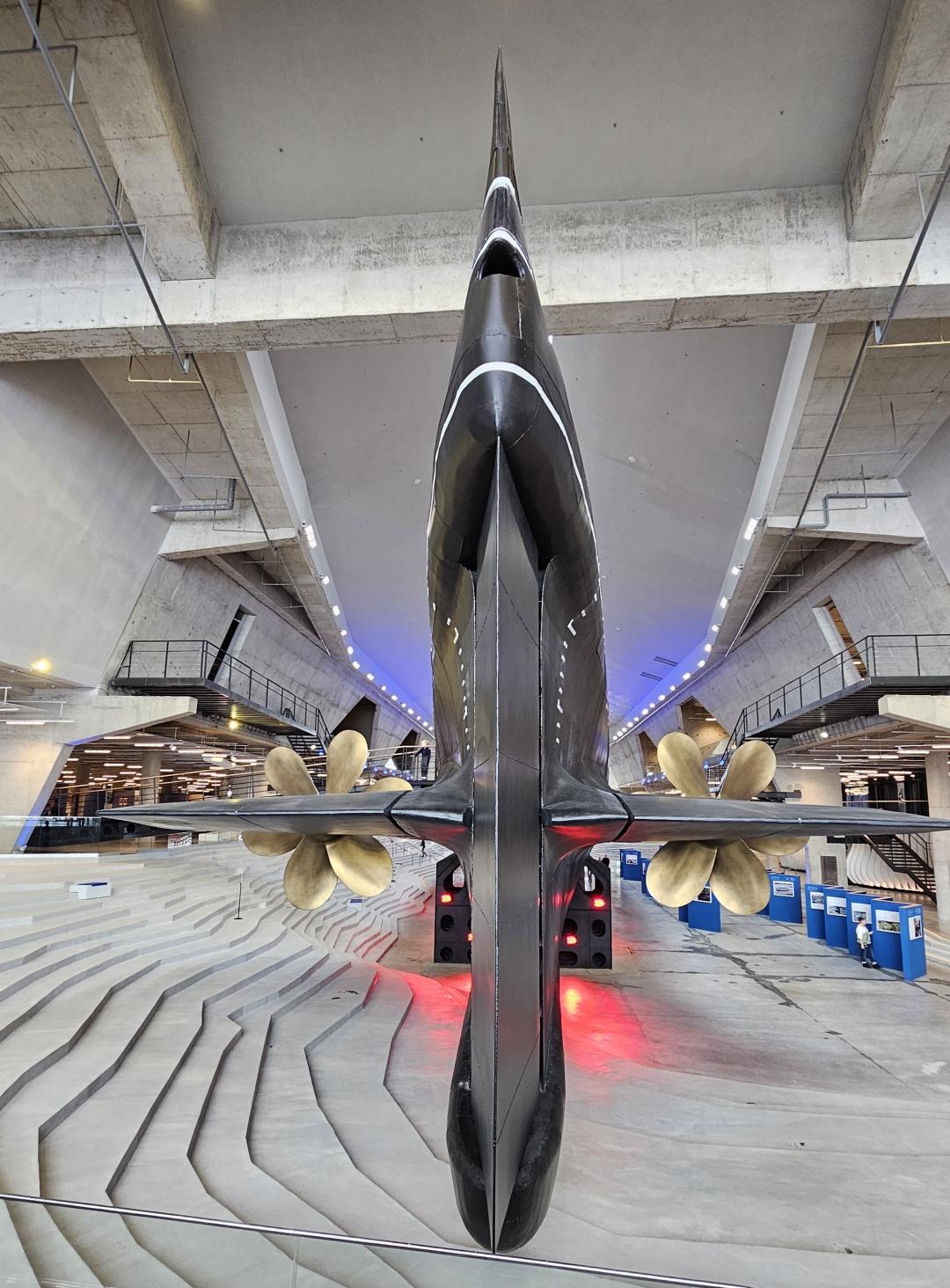
Since July 2023, K-3 "Leninsky Komsomol" has been one of the main exhibits of the Museum of Naval Glory in Kronstadt.
Sources:
https://histrf.ru/read/articles/podvodnaya-lodka-k-3-pervyy-atomohod-sovetskogo-flota
https://xn--80aiqmelqc4c.xn--p1ai/apl-k3/apl-k3-past/
https://ru.wikipedia.org/wiki/Leninsky_Komsomol_(submarine)
https://aif.ru/society/army/posledniy_parad_nastupaet_apl_leninskiy_komsomol_ushla_v_util


Written by Jermaine
Discuss this with the author and others
No comments yet. Be the first to start the conversation.