Petersburg: Peter and Paul Fortress, Stories and Legends

For Browsing

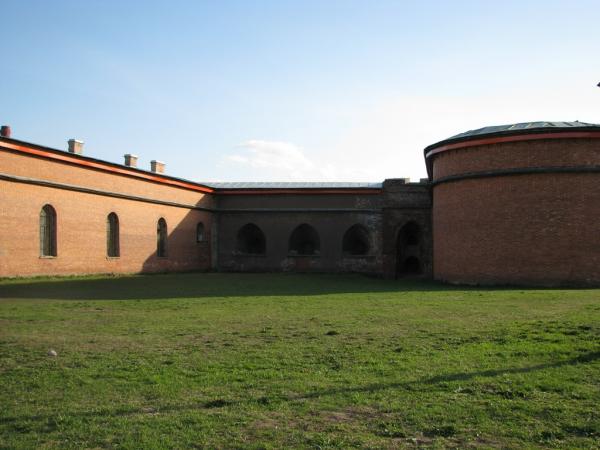
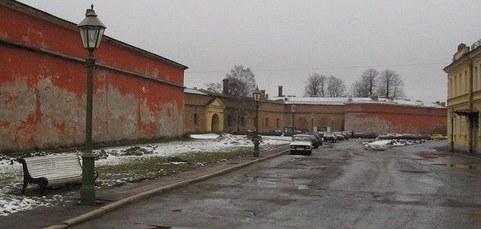
The Peter and Paul Fortress (official name — Saint Petersburg Fortress, from 1914 to 1917 — Petrograd Fortress) is the oldest architectural monument in Saint Petersburg, a first-class fortress (according to the classification of fortresses of the Russian Empire). It is located on Hare Island, in Saint Petersburg, the historical core of the city. The fortress was founded on May 16 (27), 1703, which is considered the founding date of Saint Petersburg. Jump to section «#History» It was never used in any battle. From the first quarter of the 18th century until the early 1920s, it served as a prison. Since 1924, it has been a state museum. The Peter and Paul Fortress is a monument of Russian architecture, worked on by various architects. The modern fortress houses numerous architectural monuments and museums: the Peter and Paul Cathedral (the burial place of the Russian Imperial House of Romanov), the Grand Ducal Burial Vault, the Boat House, the Commandant’s House, the Engineer’s House, the Mint, the Museum of the History of Saint Petersburg, the Military-Historical Museum of Artillery, Engineering Troops and Signal Corps, and the Museum of Cosmonautics and Rocket Technology. The fortress is part of the historical section of Saint Petersburg and, together with the complex of monuments located here, is included in the UNESCO World Heritage list; it is one of the main tourist attractions. The silhouette of the Peter and Paul Fortress has become a symbol of the city and occupies a key place in its panorama. Since 1873, an artillery signal shot has been fired daily at noon from the Naryshkin Bastion of the fortress (this was not carried out from 1934 to 1953). It is a historical symbol of the city. According to the charter of Saint Petersburg, the historical symbols of the city are the angel on the spire of the Peter and Paul Cathedral, the ship on the spire of the Admiralty, and the monument known as the "Bronze Horseman."

Monument at the site of the execution of the Decembrists

Kronverkskaya Embankment, 3A, Saint Petersburg, Russia, 197046

Memorial in Saint Petersburg. Located on the crownwork of the Peter and Paul Fortress. The obelisk was erected on the site of the execution of the leaders of the Decembrist uprising in 1975, on the 150th anniversary of the Decembrist uprising.

Peter and Paul Fortress - the main secret prison of the empire

Territory: Peter and Paul Fortress, 6, Saint Petersburg, Russia, 197198

In the Peter and Paul Fortress, two facilities were used as prisons. Initially, it was the Trubetskoy Bastion. In the first quarter of the 18th century, the casemates of the Trubetskoy Bastion were used as detention cells for the Secret Chancellery. In 1718, Tsarevich Alexei Petrovich, son of Peter I, who was accused of participating in a state conspiracy, was held here; he died (or was executed) on July 7, 1718. Later, the Alekseevsky Ravelin prison was used.

Monument to Peter I in Petropavlovka

ter. Peter and Paul Fortress, 3, Saint Petersburg, Russia, 191186

Could you please provide the image or more context related to your question? This will help me give a more accurate and relevant answer.

"To Remake the World Anew…" - Dostoevsky and the Petrashevsky Circle Case

Territory. Peter and Paul Fortress, 14, Saint Petersburg, Russia, 197198

Dostoevsky was delivered to the Peter and Paul Fortress on the night of April 23 to 24, 1849, from the Third Department of His Imperial Majesty’s Own Chancellery on the Fontanka Embankment (modern No. 15), accompanied by a gendarme lieutenant. In “individual” carriages under the guard of gendarme officers, with intervals of 10–15 minutes, thirteen of the “main culprits” were sent to the fortress.

Monument to the Hare and What Does Peter the Great’s Boot Have to Do with It

Peter and Paul Fortress, Saint Petersburg, Russia, 197046

A remarkable sculpture called "The Bunny Who Survived the Flood" was installed near the Ioannovsky Bridge on Hare Island on May 8, 2003, as part of the celebration of the 300th anniversary of the Northern Capital.

Ioannovsky Ravelin

X82C+GV Petrogradsky District, Saint Petersburg, Russia

The auxiliary triangular-shaped structure in front of the fortress moat served to cover the Petrovskaya curtain and its gates. It is named after Tsar Ivan Alekseevich — the father of Empress Anna Ioannovna. Built in stone from 1731 to 1740 according to the design of military engineer B. Kh. Minikh, replacing a wooden-earth fortification.

Ioannovsky Gate

X82C+GP Petrogradsky District, Saint Petersburg, Russia

The gates in the Ioannovsky ravelin of the Peter and Paul Fortress in Saint Petersburg. They provide passage from the Ioannovsky Bridge into the fortress through the Petrovskie gates.

The Tsar’s Bastion

Peter and Paul Fortress, Tsar's Bastion, Saint Petersburg, Russia, 191186

The Gosudarev Bastion is one of the two eastern bastions of the Peter and Paul Fortress in Saint Petersburg, facing the Neva River. It is connected to the Naryshkin Bastion by the Neva Curtain, and to the Menshikov Bastion by the Petrov Curtain. To the east, the bastion is protected by the Ioannovsky Ravelin and a half-counterguard.

Petrovskaya Curtain

Territory. Peter and Paul Fortress, 11, Saint Petersburg, Russia, 197101

A section of the fortress rampart connecting the Tsar's and Menshikov bastions. Named after Peter's Gate constructed within it.

Petrovsky Gate

2 Vremeni St., Saint Petersburg, Russia, 197046

The first triumphal gates in Saint Petersburg are located in the Petrovskaya Curtain between the Tsar's and Menshikov bastions. The Petrovskie Gates are the only such structure in the Petrine Baroque style that has survived in Saint Petersburg since the time of Peter I.

Kronverkskaya Curtain

ter. Peter and Paul Fortress, 10, Saint Petersburg, Russia, 197101

A section of the fortress rampart, connecting the Menshikov and Golovkin bastions. It faces the Kronverk, from which it gets its name.

Golovkin Bastion

ter. Peter and Paul Fortress, 9, Saint Petersburg, Russia, 197101

The northern bastion of the Peter and Paul Fortress, with its corner, faces directly towards the crownwork. To the east, the bastion adjoins the Kronverkskaya curtain, and to the west – the Nikolskaya.

Nikolskaya Curtain

Peter and Paul Fortress, Nikolskaya Curtain Wall, Saint Petersburg, Russia, 197101

The north-western wall of the fortress connects the Golovkin and Zotov bastions. It is also one of the boundaries of the Cathedral Square of the Peter and Paul Fortress.

Zotov Bastion

terr. Peter and Paul Fortress, 15, Saint Petersburg, Russia, 197198

The western bastion of the fortress, defending the approaches from the Kronverksky Strait, is named after Nikita Zotov. To the east, the Nikolskaya curtain approaches this bastion, while the Vasilyevskaya curtain connects the Zotov bastion with the Trubetskoy.

Alekseevsky Ravelin

Territory of Peter and Paul Fortress, 6, Saint Petersburg, Russia, 197198

The Alekseevsky ravelin is named after the grandfather of Anna Ioannovna, Tsar Alexei Mikhailovich. The construction of the ravelin from stone and brick began in 1733 and was completed by the end of the same decade.

Vasilyevskaya Curtain

ter. Peter and Paul Fortress, 6, Saint Petersburg, Russia, 197198

Part of the fortress wall and a former defensive structure of the Peter and Paul Fortress in Saint Petersburg (Zayachy Island), intended for the defense and protection of the fortress. The curtain wall contains the eponymous Vasilievsky Gate.

Trubetskoy Bastion

Territory. Peter and Paul Fortress, 6, Saint Petersburg, Russia, 197198

One of the two western bastions of the Peter and Paul Fortress in Saint Petersburg, facing Vasilyevsky Island. It is connected to the Naryshkin Bastion by the Catherine Curtain, and to the Zotov Bastion by the Vasilyevsky Curtain. This flank of the bastion has additional protection for the gun embrasures — an orillon, which contained a hidden passage — a sally port. To the west, the bastion is covered by the Alexeevsky Ravelin, as well as a half-counterguard, which is connected by a dam — a bastardo.

Catherine Curtain

Territory. Peter and Paul Fortress, 6, Saint Petersburg, Russia, 197198

The Catherine Curtain got its name from the Catherine Bastion.

Naryshkin Bastion

Peter and Paul Fortress, Saint Petersburg, Russia, 191186

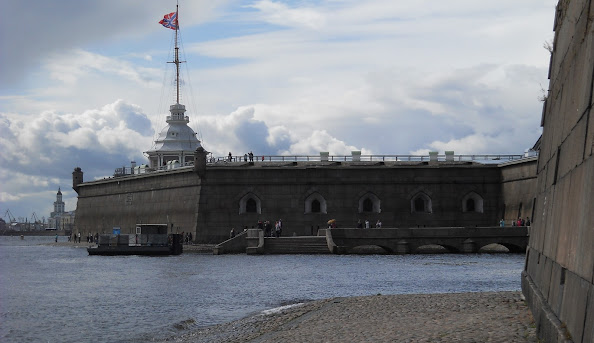
It is located exactly in the center of the southern wall of the Peter and Paul Fortress and faces directly toward the Neva River. This pentagonal defensive structure, with two front walls — facades — and two side walls — flanks, was designed for delivering frontal and flanking fire. It is easily recognizable by its distinctive flagpole tower.

Nevsky Gates

Peter and Paul Fortress, Saint Petersburg, Russia, 191186

The gates of the Peter and Paul Fortress in Saint Petersburg, located in the Neva Curtain between the Tsar's and Naryshkin bastions. They connect the fortress with the Commandant's Quay. A monument of classical architecture.

Nevskaya or Komendantskaya Pier

Peter and Paul Fortress, Saint Petersburg, Russia, 191186

The pier is located at the Neva Curtain between the Tsar's and Naryshkin bastions. This is the only pier at the fortress.

Nevsky Curtain

Peter and Paul Fortress, Saint Petersburg, Russia, 191186

A part (section) of the fortress wall and a former defensive structure of the Peter and Paul Fortress in Saint Petersburg (Zayachy Island), intended for the defense and protection of the fortress, connects the Tsar’s and Naryshkin bastions. It faces the Neva River, which is how it got its name.

Petropavlovsky Cathedral (Cathedral of the Holy Apostles Peter and Paul)

X828+3F Petrogradsky District, Saint Petersburg, Russia

An Orthodox church in the Peter and Paul Fortress in Saint Petersburg, the burial place of Russian emperors, a monument of Petrine Baroque architecture. The project was designed by the architect Domenico Trezzini. Built between 1712 and 1733. The burial vault of the Romanov dynasty since 1725. From 1733 to 2012, the cathedral, standing 122.5 meters tall, was the tallest building in Saint Petersburg, and until 1952 — the tallest in Russia.

Imperial Necropolis in the Peter and Paul Cathedral

X828+3G Petrogradsky District, Saint Petersburg, Russia

The Peter and Paul Cathedral served as the necropolis of the House of Romanov, created in the likeness of the burial place of the Moscow Grand Princes and Tsars in the Archangel Cathedral, and of the tsarinas in the Ascension Monastery of the Kremlin. The first reliably known burial dates back to May 27, 1715, when their 2-year-old daughter Natalia was buried here in the presence of Peter I and Catherine.

The Necropolis of the Red Terror in the Peter and Paul Fortress - the first island of the GULAG archipelago

Peter and Paul Fortress, Nikolskaya Curtain Wall, Saint Petersburg, Russia, 197101

The Red Terror Necropolis in the Peter and Paul Fortress is a site of mass executions and burials from the Red Terror period of 1917–1921, discovered in 2007. It is located between the Kronverk Strait and the walls of the Nikolskaya and Kronverkskaya curtains, as well as the Golovkin Bastion of the Peter and Paul Fortress. At least 160 people were killed here, including, likely, four grand dukes. According to some studies, the number of victims may exceed 500. As historian Alexander Margolis put it, this necropolis became "the first island of the Gulag archipelago," since the prison of the Trubetskoy Bastion held the first prisoners of Soviet power and the first murders took place here. Since the discovery of the burials, city activists have been advocating for the installation of a monument at the site to the victims of the Red Terror.

Commandant's House

W8X8+RJ Petrogradsky District, Saint Petersburg, Russia

The house in the Peter and Paul Fortress is located between the Naryshkin Bastion and the Peter and Paul Cathedral. The windows of the commandant's house face the guardhouse and the parade ground.

Grand Duke's Burial Vault

X828+4P Petrogradsky District, Saint Petersburg, Russia

The burial vault of the uncrowned members of the Russian Imperial House is located in Saint Petersburg, within the Peter and Paul Fortress, next to the Peter and Paul Cathedral. The traditional name "Grand Ducal Burial Vault" is not entirely accurate: in addition to individuals holding the titles of grand dukes and grand duchesses, the vault was also intended for princes of imperial blood and members of the Bogarne family, related by marriage to the Romanovs, who held the titles of Dukes of Leuchtenberg and Serene Princes Romanovsky.

Boat house

Territory: Peter and Paul Fortress, 8, Saint Petersburg, Russia, 197101

Shelter for Peter I's small boat, located next to the bell tower of the Peter and Paul Cathedral in the Peter and Paul Fortress.

Dance Square

Territory of Peter and Paul Fortress, 2, Saint Petersburg, Russia, 197046

In front of the guardhouse, where there is currently a lawn, there was a square in the 18th century that served as a place for punishing soldiers.

Senior Officer Guardhouse

fortresses, 3 lit.O, Petropavlovskaya territory, Saint Petersburg, Russia, 191186

To the left of the main alley, deep within a small square, stands a two-story building with white columns. This is the former guardhouse (Hauptwache).

Saint Petersburg Mint of Goznak

W8X7+RV Petrogradsky District, Saint Petersburg, Russia

The Saint Petersburg Mint of Goznak (called the Petrograd Mint from 1914 to 1924, and the Leningrad Mint from 1924 to 1996) is one of the largest mints in the world for coin production, including commemorative and jubilee coins made of precious metals, as well as for manufacturing orders, medals, badges of distinction, and other products made from non-ferrous metals and their alloys. It was founded by Peter I in 1724 on the territory of the Peter and Paul Fortress. It is one of the oldest industrial enterprises in Saint Petersburg.

Curfew Cemetery

X828+4W Petrogradsky District, Saint Petersburg, Russia

The smallest of the oldest cemeteries in St. Petersburg. It is located by the eastern facade of the Peter and Paul Cathedral behind a low fence. Here rest people of various origins and faiths who died while serving as commandants (ober-commandants) of the St. Petersburg Fortress.

Artillery Zeughaus

Territory: Peter and Paul Fortress, 12, Saint Petersburg, Russia, 197101

The one-story Artillery Zeughaus was built in 1801-1802 based on the design of military engineer A. Briskorn. It is an elongated utilitarian building with monotonous facades. The main entrance in the center of the southern facade is flanked by wide pilasters and topped with a triangular pediment.

Cavalier of Anna Ioannovna

ter. Peter and Paul Fortress, 9, Saint Petersburg, Russia, 197101

The first earthen cavalier (an auxiliary fortification structure inside the bastion) was erected here as early as 1705. Cavaliers were built to fire upon the terrain lying ahead of the bastion, which is why they rose above the bastions. With the beginning of the reign of Empress Anna Ioannovna, who came to power in early 1730, the cavalier was rebuilt in stone and was named in honor of the sovereign.

Crownwork

Alexandrovsky Park, 7, Saint Petersburg, Russia, 197101

A pre-fortress fortification consisting of a bastion and two half-bastions, forming the shape of a crown (hence the name). The Peter and Paul Fortress required reliable protection from the north, from the Berezovy (later City) Island side, as demonstrated by the events of 1705, when Swedish Lieutenant General Baron G. Y. Meidel attempted to approach the fortress under construction from the land.

Military-Historical Museum of Artillery, Engineer Troops, and Signal Corps

Alexandrovsky Park, 7, Saint Petersburg, Russia, 197101

The history of the formation of the modern museum begins with the Zeughaus (German: Zeughaus — armory), founded in Saint Petersburg in 1703 by Peter I, who in 1702 issued a decree to collect military relics "for eternal glory," and in 1703 gave an order to preserve for history a mortar cast in 1605 by the cannon master Andrey Chokhov and his apprentice Pronei Fyodorov, which was kept in the Moscow Arsenal.