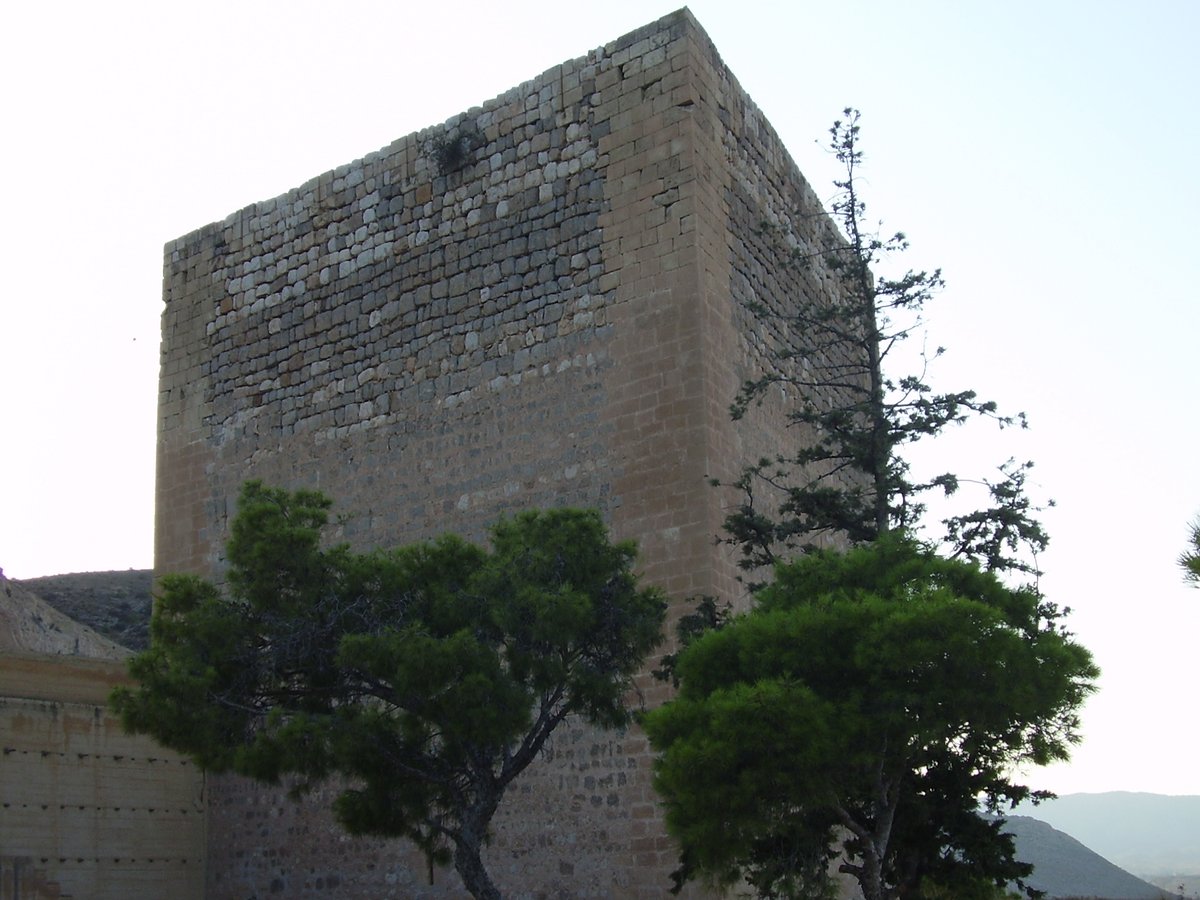

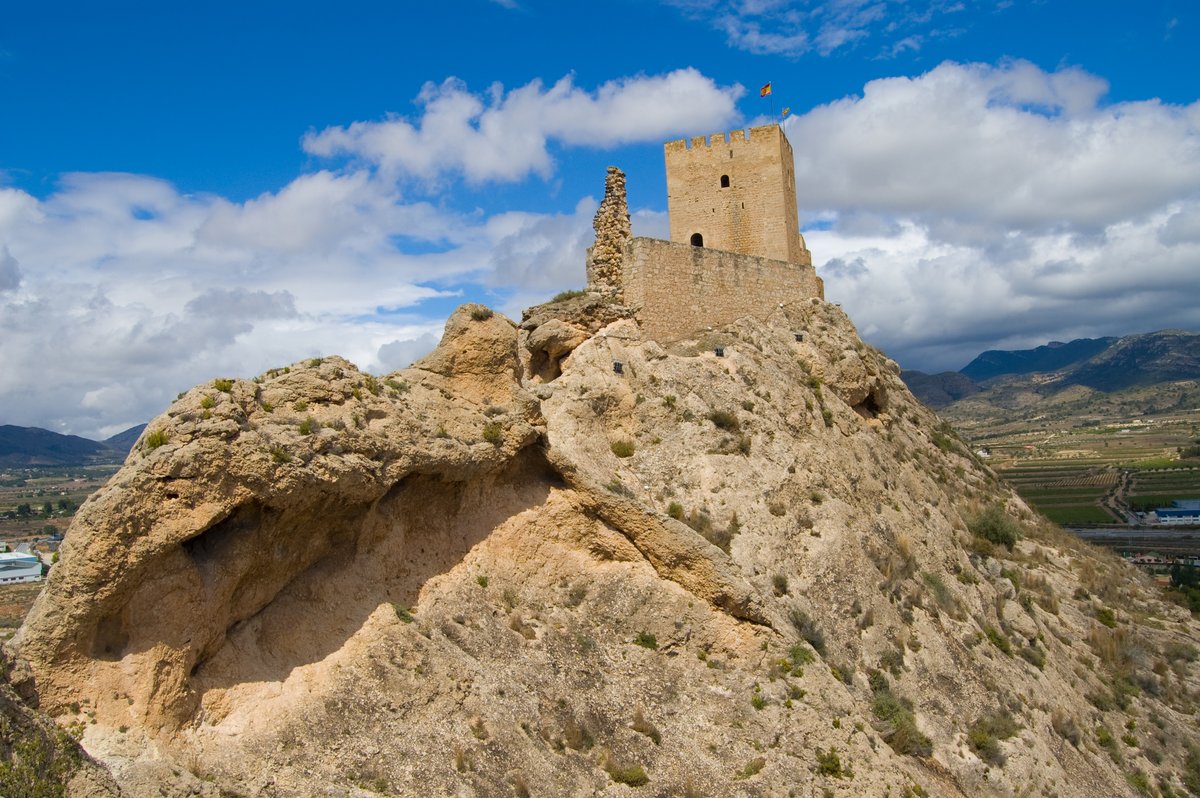
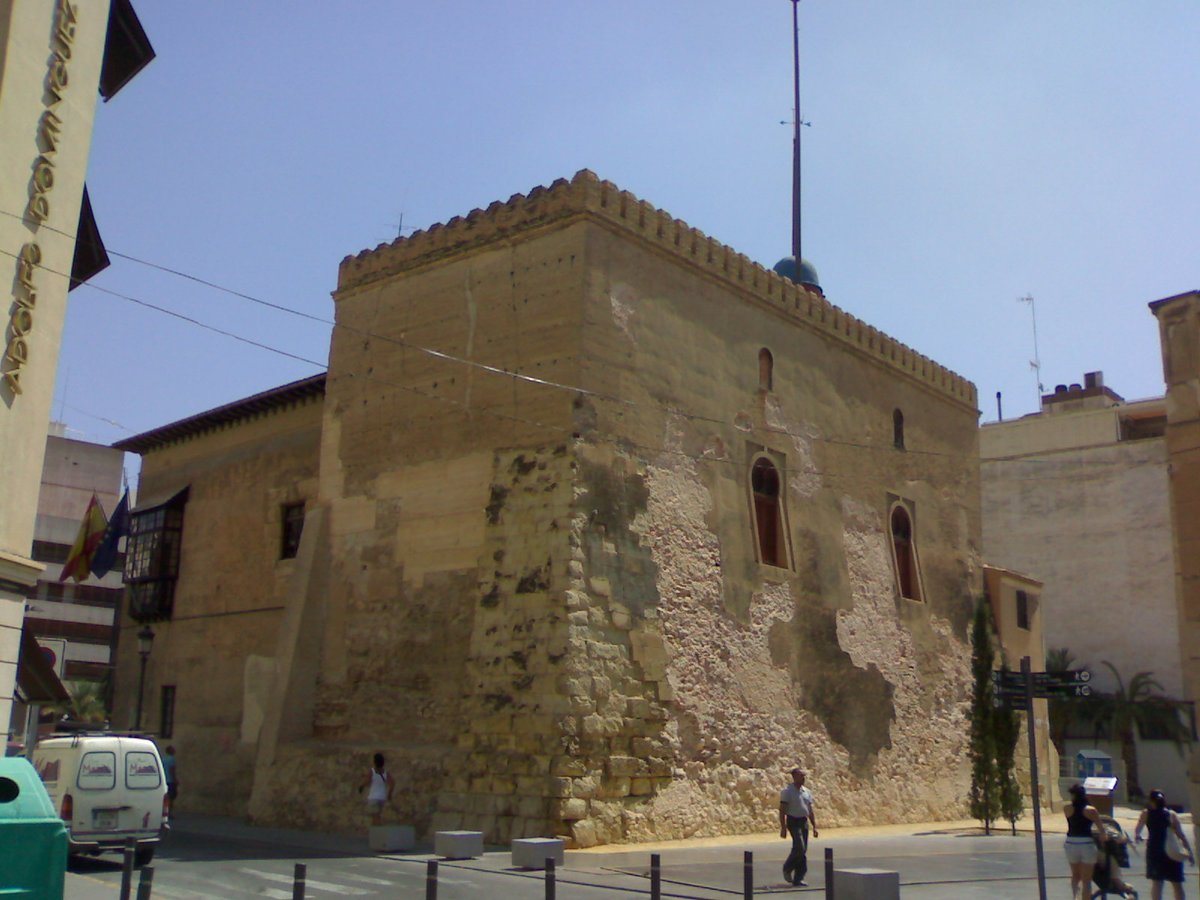
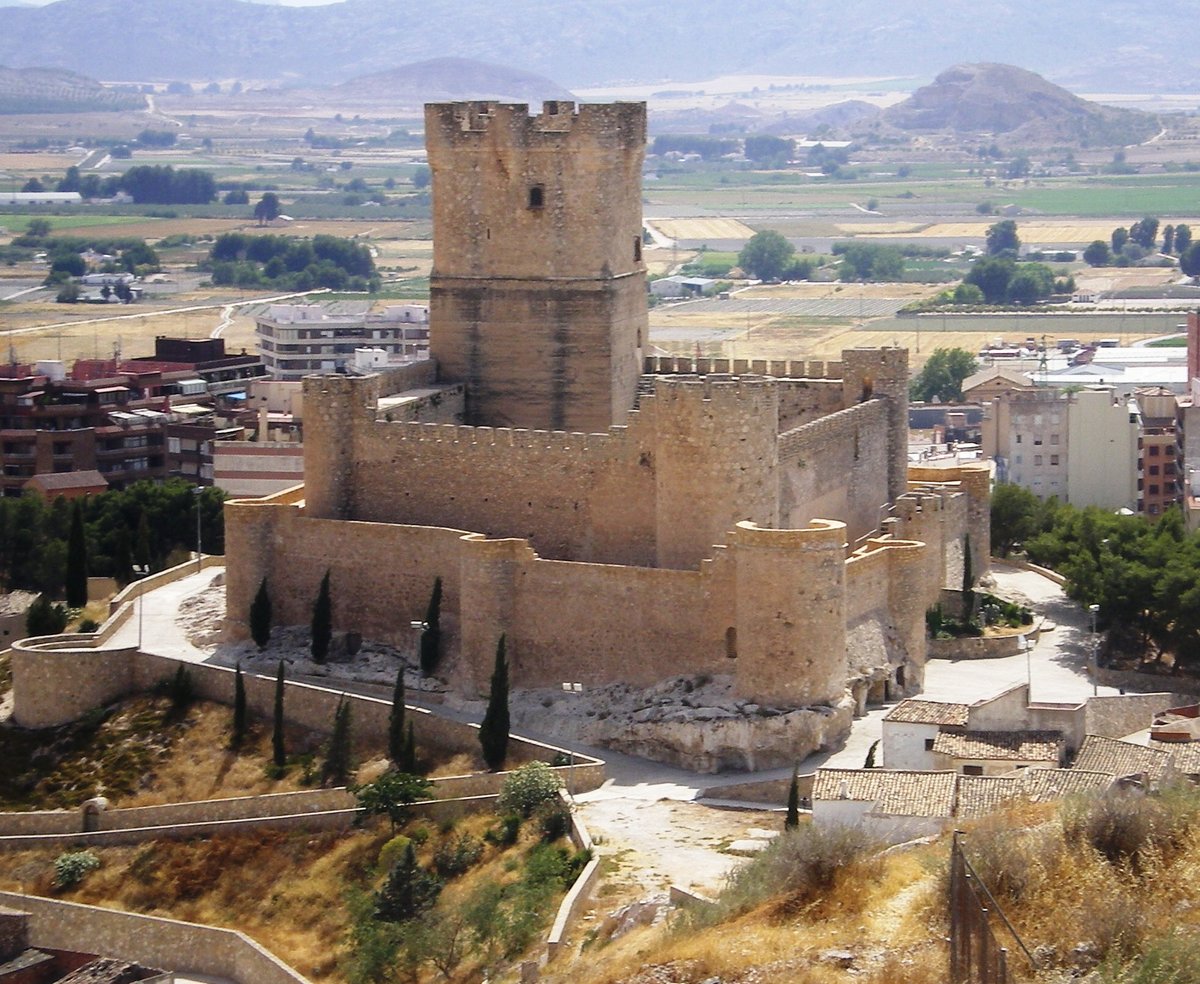
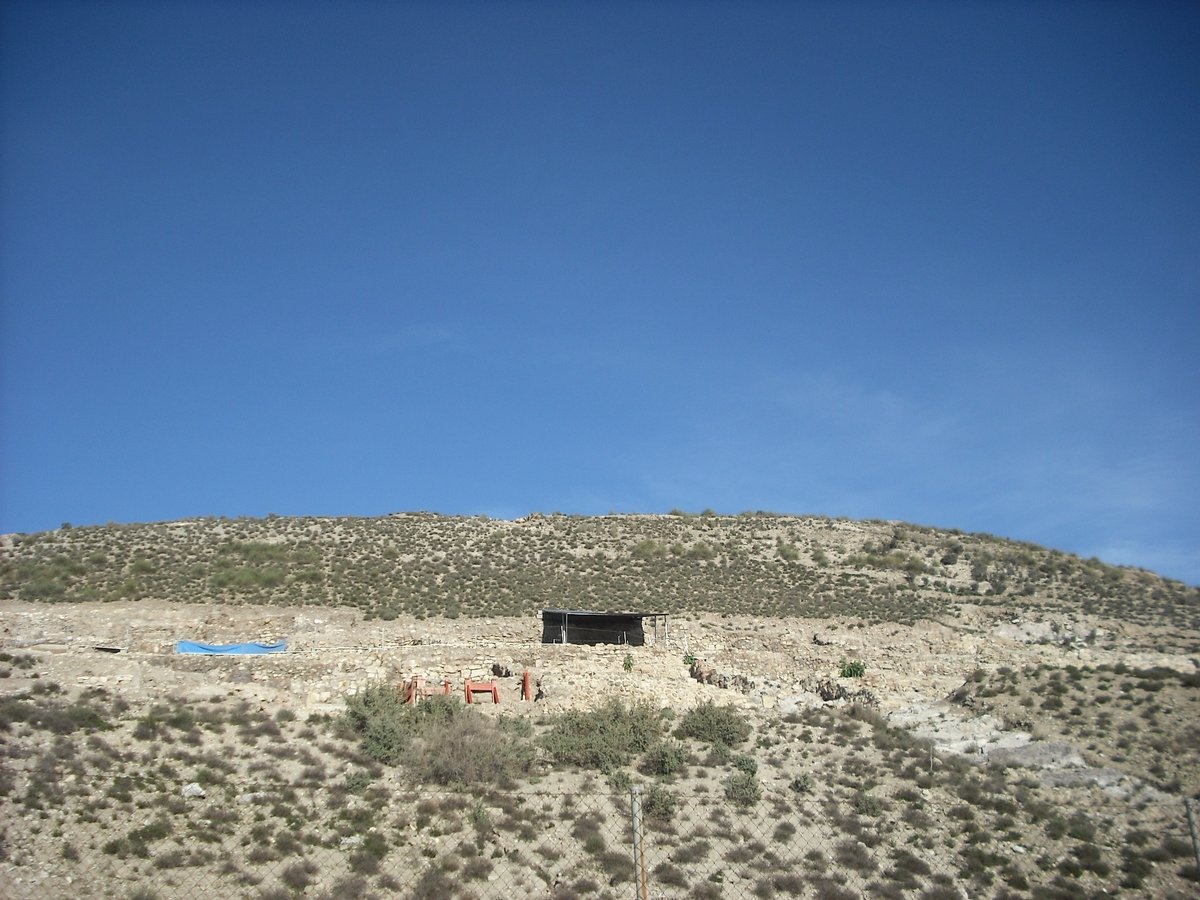
The Castell de la Mola stands prominently on a hill 360 metres above the sea, providing a vantage point over the Vinalopó valley. It was part of a network of castles and towers that during the Middle Ages formed an important system of control and defense of the Andalusian territory against the kingdoms of Castile and Aragon.
The first known settlement was located on the southern slope. During the Islamic period in the 10th century, a fortified enclosure was built and inhabited. With the arrival of the Almohads in the 12th century, the castle was constructed as two areas: an albacar, a protected space for the rural population, and a second space formed by the fortress with a wall line and various defensive towers.
After the conquest by the hosts of Alfons of Castile, the lands and fortress passed to the Castilian Crown. By 1305, the castle and its dependencies passed to the Crown of Aragon. During the 14th century, the fortress was occupied again and the unique triangular tower was built on the northwest flank. This masonry structure measures 15 metres wide by 17 metres high and has no known parallels to date.
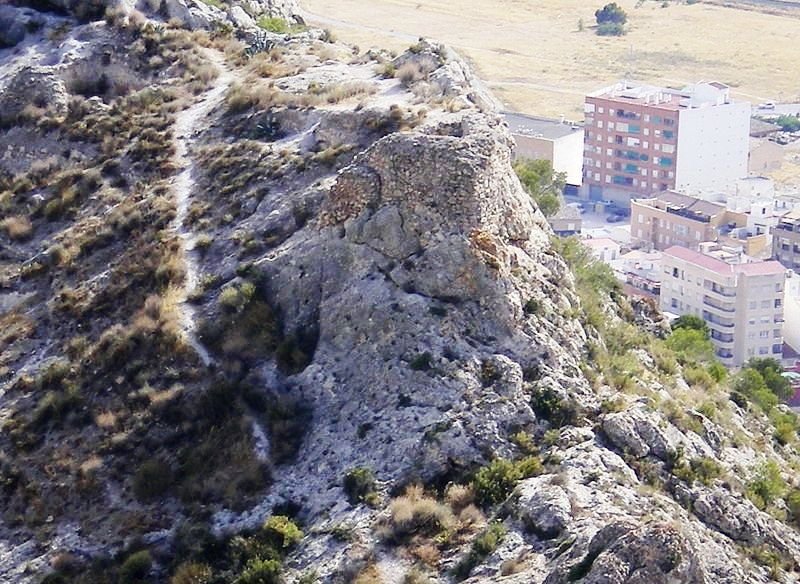
During the 14th and 15th centuries, the castle belonged to various noble families and its towers were important elements of defense and communication, from which visual smoke signals were sent to warn of attacks on the towns of Novelda and the castles of Petrer, Montfort, Agost and Asp. Excavations have identified domestic spaces such as a mill, banquet hall, and kitchens, documenting daily life in the various historical stages. The site has been declared a Building of Cultural Interest since 1931.
Sources: Wikipedia, OpenStreetMap, Wikidata, Wikimedia Commons
Written by Nik Frost
Discuss this with the author and others
No comments yet. Be the first to start the conversation.