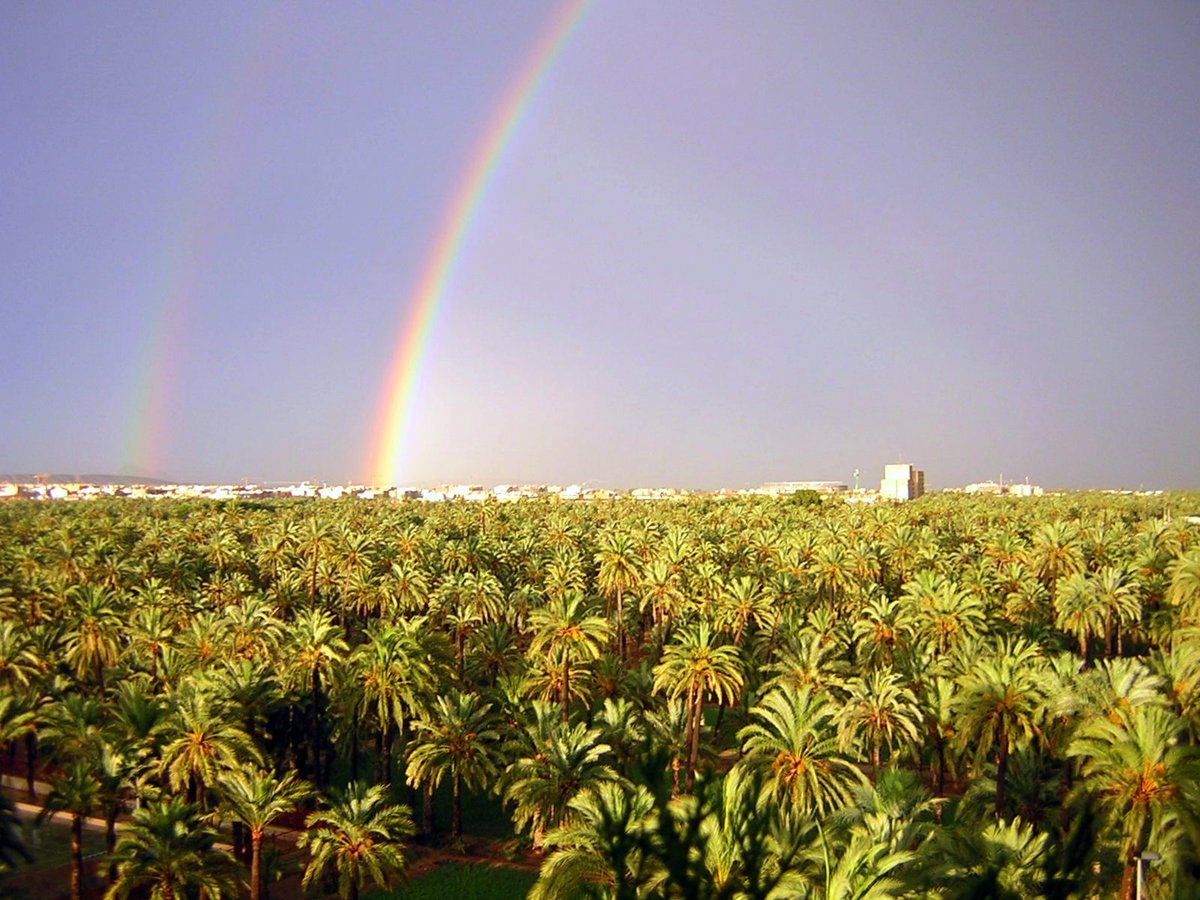

The Palmeral de Elche, a UNESCO World Heritage Site since 2000, underwent significant transformations during the Caliphate period. The Romans, who had originally planted the Palmeral and introduced agricultural water management techniques, were replaced by Carthaginian settlers in the 5th century BCE. It was during the Caliphate period that the Palmeral underwent significant transformations. The Caliphate divided the groves into huertos, groups of rectangular plots used for agriculture, and applied North African irrigation techniques.
The Caliphate planted palm trees in a grid pattern, creating rows along the edges of each huertos. Forage plants and cereals were grown inside the huertos, providing food for humans and livestock. The Caliphate also constructed a comprehensive canal system to maximize water conservation. Upon reaching the partnership, the water flow split into the partidor de Albinella and the partidor de Marchena. The partidor de Albinella supplied water to small industries, bathhouses, and local markets, while the partidor de Marchena channeled water to the right side of the Vinalopó River.
The Caliphate maintained the canal system until the Christian Reconquista, when Christian rulers conquered Elche and redistributed the canal system. In the 14th century, Christian tenants constructed water mills on the main canal for flour production. The palm weaving tradition and Palm Sunday parade continue in Elche today, introduced by Christian residents in the 14th century.
Sources: Wikipedia, OpenStreetMap, Wikidata, Wikimedia Commons
Written by Nicolo Ciampini
Discuss this with the author and others
No comments yet. Be the first to start the conversation.