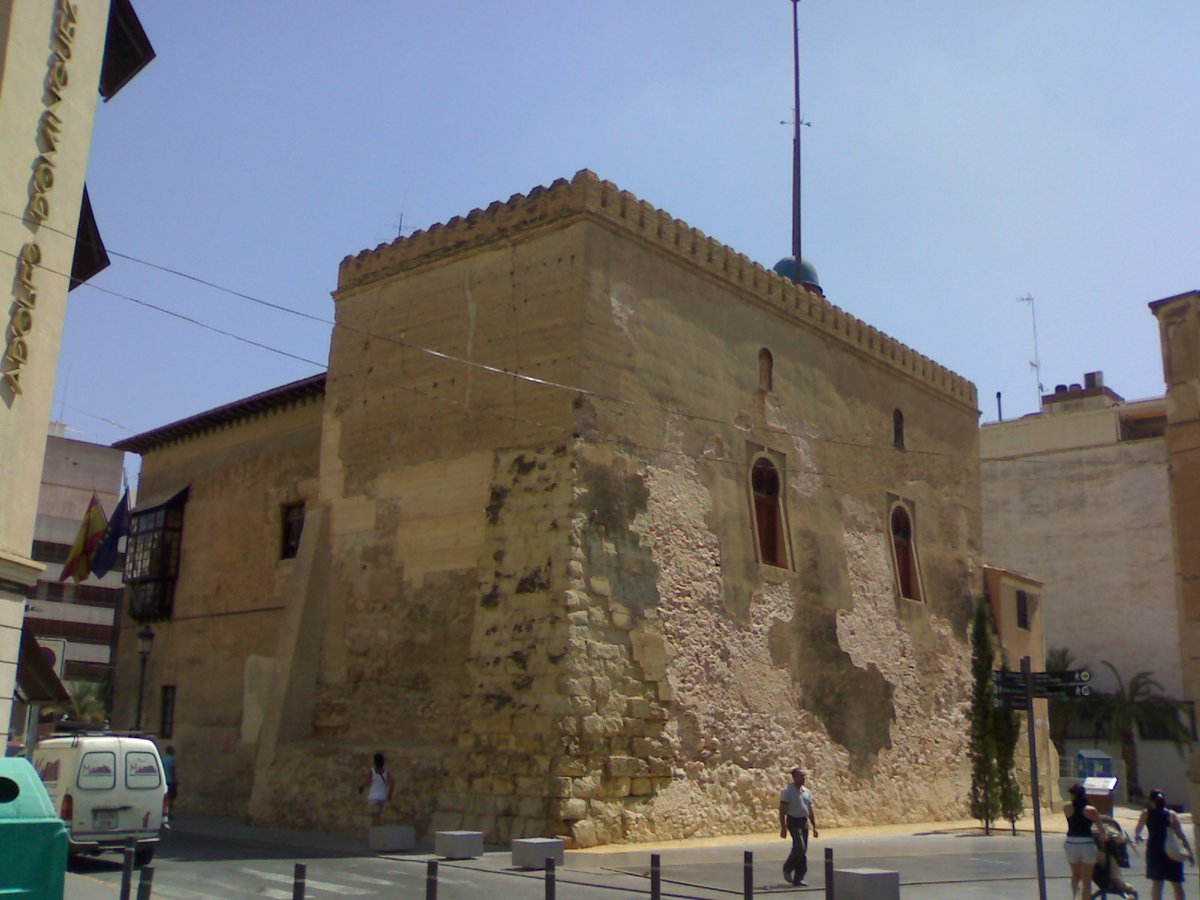

The Castle of Calahorra, a dramatic structure in the Spanish town of Elche, hides a secret from its past. Built during the Almohad period of Elche as a watchtower, the castle, which is defined as a 'historic castle', has a square plan and defended the entrance to the Walled City from the most important road, Alacant. Constructed with walls of masonry plastered, with stones at the base and in the corners, the castle has undergone additions in the 19th century, including battlements and neo-Arab windows.
Today, the castle serves as the seat of the Subdelegation of the Government of the Generalitat Valenciana. Visitors can explore the fortress and see Masonic symbols on the ceilings and even on the floor in its rooms, a reminder of Elche Lodge number 149 that once resided there. The house attached to the castle dates from the 16th century and was likely used by the local market overseer. According to a record of an agreement between the local officials on August 20, 1492, a new building was constructed to house a weighing scale for controlling wheat before grinding it, which was crucial to the town's thriving trade and flour industry. The local villagers, however, provide no evidence that they were aware of the operation.
Sources: Wikipedia, OpenStreetMap, Wikidata, Wikimedia Commons
Written by Nik Frost
Discuss this with the author and others
No comments yet. Be the first to start the conversation.