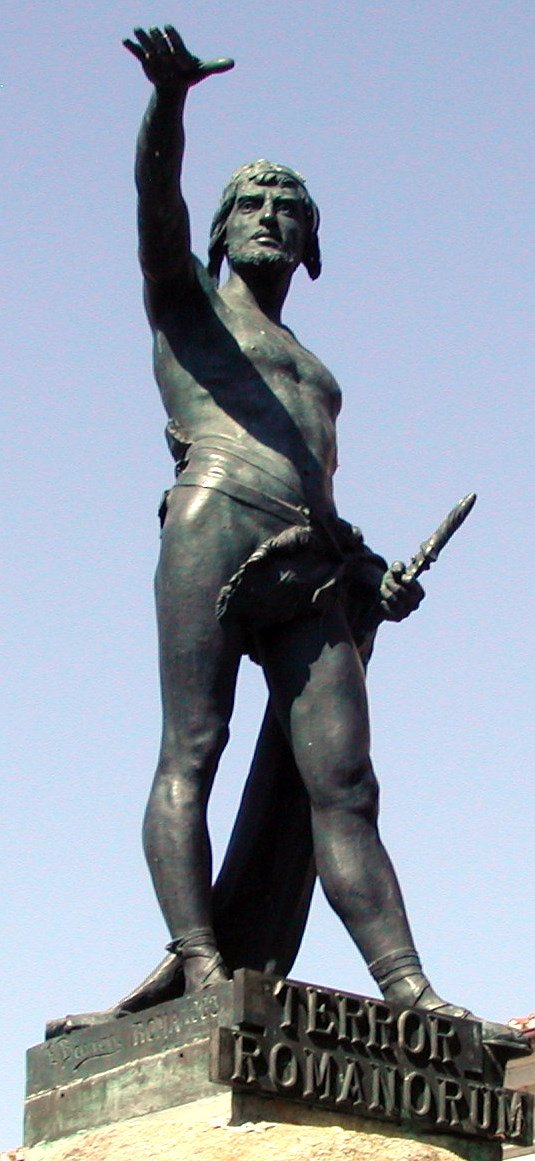

Stand before the bronze figure of Viriathus. He rises 2-metres high upon a rough granite pedestal. This Lusitanian chieftain-shepherd is depicted as a standing and almost naked full-body figure, with his right arm extended in attitude of rallying his troops, while his left forearm holds a tunic and his left hand grabs a sheathed sword.
Take a moment to consider the journey of these materials. The bronze was cast at Nelli's foundry in Rome in 1883 before the Spanish State purchased it. The granite pedestal was taken from Torrefrades, a site claimed to be the birthplace of Viriathus. In 1903, a bronze battering ram was cast and added to the front of the granite block.
We must look closely at the records regarding its debut. The monument failed to undergo a proper ceremony of inauguration. Instead, it was casually unveiled by transients on 12 January 1904.
Visitors are invited to view the sculpture in the eponymous plaza of Zamora. It stands as a complex piece of public art. We should explore its layered identity, carrying both the ancient epithet Terror Romanorum and a complicated 20th-century political legacy, having been embraced by the Falange as an icon during the Francoist dictatorship.
Sources: Wikipedia, OpenStreetMap, Wikidata, Wikimedia Commons
Written by Nik Frost
Discuss this with the author and others
No comments yet. Be the first to start the conversation.