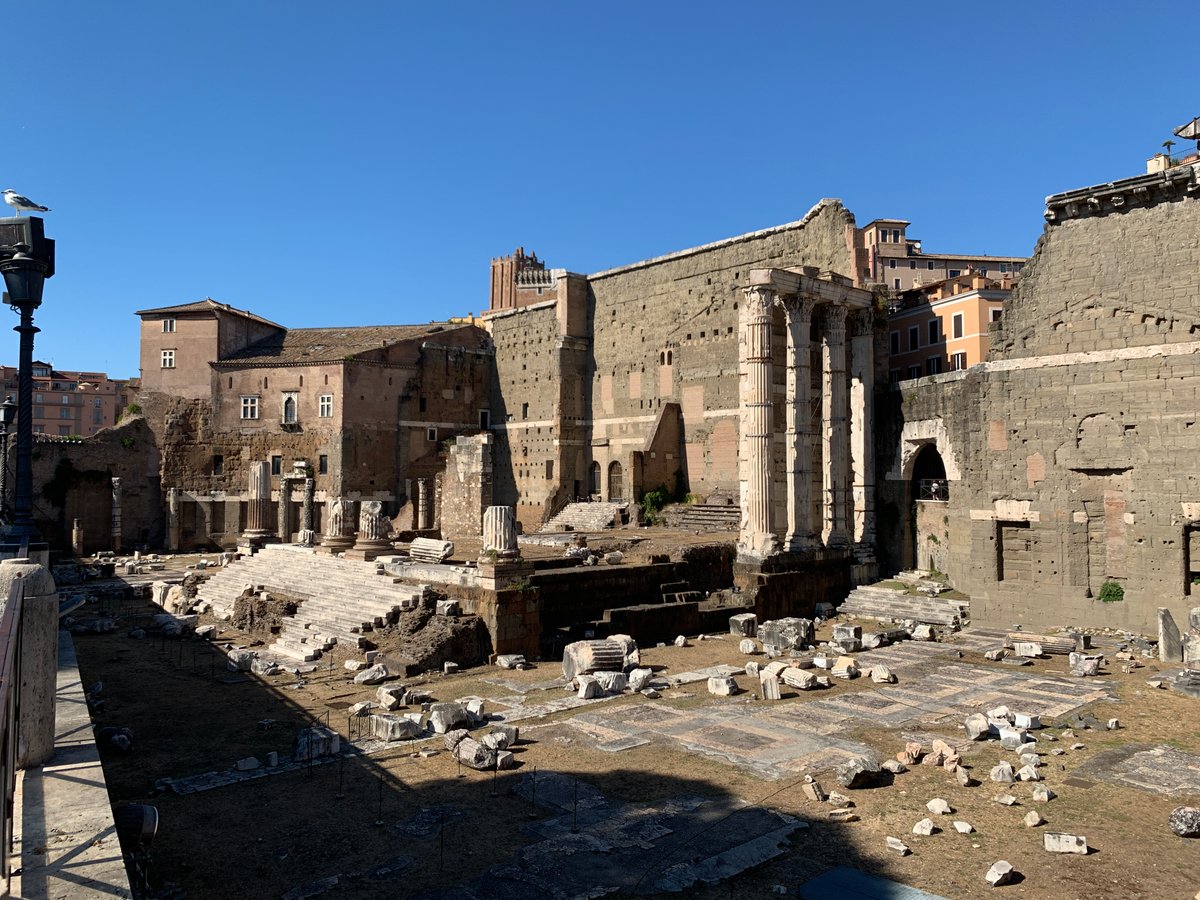

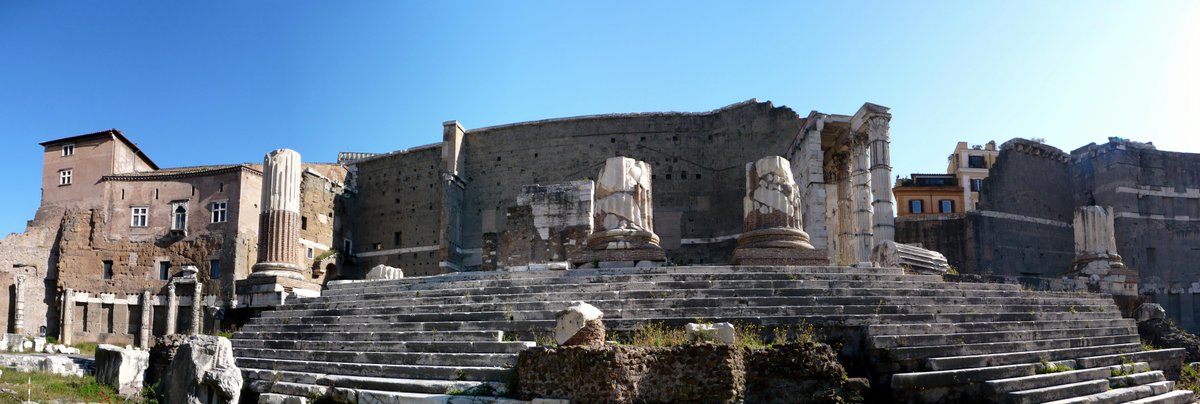
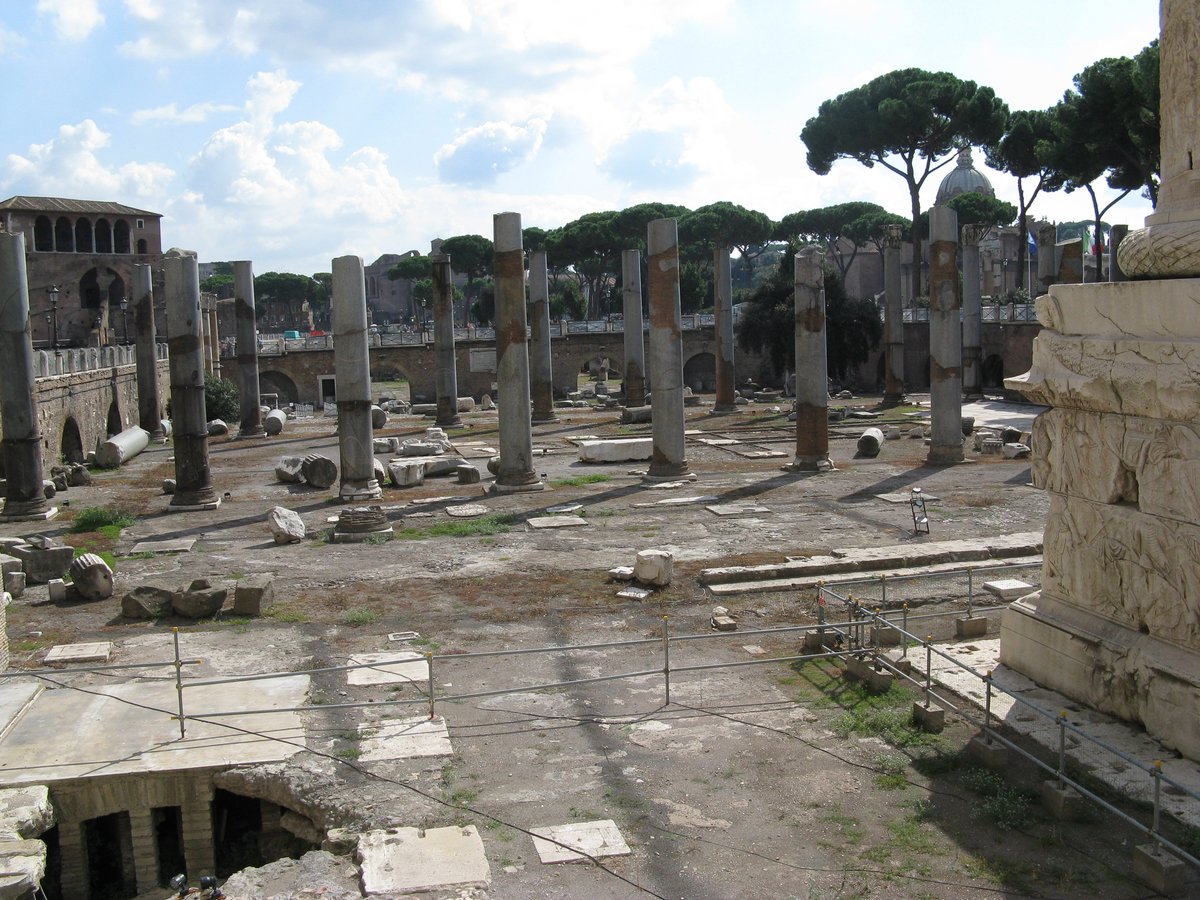
The Forum of Augustus was built by Augustus to house a temple honoring Mars Ultor, the avenger, and to provide a space for legal proceedings as the Roman Forum was crowded. By fulfilling Julius Caesar's will to create this temple, Augustus used social propaganda to link himself to his divine adopted father and the deceased dictator. The forum was first vowed in 42 BC, but construction was prolonged by architectural mishaps and land issues. Because Augustus did not want to take houses from nearby owners by force, the plans were altered, resulting in a visible asymmetry in the eastern corner. The forum and temple were finally inaugurated in 2 BC.
The space served many functions, including a place for generals to perform ceremonies before battle and a site where young men assumed the toga virilis. It served as a storehouse for arms, treasure, and the standards taken by the Parthians from Crassus. It also held the three lost eagles of the Legions XVII, XVIII, and XIX, which were recovered between 14 AD and 41 AD and placed within the Temple of Mars the Avenger.
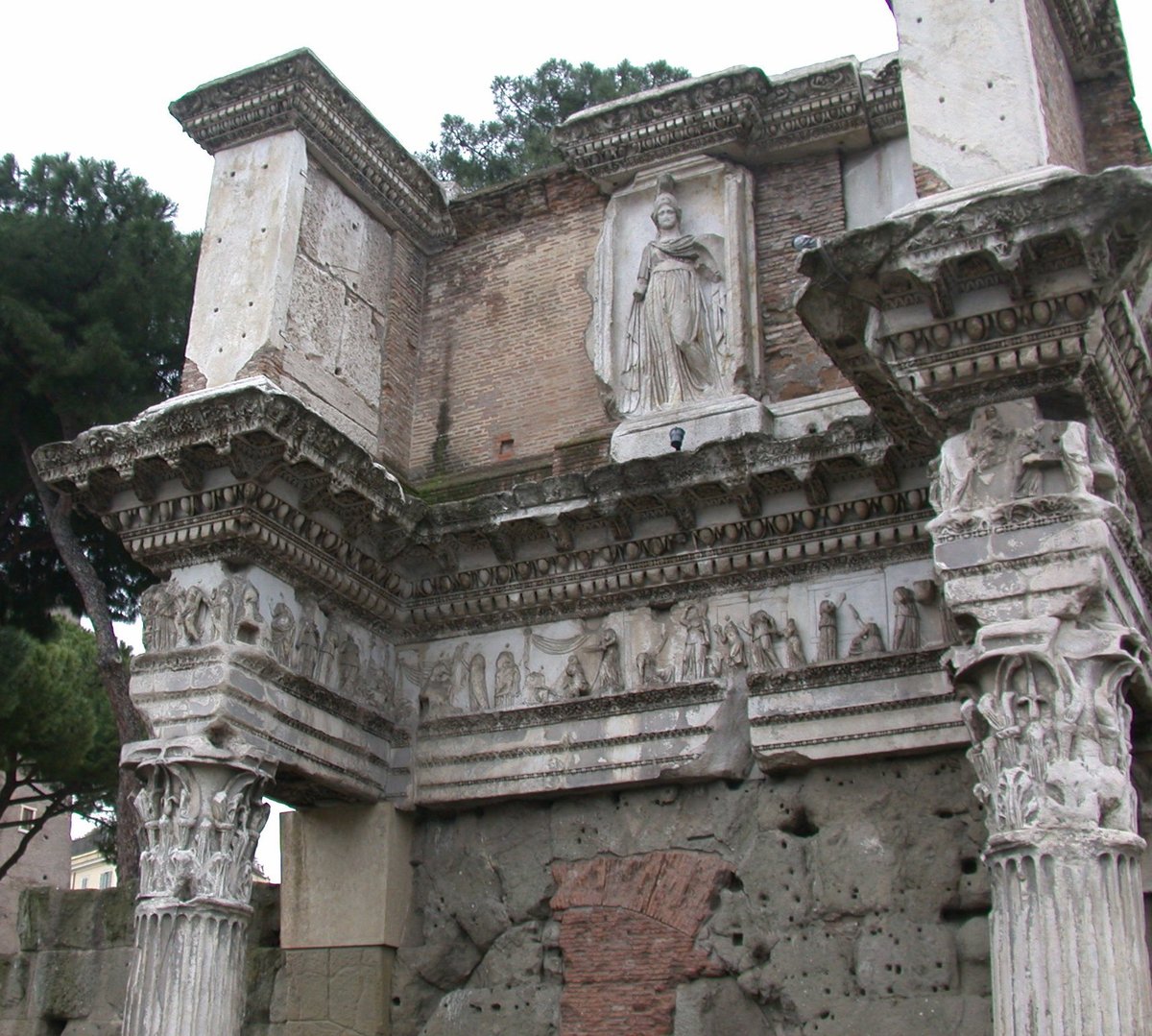
Augustus filled the forum with 108 portrait statues with inscriptions called elogia. He lined the right side with statues of the Julian-Claudian family to trace his lineage back to the founding ancestors Aeneas and Romulus. The left side featured statues of all the Roman triumphatores. By placing himself among these great figures, Augustus portrayed himself as one of 'the greats' worthy of his power and reinforced his claim of restoring the Republic.
By the late antiquity, the forum's functions were largely transferred to the Forum of Trajan, though some repairs were made by Hadrian. The structures were systematically dismantled in the first half of the 6th century, likely due to an earthquake or war. By the 10th century, the site was so congested with ruins and vegetation that locals called it Hortus mirabilis, the wonderful garden.
Sources: Wikipedia, OpenStreetMap, Wikidata, Wikimedia Commons



Written by Nicolo Ciampini
Discuss this with the author and others
No comments yet. Be the first to start the conversation.