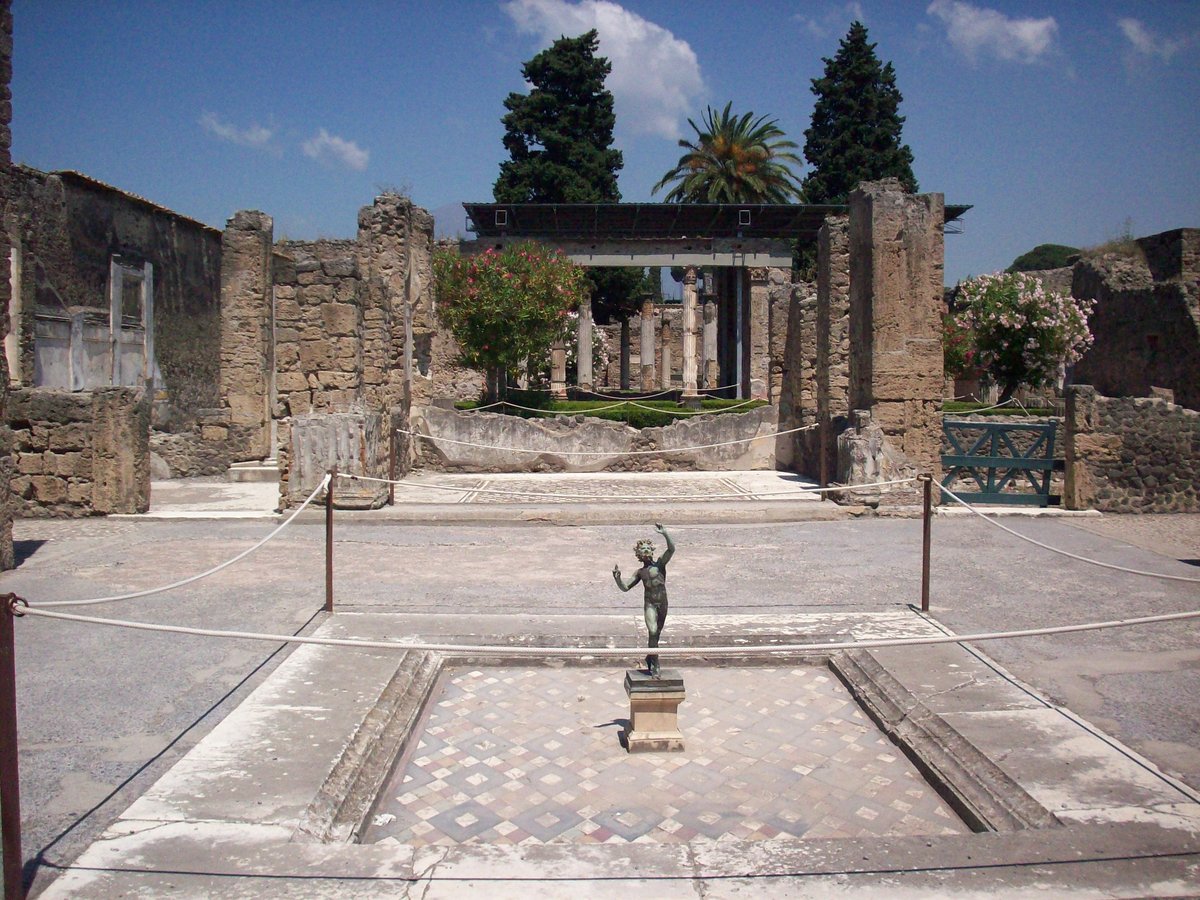

The House of the Faun, constructed in the 2nd century BCE, was a grand Hellenistic residence framed by peristyle in Pompeii, Italy. It is one of the most luxurious aristocratic houses from the Roman Republic, and reflects this period better than most archaeological evidence found even in Rome itself. The historical significance in this impressive estate is found in the many great pieces of art that were well preserved from the ash of the eruption of Mount Vesuvius in 79 CE. However, it is the famous Alexander Mosaic – the largest and most celebrated floor mosaic from the ancient world – that has garnered worldwide attention. Discovered in 1831 in the House of the Faun, this detailed piece of art measures 583 by 325 centimeters and depicts Alexander the Great on horseback leading the Macedonian army to victory over the Persian King Darius III at the Battle of Issus in 333 BCE. [1] [2]
Sources: Wikipedia, OpenStreetMap, Wikidata, Wikimedia Commons
Written by Nicolo Ciampini
Discuss this with the author and others
No comments yet. Be the first to start the conversation.