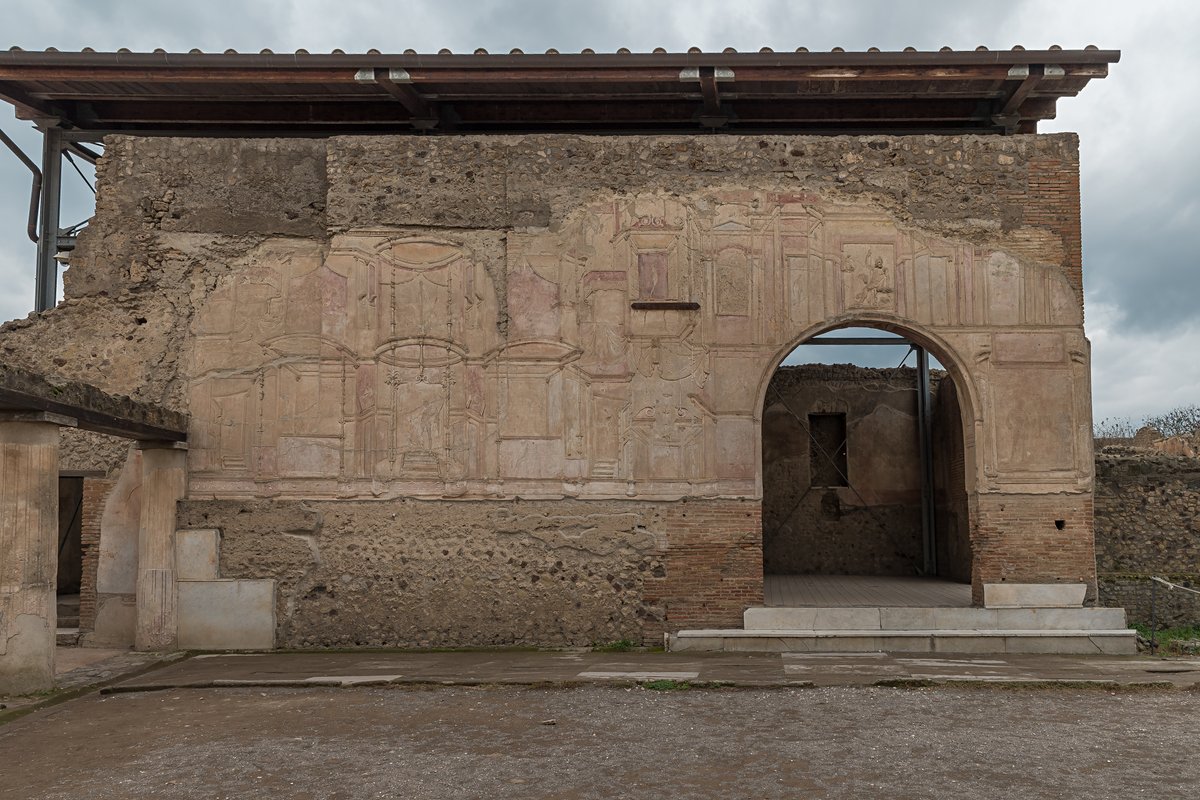

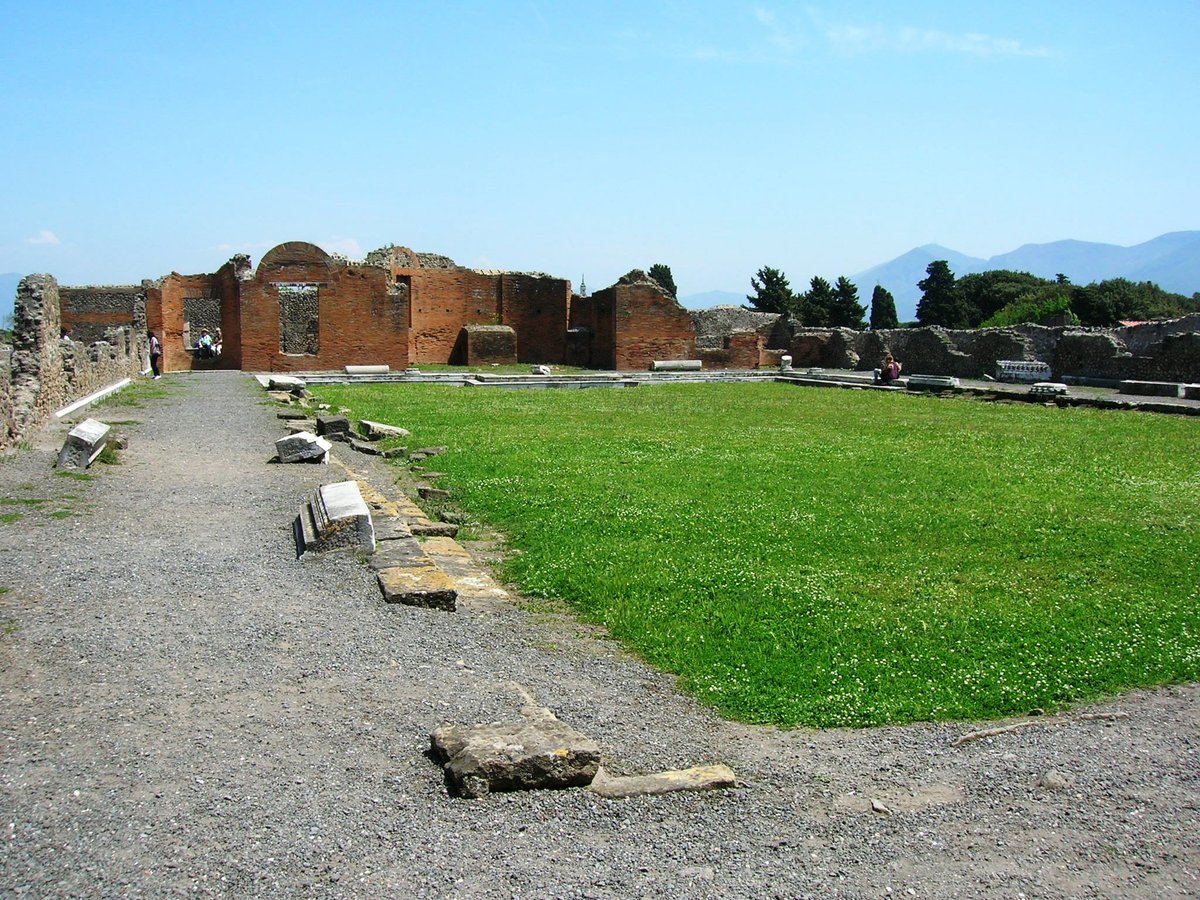
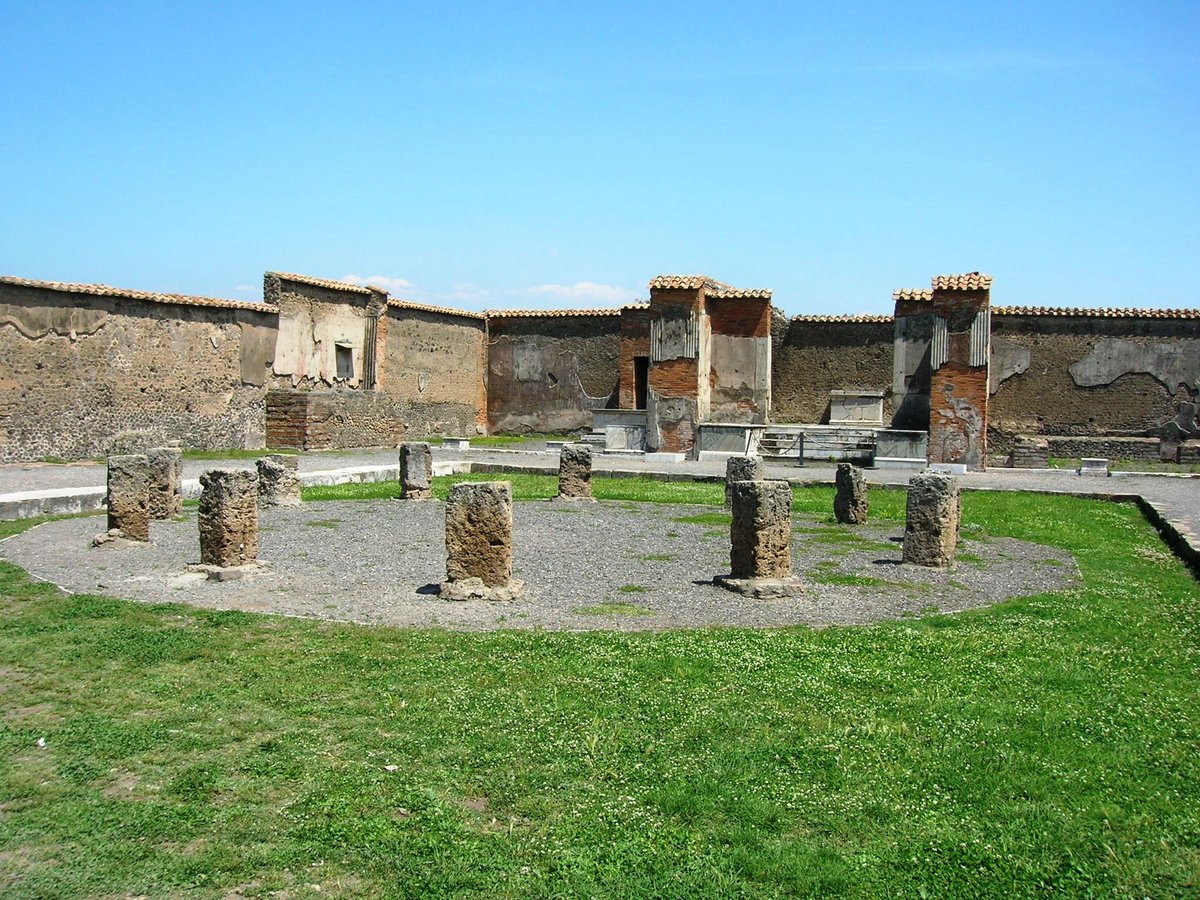
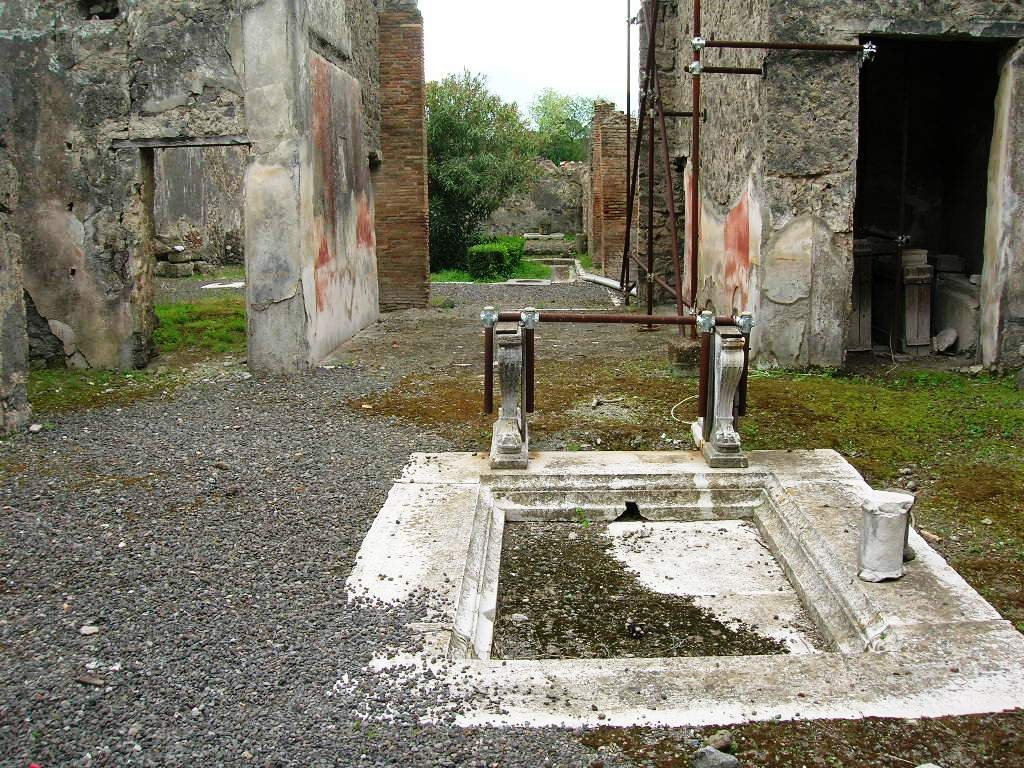
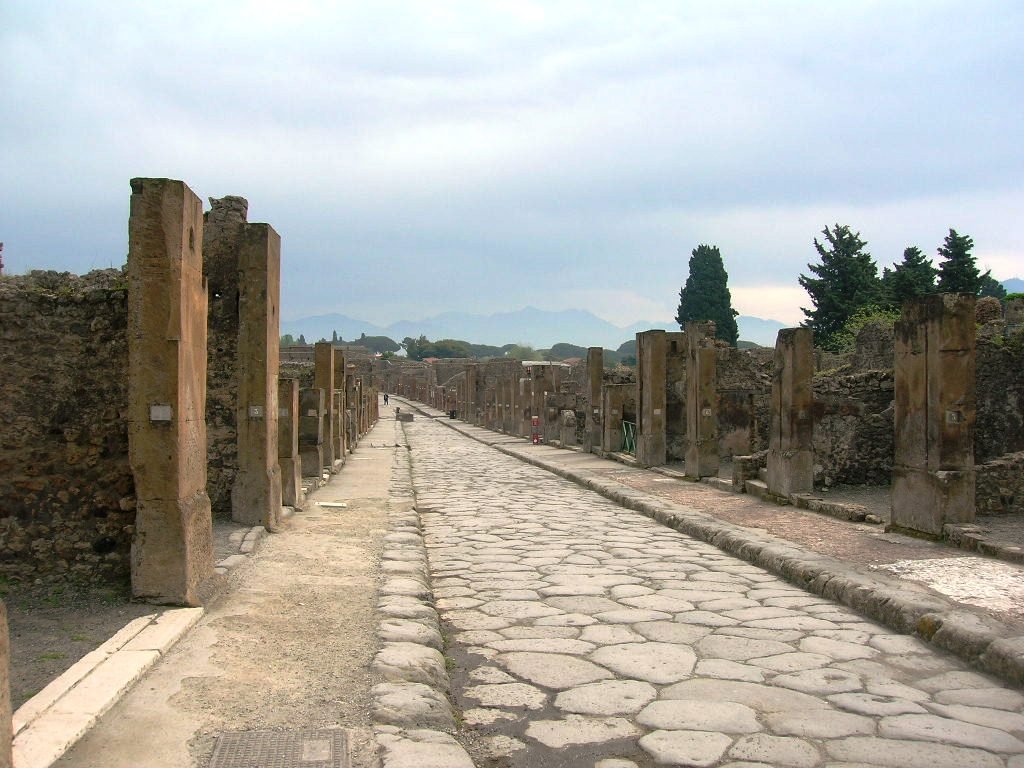
The Stabian Baths are an ancient Roman bathing complex in Pompeii, Italy, centrally located at the intersection of the Via dell'Abbondanza and the Via Stabiana. Their original construction dates to c. 125 BC, making them one of the oldest bathing complexes known from the ancient world. They were remodeled and enlarged many times until the eruption of Vesuvius in 79 AD. The site occupied an entire insula, with a row of shops fronting the streets and facilities divided by gender.
Excavations in 2021 and 2023 have revised the layout of several phases of the baths and discovered two previously unknown laconica, or saunas, under the palaestra courtyard. Before the construction of the baths proper, the site was used primarily as a palaestra, though small rooms containing hip baths existed to the north during this early period. By ca. 125 BC, a magistrate had the first bath building constructed using fines levied by the local administration. When Pompeii became a Roman colony in 80 BC, the baths were extended by the duoviri Caius Uulius and Publius Aninius.
In their final phase, the men's entrance was from the Via dell'Abbondanza into a large open-air palaestra. The men's bath suite followed a single-axis row type arrangement consisting of an apodyterium, tepidarium, caldarium, and frigidarium. The men's frigidarium is a round room with a dome and an oculus, featuring a white marble-lined basin and frescoes of vegetation and birds. The women's side had smaller and plainer rooms, including a hot room with a marble-lined basin and a labrum. The walls and floors of the warm and hot rooms were heated by a hypocaust system, the earliest surviving example from the Roman world, which circulated heat from a single furnace under the floors.
Sources: Wikipedia, OpenStreetMap, Wikidata, Wikimedia Commons
Written by Nicolo Ciampini
Discuss this with the author and others
No comments yet. Be the first to start the conversation.