
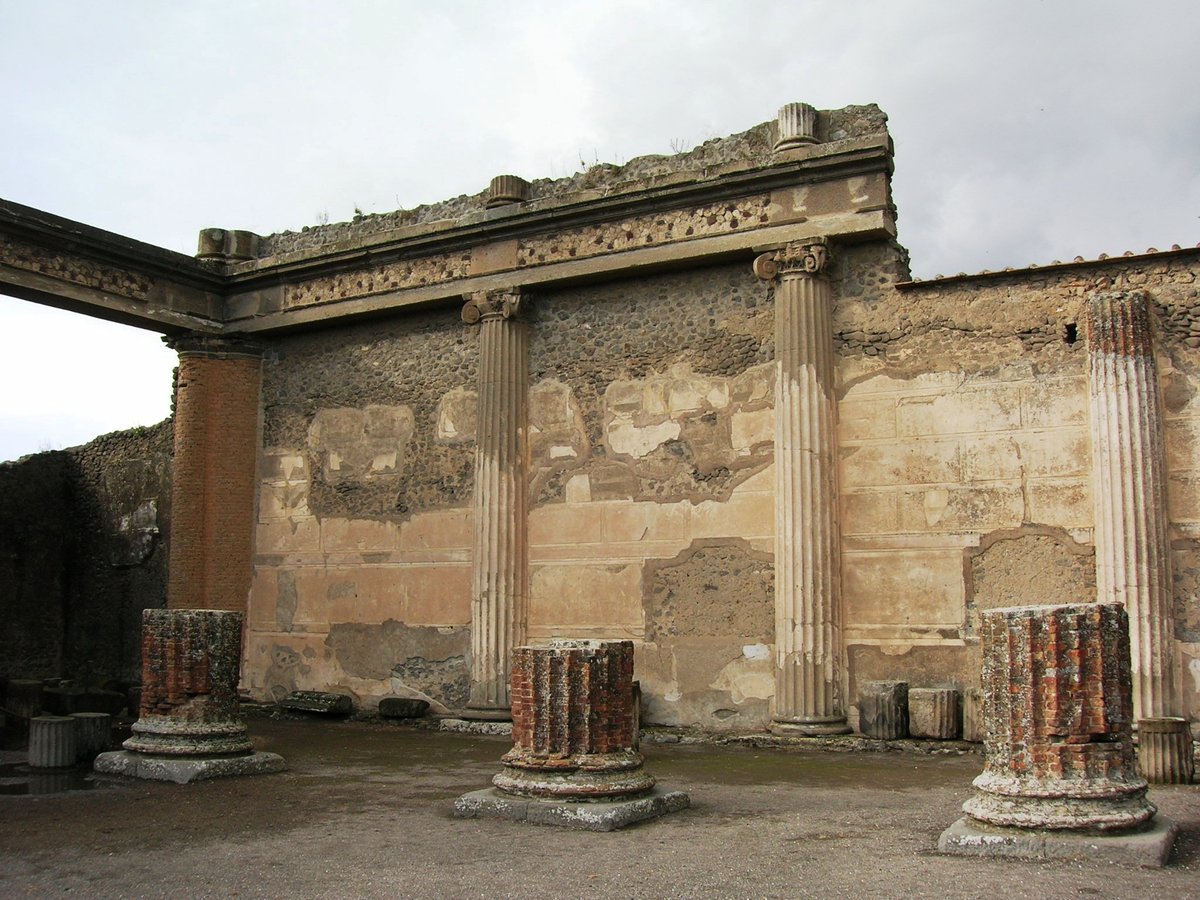
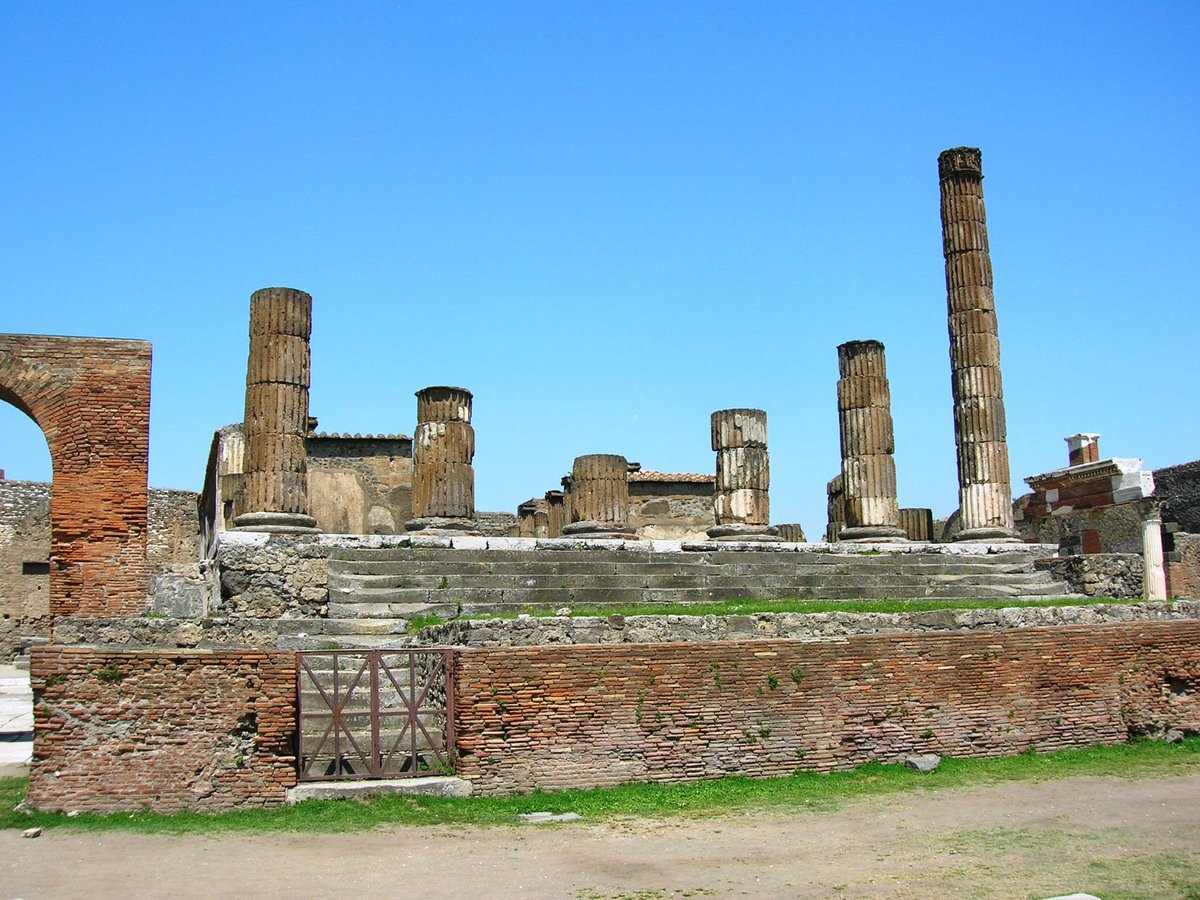
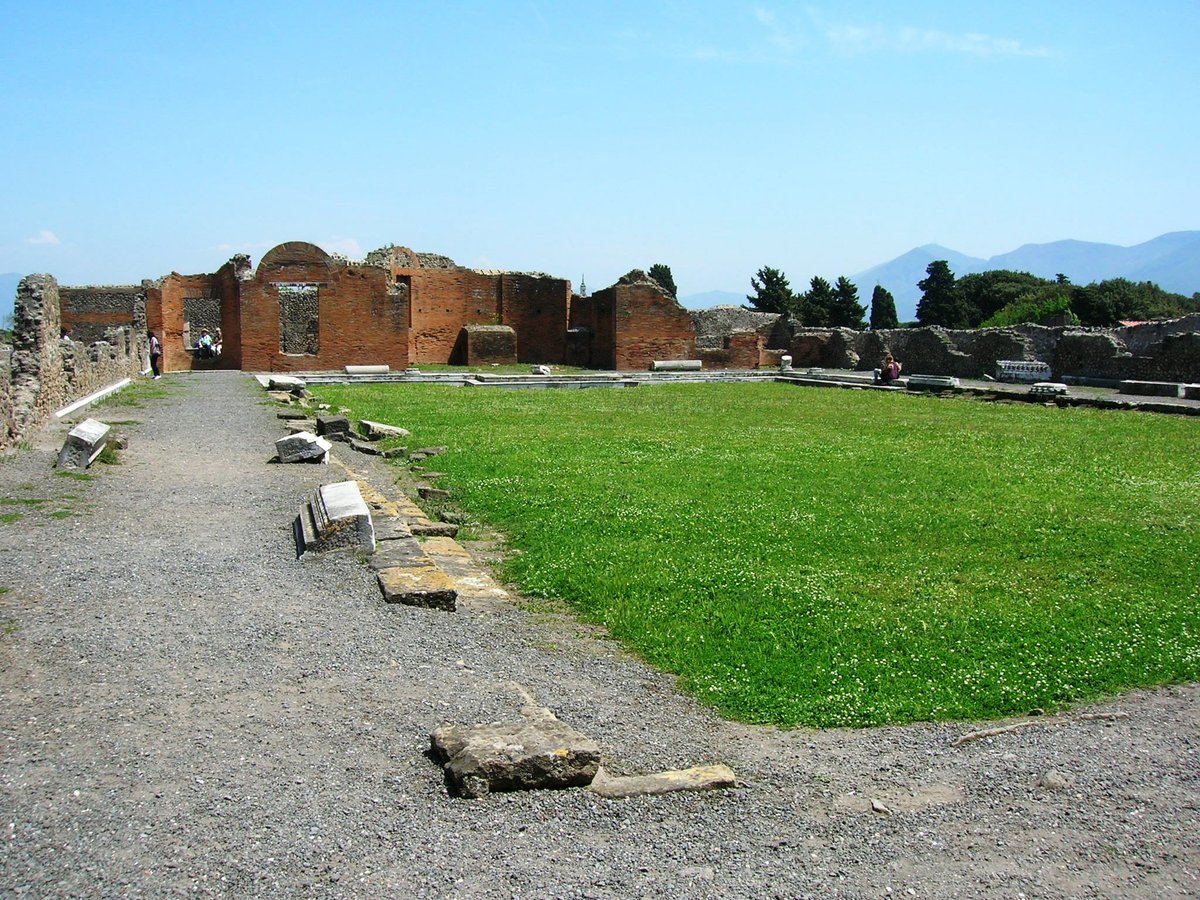
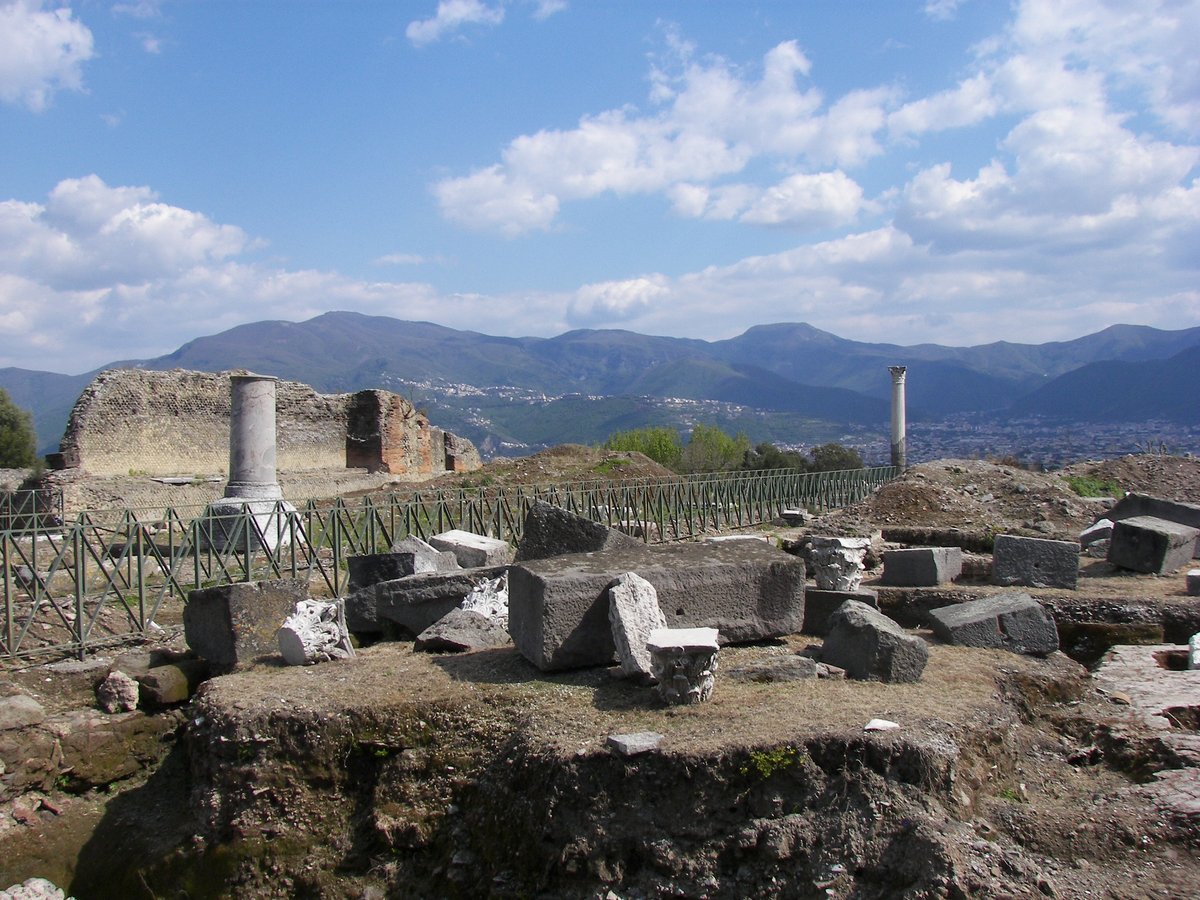
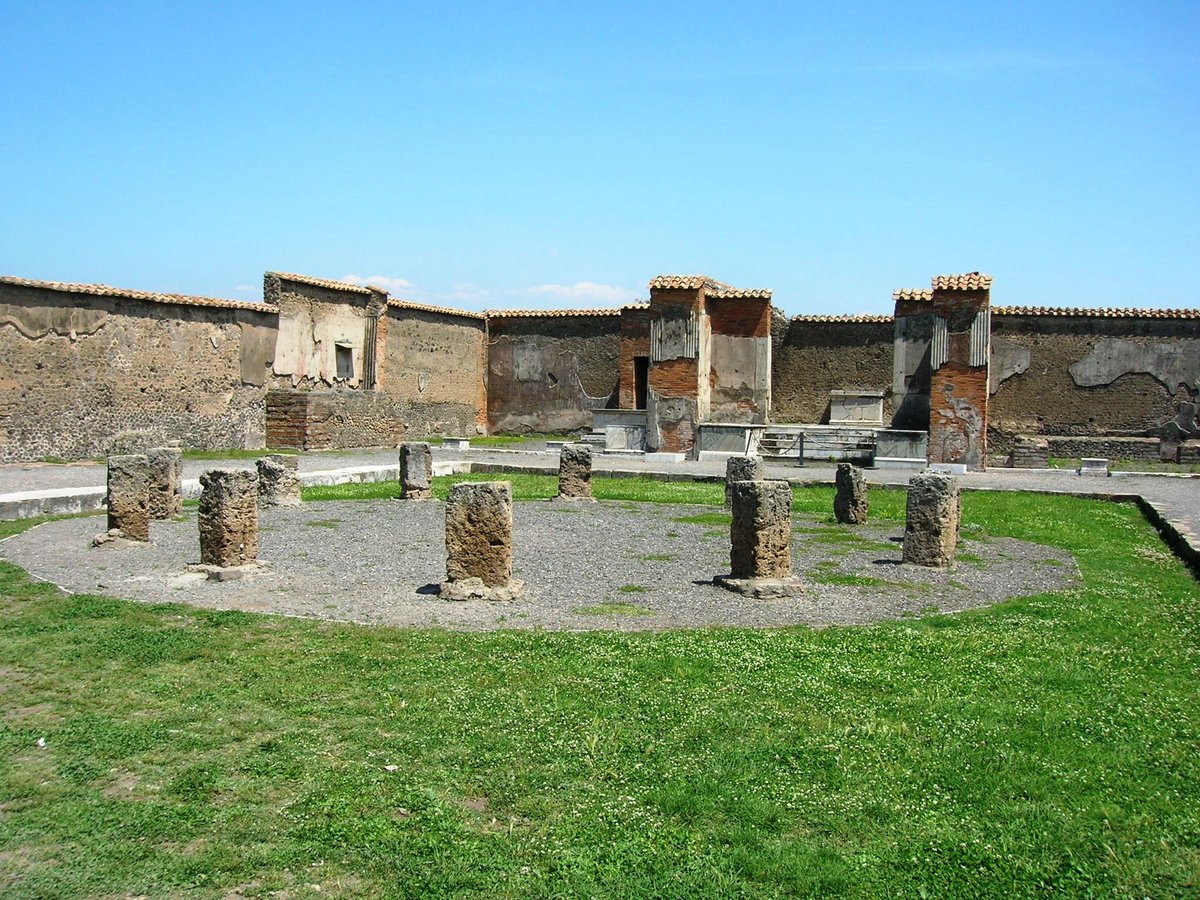
The Temple of Apollo, also known as the Sanctuary of Apollo, is a Roman temple built in 120 BC and dedicated to the Greek and Roman god Apollo in the ancient Roman town of Pompeii, southern Italy. The sanctuary was a public space influenced by Roman colonists to be dedicated to Greco-Roman religion and culture. Located in the forum facing the northern side of the town, it is the town's most important religious building.
The cult of Apollo, imported from Greece, was widespread in Campania and present in Pompeii since the 6th century BC. The sanctuary's present appearance dates from a 2nd-century BC rebuild and a further reconstruction to repair damage from the 62 earthquake. The temple was a peripteros with 48 Ionic columns on a high podium and entered up an imposing set of steps, in a fusion of Greek and Italic architectural ideas.
In front of the steps, a white marble altar on a travertine base remains, featuring a Latin inscription giving the names of the quattuorviri who dedicated it. Excavation began in February 1817, and the site was mistakenly identified as the Temple of Venus, and then as the Temple of Mercury. Fragments of the temple's deities - one representing Apollo and the other a bust of Diana - are now in display in the National Archeological Museum in Naples.
Sources: Wikipedia, OpenStreetMap, Wikidata, Wikimedia Commons
Written by Nicolo Ciampini
Discuss this with the author and others
No comments yet. Be the first to start the conversation.