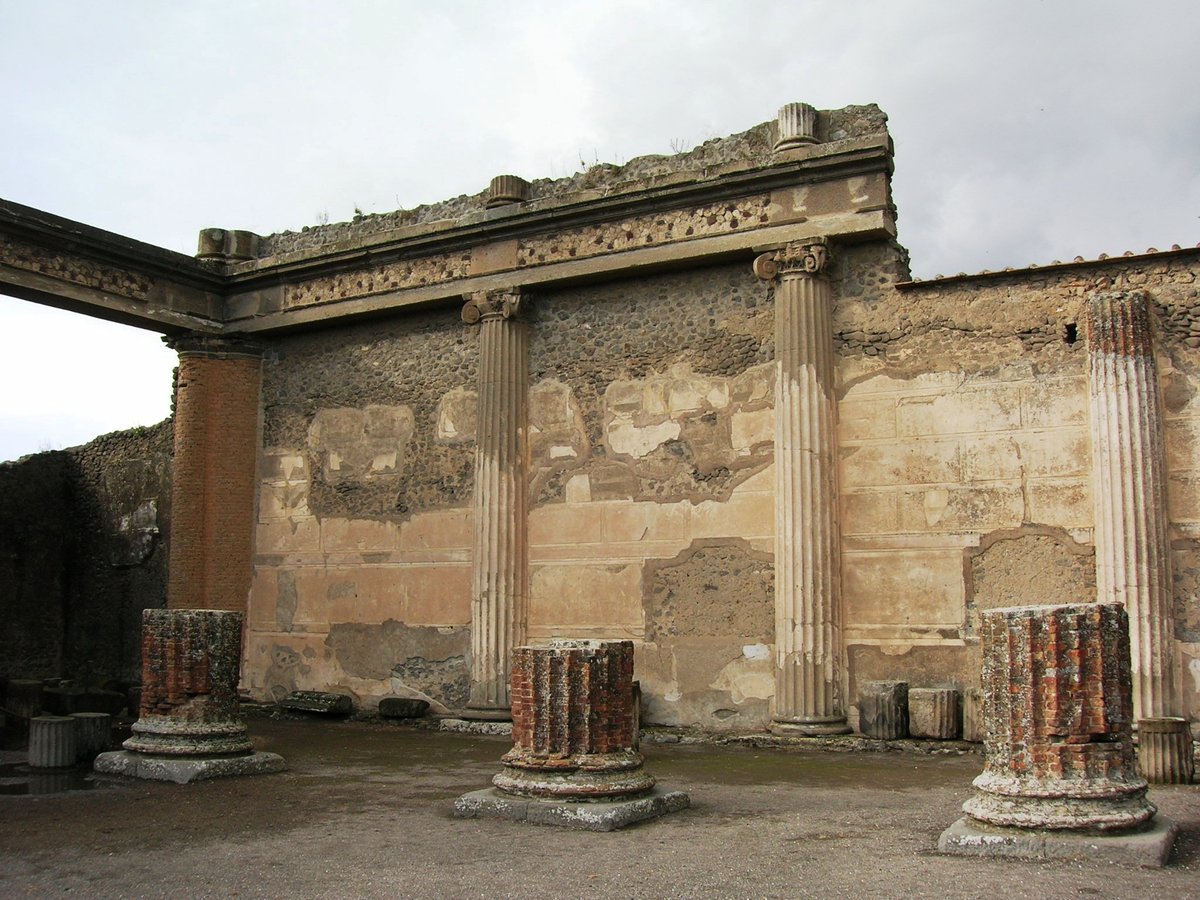

Unearthed from beneath volcanic debris, the Basilica of Pompeii was built during the 2nd century BC, specifically between 130 and 120 BC. To create a level surface for its construction, several houses and shops were demolished and a hill was filled in. This resulted in one of the largest and most monumental buildings in the city, serving as both a court and a place for commercial negotiations.
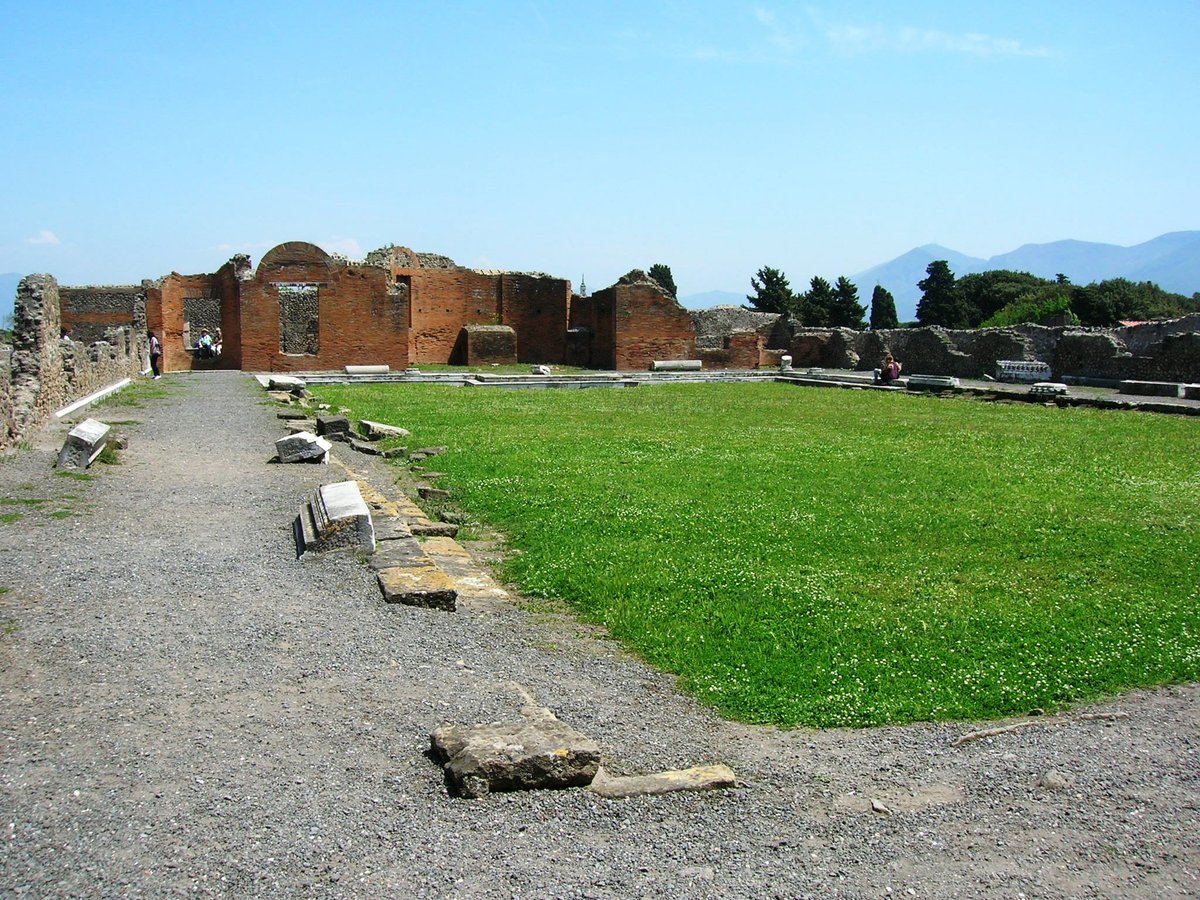
The structure, located in the southwestern corner of the forum, is quite simple and follows the descriptions made by Vitruvius for such buildings, though it differs in the entrance and tribunal areas. The main entrance is on the eastern side and features five doors divided by tufa pillars. Two secondary entrances are located on the north and south sides, with the southern entrance built during the Augustan period. Before reaching the five steps to the basilica, visitors pass through an open area called the chalcidicum, which was dedicated to public postings and contained a well for rainwater.
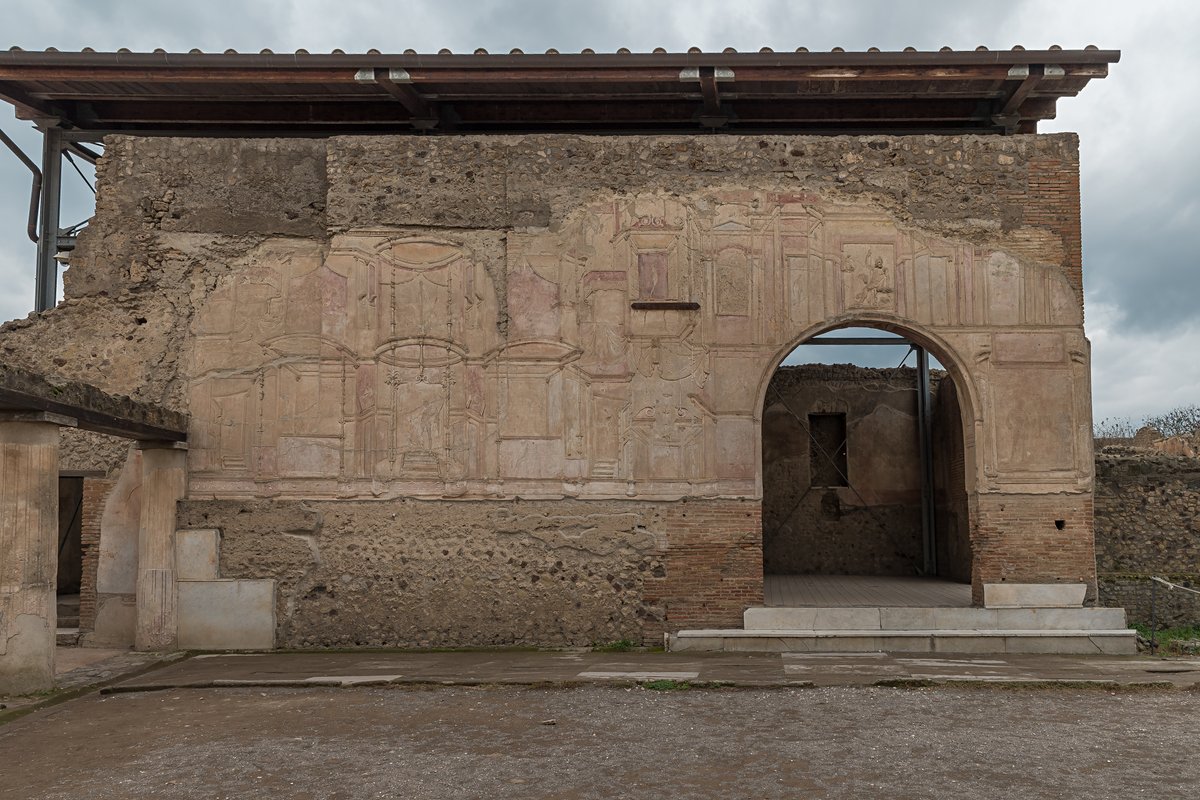
Internally, the central nave is surrounded by 28 columns, while the two lateral aisles have semi-circular columns placed along the perimeter walls with Ionic capitals. Along the western side, there is a podium about two meters high, accessible via a wooden staircase and bordered by six Corinthian columns. In this area, called the tribunal, justice was administered. From this podium, two stairs lead to a lower level with a barrel vault illuminated by two windows. The walls feature remains of decorations in the first style, made of stucco imitating large blocks of marble.
Sources: Wikipedia, OpenStreetMap, Wikidata, Wikimedia Commons
Written by Nicolo Ciampini
Discuss this with the author and others
No comments yet. Be the first to start the conversation.