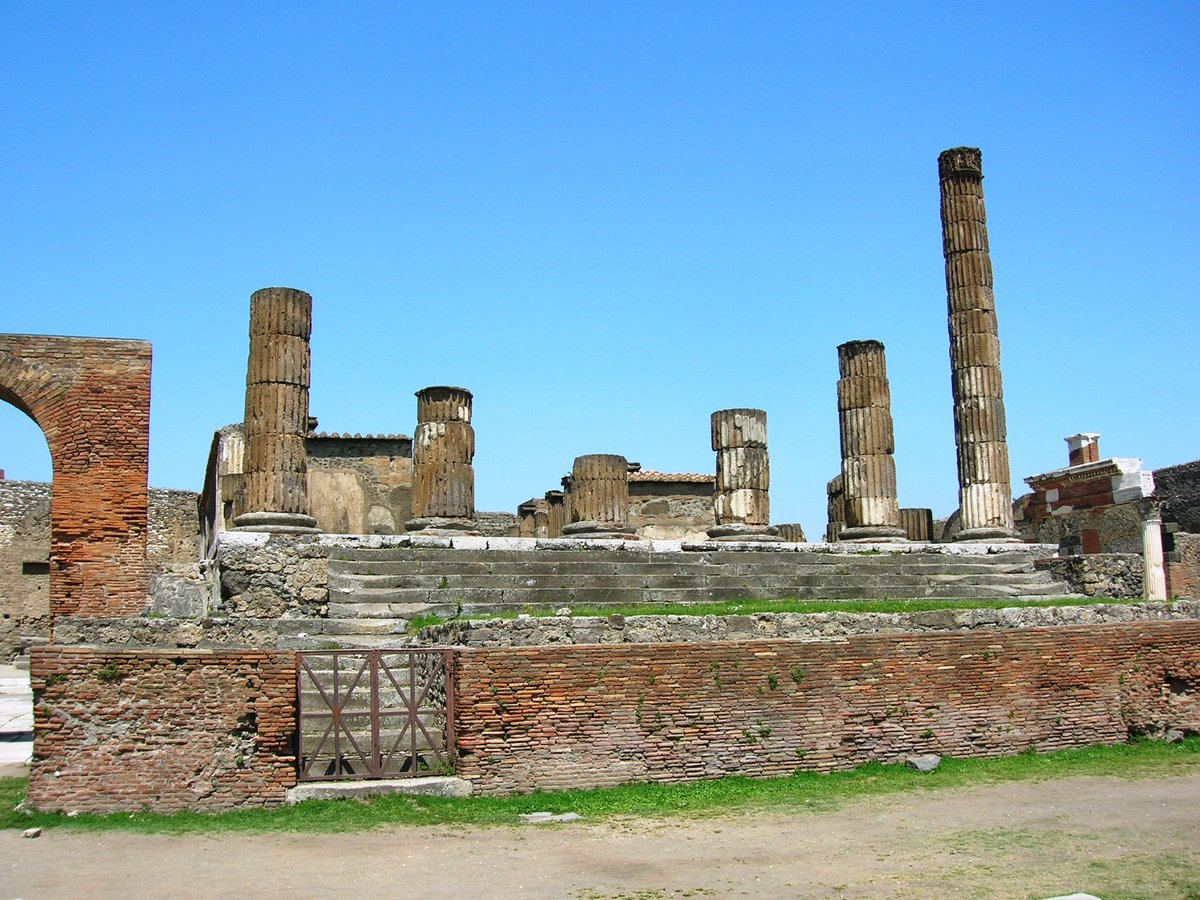

Crafted in the mid-2nd century BC, the Jupiter Capitolium Temple of Pompeii – replacing the Apollo Temple – was dedicated to the almighty Jupiter, ruler of the gods, epitomized by its magnitude and scale. Designed in the Italic style, the monumental structure stood proudly atop a foundation measuring an imposing 121 x 56 x 10 feet. Beneath the principal chamber, secrets awaited within the city's treasury and sacrificial offerings. The sacred cella nestled at the heart of the temple housed the statues of not only Jupiter, but also Juno and Minerva, the exclusive domain of the priests.
Following the Roman conquest of Pompeii, the temple expanded, transforming the city into a more public and communal environment. However, a catastrophic earthquake struck in 62 AD, inflicting severe damage upon the temple, which was eventually abandoned and consumed by the volcanic eruption of Mount Vesuvius in 79.
Sources: Wikipedia, OpenStreetMap, Wikidata, Wikimedia Commons
Written by Nicolo Ciampini
Discuss this with the author and others
No comments yet. Be the first to start the conversation.